
Gain complimentary access to the Editor’s Summary
In this weekly periodical bulletin, Roula Khalaf, the FT’s Editor, highlights her top picks.
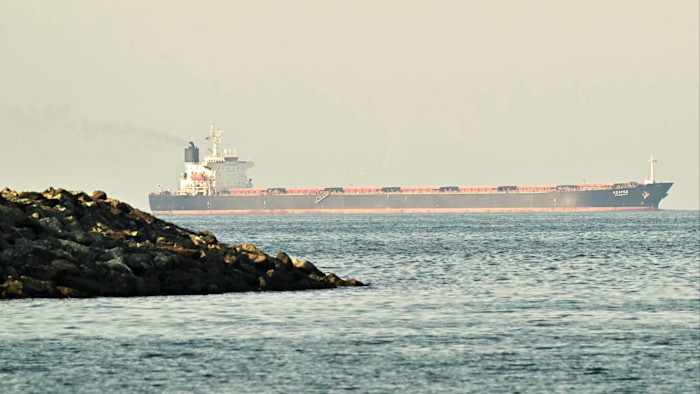
Following the assault on Iran by the US and Israel, underwriters informed vessel proprietors on Saturday of their intention to rescind contracts and elevate coverage premiums for ships transiting the Gulf and Strait of Hormuz.
On Saturday, conflict risk underwriters issued termination alerts for policies safeguarding maritime vessels traversing the vital petroleum transit point, intermediaries informed the FT, predicting an increase in prices by up to 50 percent in the subsequent days.
This uncommon action of issuing these declarations prior to the resumption of trading on Monday highlights the rapid intensification following Iran’s initiation of responsive assaults against US installations throughout the Middle East.
Premiums for ships navigating the Gulf had previously stood at roughly 0.25 percent of a vessel’s reconstruction value. These could now skyrocket by as much as 50 percent, explained Dylan Mortimer, the marine hull UK war specialist at intermediary Marsh, to the FT.
Coverage expenses for ships docking at Israeli ports, which were approximately 0.1 percent of a vessel’s value before recent assaults, might also surge by up to 50 percent, Mortimer noted, as underwriters anticipated counter-action from Iran.
Mortimer stated that the primary apprehension among underwriters centered on whether Iran would seal off the Strait of Hormuz. He further mentioned that insurers were factoring in anticipated attempts by Iranian allies to board and commandeer maritime vessels.
“Should Israel and the US persist in attacking Iran . . . it becomes more probable that Iran will commence utilizing its influence through the handling of maritime traffic in the area,” Mortimer commented.
Freight conflict risk underwriters — who safeguard goods transported on tankers, including grain and oil — also indicated their preparation to invalidate contracts on Monday, according to another intermediary.
Upon policy termination, insurers were anticipated to re-evaluate protection at elevated costs, intermediaries explained, rather than outright rejecting coverage for vessels navigating into the area.
Furthermore, some vessel proprietors are avoiding the Strait of Hormuz, a conduit for roughly one-fifth of the global unprocessed petroleum.
On Saturday, a minimum of three vessels diverted from the strait, instead of traversing it, as proprietors evaluated the peril of assault within the confined passage.
EOS Risk, a consultancy, also indicated that certain vessels had apparently received a maritime alert via radio from the Iranian Revolutionary Guard Corps, stating that the strait was now inaccessible for maritime traffic.