
Unlock the Editor’s Digest for free
Roula Khalaf, Editor of the FT, selects her favourite stories in this weekly newsletter.
**Key Takeaways:**
1. **Dual Supply Shock Threat:** Houthi threats to Saudi Red Sea ports, combined with existing Strait of Hormuz tensions, create a perilous “pincer movement” risking major disruptions to global oil and refined product flows, potentially driving energy prices significantly higher.
2. **Escalating Maritime Risk:** The renewed targeting of commercial shipping in a critical chokepoint like the Bab al-Mandab Strait forces major shipping lines to reassess tentative returns, leading to increased war risk premiums, rerouting, and extended transit times, further straining global supply chains.
3. **Geopolitical Premium & Inflation:** This latest escalation injects a significant geopolitical premium into commodity markets, exacerbating existing inflationary pressures and creating headwinds for global economic growth, particularly impacting energy-dependent industries and consumer spending.
The global energy market is once again bracing for intensified volatility as escalating geopolitical tensions in the Red Sea threaten to choke off vital oil supplies. In a move sending immediate ripples through maritime intelligence and commodity trading desks, at least four tankers laden with Saudi crude have abruptly altered their course, following explicit warnings from Yemen’s Houthi rebels that vessels calling at Saudi ports will be targeted.
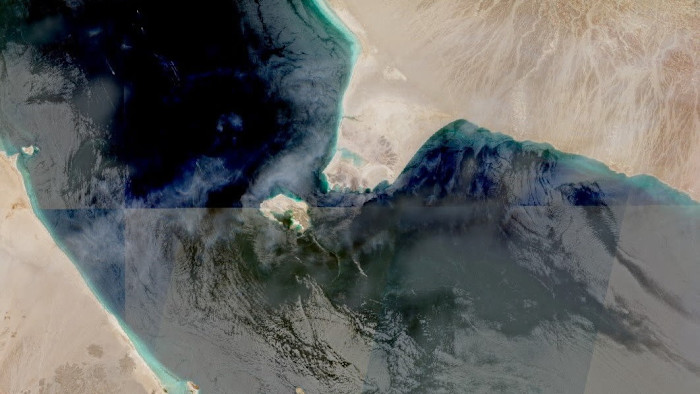
This development marks a significant and concerning uptick in the Iran-backed Houthis’ strategy, potentially unleashing a fresh wave of disruptions across a maritime corridor critical to global trade. The rebels’ broadcast radio warnings, instructing ships against traversing the narrow Bab al-Mandab Strait if they had previously docked at Saudi facilities, are not mere rhetoric. They represent a tangible threat that has already translated into concrete evasive action by commercial shipping, immediately impacting supply chain predictability and risk assessments.
The messaging, reinforced by an internal alert circulated among shipping companies, explicitly stated that vessels serving Red Sea ports in the Kingdom of Saudi Arabia could face “targeting in any location within the operational reach of the Yemeni Armed Forces.” This aggressive posture reignites fears of a full-blown return to conflict in the Red Sea, a region that had only recently witnessed a cautious and tentative return of major shipping lines. These lines had begun to resume routes following a period of relative calm from the Houthis, who are a key component of Tehran’s “axis of resistance” but had largely refrained from direct attacks on commercial shipping since earlier in the year, beyond a barrage of missiles aimed at Israel in March and April.
For Saudi Arabia, the world’s largest oil exporter, this new threat profile is particularly acute. The Red Sea port of Yanbu has become the Kingdom’s indispensable primary oil-loading terminal. This shift occurred after its traditional Gulf port of Ras Tanura faced near-crippling restrictions due to Iran’s tightening grip and intermittent closures of the Strait of Hormuz – the other critical chokepoint for Middle Eastern oil exports. Data from energy analytics firm Kpler indicates that Yanbu has been handling an average of nearly 4.9 million barrels of crude per day since April, making it a linchpin in global crude supply. Any sustained disruption to this flow would reverberate globally, pushing energy prices higher and intensifying inflationary pressures.
The immediate market tremor was palpable as at least three tankers, having loaded at Yanbu, changed course in the Red Sea on Tuesday. A fourth, the Hong Kong-flagged New Prime, slated to load at Yanbu on July 26, appeared to reverse course even before reaching the Bab al-Mandab Strait. Such swift reactions highlight the high-stakes environment in which maritime logistics now operate, where perceived threats can trigger costly diversions and delays.
This latest maritime threat unfolds against a precarious geopolitical backdrop, specifically the recent breakdown of a fragile ceasefire between the US and Iran. That failure has already contributed to a near-closure of the Strait of Hormuz, directly contributing to Brent crude prices climbing back above the $80 per barrel mark. Michelle Wiese Bockmann, a maritime intelligence analyst at Windward, succinctly described the combined effect of Iranian and Houthi actions as a “pincer movement” on global energy flows. Her warning that the market for refined products faces particular disruption underscores the broader economic implications, as transportation and industrial sectors heavily rely on these refined fuels.
The roots of the renewed Houthi-Saudi tensions trace back to earlier this month when the rebels reopened Sana’a airport, facilitating an Iranian plane’s flight to repatriate rebel officials and wounded Yemenis. The Houthis accused Saudi Arabia of deploying fighter jets to impede the landing, threatening retaliation for any further “violations” of Yemeni airspace. While the aircraft ultimately landed and transported a Houthi delegation to Tehran for the funeral of Ayatollah Ali Khamenei, a subsequent Iranian flight returning the delegation to Sana’a was forced to divert to the Red Sea port of Hodeidah after the airport was attacked by Saudi-aligned Yemeni forces. This cycle of accusation and reprisal has now spilled into the vital maritime domain.
Saudi Arabia’s official response has been resolute, asserting its intent to “take all necessary measures to protect its ships in accordance with international law and the 1982 United Nations Convention on the Law of the Sea.” This legal stance, however, belies the complex operational challenges and the significant economic risks involved in ensuring unhindered passage through such a contested waterway. The dilemma for Riyadh is clear: protect its economic lifeline without triggering a wider regional conflict that could destabilize global energy markets even further.
Market Impact:
The intensification of maritime threats in the Red Sea, coupled with ongoing tensions in the Strait of Hormuz, presents a formidable challenge to the global economy. For commodity markets, particularly crude oil and refined products, this “pincer movement” guarantees an elevated geopolitical risk premium. Traders will price in greater uncertainty, leading to increased volatility and a probable upward trajectory for energy benchmarks like Brent and WTI. This surge in energy costs will directly fuel inflation, placing additional pressure on central banks already struggling with persistent price increases, potentially forcing more aggressive monetary policy actions that could dampen economic growth and increase recession risks. For the shipping industry, war risk premiums for insurance will soar, and the necessity for lengthy and expensive rerouting around the Cape of Good Hope will significantly increase freight rates and extend transit times, impacting global supply chains for everything from consumer goods to industrial components. Investors will likely pivot towards safe-haven assets, while equities, especially those of energy-intensive companies and those reliant on global trade, may face downward pressure. This environment underscores the fragility of global supply lines and the deep interconnectedness of geopolitics and economic stability.