
Stay informed with free updates
Simply sign up to the EU energy myFT Digest — delivered directly to your inbox.
**Key Takeaways**
1. **Critical Loophole Narrows for Russian LNG:** Danish shipyard Fayard remains the sole EU entity providing essential dry-dock services to Russia’s Arc7 ice-class LNG tankers, extending a critical but increasingly scrutinized lifeline until a comprehensive EU maritime services ban takes full effect in 2027. This continued service underscores the inherent tension between European energy security needs and the evolving sanctions regime.
2. **Shifting Global Energy & Shipping Dynamics:** The impending EU and recently enacted UK sanctions on maritime services are forcing a significant realignment in the maintenance, insurance, and operational viability of Russian LNG fleets. This will likely accelerate the pivot of Russian energy exports towards Asia, increase operational costs, and challenge the long-term ownership and asset value of Western-affiliated vessels in this trade.
3. **Ethical vs. Economic Tensions Persist:** The ongoing servicing by Fayard, despite governmental opposition, highlights the complex interplay between maintaining critical energy supply chains for Europe, corporate adherence to evolving sanctions, and the ethical imperative to curtail Russia’s fossil fuel revenues, which remain a primary funding source for its war effort.
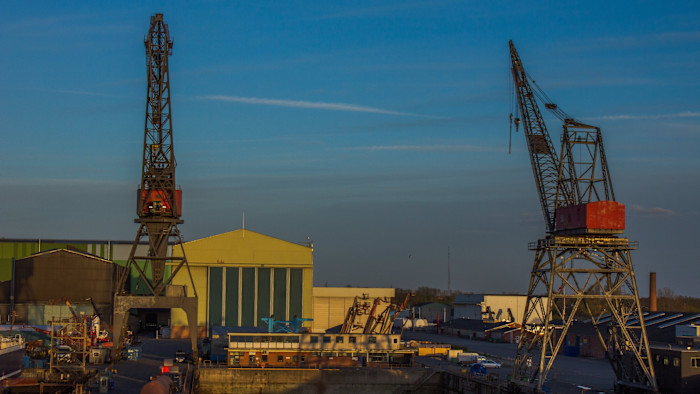
The Danish shipyard Fayard has continued servicing ice-class liquefied natural gas (LNG) tankers that provide a critical lifeline to exports from Russia’s Yamal gas plant, despite vocal opposition from the Danish government and an impending comprehensive EU ban on offering maritime services to Russia-linked ships. This situation spotlights a crucial, albeit diminishing, operational loophole in Western sanctions designed to cripple Russia’s energy export capabilities.
Fayard stands as the only EU shipyard currently providing dry-dock services to the highly specialized Arc7 class vessels. These tankers, engineered to navigate the challenging Arctic conditions from the Yamal peninsula, rely heavily on European yards not only for their advanced technical expertise but also for their strategic proximity to the tankers’ primary trade routes, which historically run from Siberia down to key ports in north-west Europe. This technical dependency has created a significant bottleneck in the global shipping and energy supply chain as sanctions tighten.
Analysis by Urgewald, a non-governmental organisation, reveals the scale of this reliance: six of the 15-strong Arc7 fleet of icebreakers would be due for essential repair and maintenance at the Danish yard this summer. This timing is particularly critical as it precedes a broader EU ban on services to LNG tankers operating out of Russia, which is due to come into force from 2027. The phased implementation of these sanctions allows a temporary reprieve, reflecting the EU’s delicate balancing act between energy security and its geopolitical objectives.
Last year alone, Fayard serviced five tankers that had sailed from Yamal, as detailed in its annual report, demonstrating a consistent operational commitment to this controversial trade route. The EU’s impending maritime services sanction aligns with a wider bloc-level ban on the import of Russian gas, also from next year. This tightening squeeze on Russian trade is widely expected by market analysts to significantly cut Yamal’s utilisation rate and accelerate the pivot of its exports towards Asian markets, necessitating new logistical and financial arrangements.
In a significant market shift, August last year saw Dutch-owned Damen, previously the only other major European shipyard operator to service the technically advanced Arc7 fleet, announce it would halt its work on the tankers at its French yard in Brest. This decision was made “in line with Dutch foreign policy discouraging Dutch companies from supporting Russian LNG exports,” setting a precedent for other European maritime service providers. The move by Damen underscores the increasing pressure on companies to align with national and bloc-wide foreign policy directives, even at the cost of lucrative contracts.
Since Russia’s full-scale invasion of Ukraine, Damen has received eight visits from Arc7 vessels, while Fayard has received 15, illustrating Fayard’s increasing role as the last European port of call. Damen is separately facing criminal proceedings from Dutch prosecutors over alleged breaches of earlier EU-Russia sanctions, highlighting the severe legal and reputational risks associated with perceived non-compliance.
Although the servicing activity itself has never been explicitly illegal under current EU law, the political pressure has been immense. Mette Frederiksen, Denmark’s prime minister, publicly stated after reports first emerged of Fayard’s role that it was “completely incomprehensible” and they “simply have to stop that.” This political condemnation signals the growing chasm between the letter of the law and the spirit of sanctions policy among EU member states.
Villy Søvndal, a Danish MEP and former foreign minister of Denmark, told the FT that it was “deeply concerning if European companies continue helping to sustain Russia’s fossil fuel exports. Denmark has been among Ukraine’s strongest supporters, and that commitment should also be reflected in the decisions made by Danish businesses.” In the context of the tightening EU sanctions, he added, “European companies should not exploit a final loophole for short-term profit,” pointing to the ethical dimension of commercial operations that inadvertently support Russia’s wartime economy.
Fayard, in its defence, stated its support for “the EU in its energy policy and sanctions towards Russia.” The shipyard clarified its position by noting, “The [European] Commission has decided LNG from Yamal is necessary for European energy supply until 2027, and therefore, we service specific vessels sailing to European ports delivering the LNG to Europe to ensure maritime safety and support the EU.” This response underscores the complex trade-offs facing European policymakers and businesses: balancing immediate energy security needs against the long-term strategic goal of divesting from Russian energy.
The EU has vastly decreased its imports of Russian gas since February 2022, a testament to its diversification efforts. However, it has been slow to rid itself of the last vestiges of the Russian fuel, primarily because of the continent’s heavy reliance on external energy resources and the persistent high energy costs exacerbated by global supply chain disruptions. Imports from Yamal to the EU, for instance, increased by 17 per cent to 5mn tonnes in the first quarter of 2026 compared to the same period last year, according to analytics group Kpler. This uptick reflects short-term market dynamics, likely influenced by the squeeze on global energy supplies caused by recent geopolitical instabilities, such as the Gulf crisis and broader Red Sea disruptions, which have impacted shipping routes and global LNG prices.
Sebastian Rötters, energy and sanctions expert at Urgewald, raised a “big question” about the future of the Arc7 fleet. He pondered whether European owners, which include the major Greek shipping company Dynagas, would continue to service the vessels given the incoming gas ban. “If I were Dynagas and I knew from next year I could not export to Europe any more I would begin to think about it. They might not want to invest in it and service them,” he said. This raises critical questions about the potential sale of these highly specialized tankers to Asian or Russian buyers, which would further reshape the global LNG shipping landscape and asset valuations within the maritime sector.
In a further significant step to squeeze Russian energy revenues, the UK government last week published its own ban on the provision of maritime services to ships operating in Russia. This contrasts with the EU’s phased approach, indicating a more immediate and stringent stance from London. Research from the Ukrainian NGO Razom [Together] We Stand has found that UK insurers and fleet managers dealt with more than 10mn tonnes of Russian LNG shipments in the six months between the UK first announcing the ban in December and issuing it this month. This highlights the extensive previous involvement of UK service providers in the Russian energy trade and the significant market impact of the new ban.
Eleven of the Arc7 fleet of tankers are covered by UK insurance or other shipping services, of which six are directly managed by the Glasgow-based Seapeak Maritime. Seapeak did not respond to a request for comment, indicating the sensitivity and commercial implications of operating in this increasingly sanctioned environment. The withdrawal of UK insurance and management services will create a substantial void, forcing Russia and its partners to seek alternative, potentially more costly and less reliable, providers, further fragmenting the global maritime services market.
“Russia’s fossil fuel revenues are the main funding source for its brutal war against Ukraine,” said Svitlana Romanko, executive director of Razom We Stand, adding that operators were making a “conscious choice” to contribute to Russia’s wartime economy. This ethical framing continues to exert pressure on financial and maritime service providers globally, pushing for greater scrutiny and adherence to sanction objectives.
Market Impact
The evolving landscape of sanctions on Russian LNG maritime services is set to significantly impact global energy and shipping markets. For Russia, the loss of critical European dry-docking and UK insurance services will increase operational costs, reduce fleet reliability, and likely necessitate a greater reliance on less sophisticated or non-Western service providers. This will inevitably lead to higher shipping premiums and potentially greater lead times for maintenance, creating supply chain inefficiencies. For the EU, while the immediate need for Yamal LNG is acknowledged, the phased ban signals a firm commitment to long-term energy diversification, potentially leading to increased demand for LNG from alternative sources and continued price volatility in the short-to-medium term. The Arc7 fleet, critical for Arctic routes, faces significant asset value risk; their potential sale to Asian or Russian entities could reshape ownership structures in specialized shipping. Furthermore, the actions of Fayard and the scrutiny faced by Damen and Seapeak underscore a broader trend of increased compliance costs and reputational risk for companies operating in geopolitically sensitive sectors, driving a segmentation of the global maritime services and insurance industries along geopolitical lines. This fragmented market could lead to higher operational risks and costs for all participants involved in energy transportation from sanctioned regions.