

Ellie Cohanim, a previous State Department deputy special envoy, addresses current discussions between U.S. officials and Iran concerning its nuclear development on ‘The Bottom Line.’
Petroleum costs have soared over 40% since the commencement of the Iran conflict, disrupting global energy sectors and sparking apprehension that American motorists might face further price hikes at the pump.
Analysts suggest that consumers may not yet have experienced the complete repercussions, as elevated raw oil expenditures typically take weeks to translate into retail gasoline prices. Even if petroleum rates stabilize, fueling station costs could continue ascending in the immediate future.
“It is highly probable that additional developments are forthcoming, given the usual delay between crude prices and what purchasers pay at the dispenser,” stated Phil Flynn, a FOX Business contributor and principal market evaluator at Price Futures Group.
Michael Mische, a logistics authority and professor at the University of Southern California, similarly forecasted that the worst period has not concluded, informing FOX Business: “Further developments are still on the horizon.”
“A time gap exists, and valuations will persistently propagate throughout the system,” he remarked.
IRANIAN CONFLICT MIGHT BOOST INFLATIONARY TRENDS THIS YEAR, ACCORDING TO GOLDMAN SACHS
Costs are observable at a fueling station in Downtown Brooklyn, New York, United States, on March 18, 2026. (Matthew Hoen/NurPhoto via Getty Images / Getty Images)
The American standard West Texas Intermediate unrefined oil concluded trading at $99.64 per barrel on Friday, remaining elevated after a turbulent phase tied to the dispute. Although valuations appeared poised for their initial weekly reduction in over a month, they persist considerably above figures from before the hostilities.
This market upswing is a consequence of supply chain disturbances linked to American and Israeli assaults againstIran, which experts calculate have withdrawn approximately 10 to 11 million barrels daily from worldwide markets, thereby constricting availability.
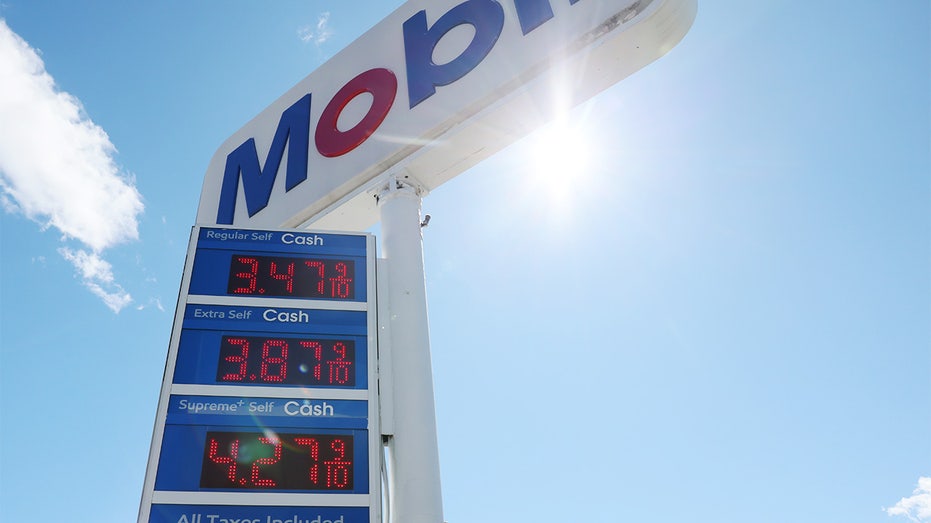
Fuel costs are exhibited at a Mobile Filling station on March 17, 2026, within the Kensington district of Brooklyn, New York City. (Michael M. Santiago/Getty Images)
Global political instability persistently influences the market. The United States has prolonged a time limit for Iran to re-establish access to the Strait of Hormuz—an essential passage for international petroleum transport—simultaneously considering further armed intervention. Costs might decrease if the hostilities de-escalate, yet are expected to stay above figures from before the dispute, whereas an extended intensification could propel costs upwards.
HOSTILITIES WITH IRAN EXACERBATE ASIA’S ENERGY CRISIS, WITH INDIA, JAPAN, AND OTHERS SENSING THE BURDEN
“Despite this sudden scarcity, the ascent has remained comparatively manageable—and the situation might have been considerably more severe,” Flynn stated.
However, Mische remarked that robust internal output has assisted in mitigating the repercussions. “Were it not for present American output volumes, we would be facing a genuine predicament,” he asserted.
As for motorists, petrol prices have already started climbing, though subsequent rises could be on the horizon, since the prior surge in raw oil persists in propagating throughout the economic chain.
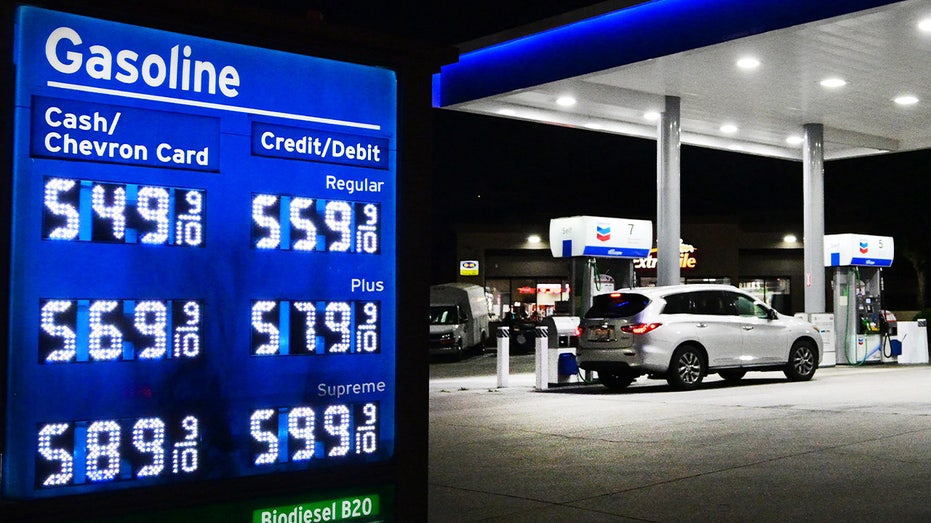
Elevated fuel costs are displayed at a Chevron service station in Los Angeles, California, on March 9, 2026, while fuel prices escalate during the continuing conflict with Iran. (Frederic J. BROWN / AFP via Getty Images)
The country’s typical cost for standard petrol was approximately $3.98 per gallon, as per AAA—an increase of approximately 6 cents from the prior week and almost $1 more than a month prior. Information from GasBuddy indicates a comparable trajectory, displaying an increase of roughly 7 cents from week to week and over $1 throughout the preceding month.
This ascent predominantly mirrors prior advances in petroleum, and since consumer fuel costs trail raw oil fluctuations, market observers anticipate further upward momentum in the forthcoming weeks.
ACCESS FOX BUSINESS ON THE MOVE BY CLICKING HERE
Periodic elements are likewise playing a role. The shift towards pricier warm-weather fuel formulations is in progress, boosting processing expenditures and potentially sustaining elevated fueling station costs even if raw oil becomes steady.
“Costs ascend rapidly, yet they descend gradually,” Mische commented.
Reuters furnished information for this article.