
Global crude benchmarks tumble as The Big Money Show breaks down the market impact of U.S.-Iran diplomatic efforts, potential military action and addressing gas prices.
**Key Takeaways:**
* **Persistent Inflation & Fed Policy:** Elevated cost-of-living concerns, driven by sticky inflation at 3.7% year-over-year, underscore the Federal Reserve’s ongoing challenge to bring inflation down to its 2% target without triggering a hard landing. Market participants are closely watching CPI and PCE data for clues on future rate decisions, impacting bond yields and equity valuations, particularly growth stocks.
* **Energy Prices as Economic Barometer:** Geopolitical tensions and supply-side dynamics, such as U.S.-Iran diplomatic efforts and potential military action, continue to exert outsized influence on crude oil and gasoline prices. These fluctuations are a key driver of consumer sentiment and inflationary expectations, directly impacting transportation costs, corporate margins, and the energy sector’s performance.
* **Monetary Policy’s Broad Reach:** The ripple effect of the Fed’s aggressive rate hike cycle is evident in high mortgage rates, elevated auto loan costs, and rising credit card balances, constraining consumer purchasing power and investment. This environment creates headwinds for interest-rate sensitive sectors like real estate and consumer discretionary, while potentially bolstering financial institutions.
Americans heading to the polls for the midterm elections on Tuesday are doing so with a palpable sense of economic strain, a sentiment that resonates deeply across financial markets. While the political implications of voter sentiment are clear, the underlying economic anxieties — particularly cost-of-living concerns — are inextricably linked to crucial market dynamics, shaping investor decisions and corporate outlooks. A recent Fox News survey, conducted October 9-12, revealed that a dominant six in ten voters identified the cost of living as their paramount economic concern looking towards Election Day, reflecting a broader disillusionment with the current economic climate. A staggering 74% majority rated the economy negatively, with 53% anticipating a further deterioration next year, while a mere 18% reported an improved family financial situation compared to two years prior. This widespread apprehension serves as a critical indicator for market analysts assessing consumer confidence and future spending patterns.
Inflation, a persistent thorn in the side of households and policymakers alike, continues to run significantly above the Federal Reserve’s long-term 2% target rate. The most recent Consumer Price Index (CPI) data painted a picture of stubborn price pressures, with inflation rising 3.7% on a year-over-year basis in September. This uptick was largely propelled by a sharp 9.1% monthly jump in gasoline prices, which now stand 34.2% higher than they were a year ago. Such figures not only erode purchasing power but also influence the Fed’s monetary policy calculus, impacting everything from bond yields to equity valuations as markets price in potential rate adjustments.
REPUBLICANS COULD FEEL ‘SAME FATE’ AS DEMOCRATS AS ARE ELEVATED AHEAD OF MIDTERMS, EXPERT SAYS
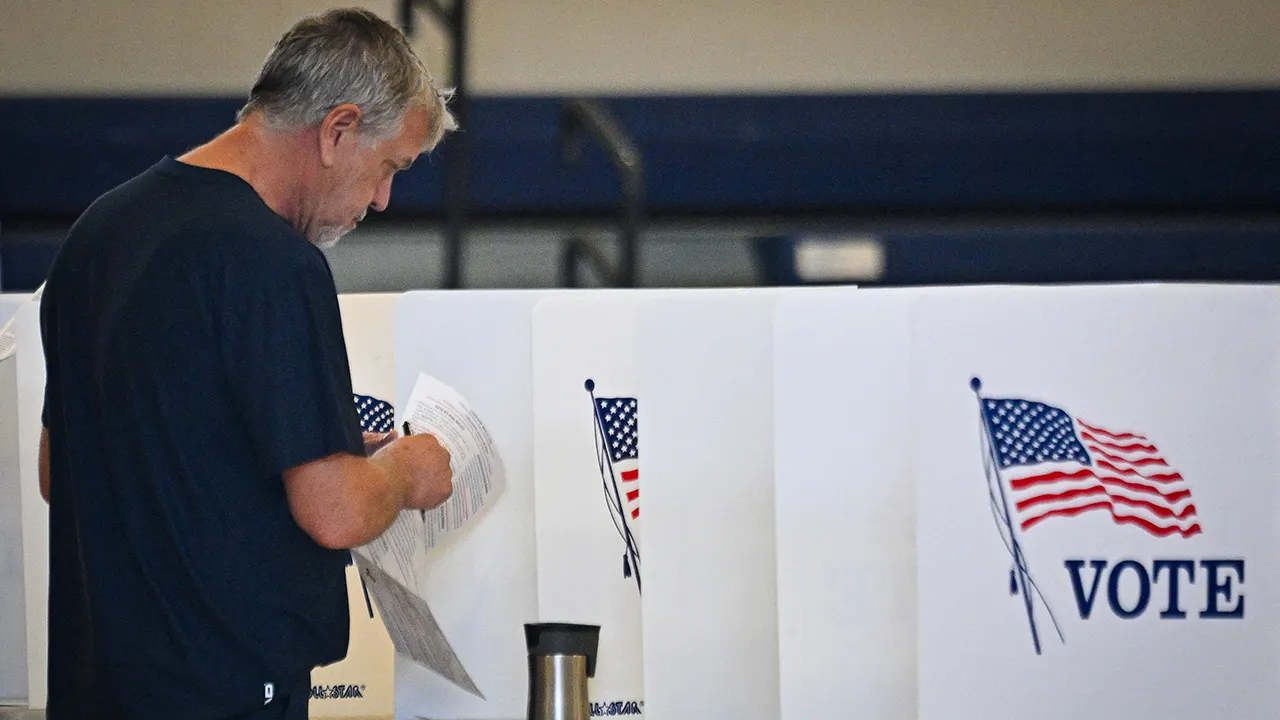
Affordability is a key economic concern for voters ahead of the election.(Miguel J. Rodriguez Carrillo/AFP via Getty Images)
Ben Lieberman, a senior fellow at the Competitive Enterprise Institute, underscored the outsized role of gasoline prices in shaping consumer perceptions of overall economic well-being. “You can look at overall household budgets and motor fuels are only a part of that, but it’s the one thing that we know what we pay for down to the tenth of a penny, so it has an outsize influence on how people feel about the economy and whether things are affordable,” Lieberman told FOX Business. From a market perspective, this highlights how energy commodity volatility, often driven by geopolitical events like U.S.-Iran diplomatic efforts or military considerations, can disproportionately impact consumer sentiment indices and, by extension, sectors reliant on discretionary spending. “Had it not been for the Iran war, I think the perception would be a lot better because gasoline prices would be lower,” he added, illustrating the direct link between geopolitical risk and market-sensitive consumer behavior.
IRAN WAR COSTS US HOUSEHOLDS $860 MORE IN HIGHER ENERGY PRICES, ECONOMIST SAYS
Lieberman further elaborated on the “new plateau” phenomenon in inflation, noting that while the pace of price increases has eased from the post-pandemic peak of 9.1% in June 2022, prices themselves are unlikely to revert to pre-surge levels. “One thing to keep in mind is the high inflation of years past. We don’t get a refund on that. Prices don’t go back to where they were, it’s like a new plateau. So there is the perception of high grocery prices, even though overall it may not be so bad,” he explained. This concept is crucial for market participants, implying a structural shift in cost bases for businesses and persistent pressure on consumer budgets. It suggests that corporate earnings, while benefiting from pricing power, may eventually face resistance as consumers adapt by “cutting back on other things,” as Lieberman observed. This shift in consumer behavior, evidenced by downsizing vacation plans, directly impacts the leisure, hospitality, and broader consumer discretionary sectors, influencing revenue forecasts and investment strategies.

Gas prices have surged this year due to the Iran war’s impact on oil supplies from the Middle East.(M. Scott Brauer/Bloomberg via Getty Images)
Olivia Mitchell, an economics and public policy professor at the Wharton School of the University of Pennsylvania, emphasized that affordability remains “one of the key topics of the midterm elections,” presenting a significant political challenge. From a market perspective, this translates into potential policy shifts that could affect various industries. Mitchell confirmed that “it’s very clear that inflation has perked up again” after a period of deceleration from the 2022 peak. After dipping to 2.3% in 2025 and starting 2026 at 2.4% in January, CPI inflation has rebounded to 3.7%. This re-acceleration complicates the Federal Reserve’s path forward, increasing the likelihood of a “higher for longer” interest rate environment, which has profound implications for fixed income markets, corporate borrowing costs, and the valuation of growth stocks.
DEMS CALL TRUMP ‘A TOTAL FAILURE’ OVER INFLATION AS WHITE HOUSE CITES ECONOMIC GROWTH

Consumer inflation is running hotter than the Federal Reserve’s 2% target.(Spencer Platt/Getty Images)
Mitchell further highlighted the pervasive impact of the Federal Reserve’s aggressive monetary tightening cycle on household balance sheets. Consumers continue to grapple with “high mortgage rates, auto loans, credit card balances, and other forms of consumer debt,” making it increasingly difficult for families to rebuild savings or prepare for retirement. This direct consequence of the Fed’s fight against inflation directly impacts the housing market, auto industry sales, and the financial health of consumers, with potential implications for default rates and bank lending standards. The persistent burden of elevated debt servicing costs dampens overall economic activity, leading to reduced discretionary spending and a more cautious consumer. She also pointed out that “The tariffs are definitely making much of what we consume much more expensive, and this is leading to consumer frustration,” a factor that filters into corporate supply chain decisions and import costs, contributing to sticky inflation. The market monitors these factors closely, as they influence corporate profitability, particularly for companies with extensive global supply chains or those heavily reliant on consumer spending.
CLICK HERE TO DOWNLOAD THE FOX NEWS APP
Mitchell concluded that “Ultimately, the affordability debate will force policymakers to move beyond broad claims about economic growth and to demonstrate much more convincingly how their policies will improve the financial security in everyday lives of our households.” For investors, this means that future fiscal and regulatory policies, shaped by election outcomes and public pressure, could directly impact sectors like infrastructure, healthcare, and technology, as government priorities shift towards tangible improvements in financial security rather than just headline GDP growth.
**Market Impact:**
The confluence of persistent inflation, elevated energy prices, and the lasting effects of aggressive monetary policy creates a complex and challenging landscape for financial markets. Stubborn inflation pressures, particularly from energy, heighten the probability of the Federal Reserve maintaining higher interest rates for an extended period, leading to continued upward pressure on Treasury yields and a re-evaluation of equity valuations. Growth stocks, typically more sensitive to rising discount rates, face headwinds, while value-oriented sectors with strong cash flows may demonstrate greater resilience. Consumer discretionary spending is likely to remain subdued as households prioritize essential goods and services amid high borrowing costs and diminishing purchasing power, impacting retail, hospitality, and automotive sectors. Geopolitical risks, particularly those affecting oil supplies, will continue to drive commodity market volatility, with implications for energy producers and industries reliant on stable fuel costs. The political uncertainty surrounding midterm elections, coupled with intense focus on affordability, could also introduce policy risks, potentially leading to shifts in fiscal spending, regulatory environments, or trade policies that create both opportunities and challenges across various market segments. Investors will need to remain agile, closely monitoring incoming economic data, central bank rhetoric, and geopolitical developments to navigate this dynamic environment effectively.