
Jeff Sica of Circle Squared Alternative Investments discusses the economic impact from the World Cup in host cities like New Jersey and New York City on Varney & Co.
Key Takeaways
- Consumer Spending Surges:U.S. consumer spending recorded its strongest growth in over four years in June, jumping 6.3% year-over-year. This robust discretionary spending, significantly boosted by the World Cup and declining gas prices, signals strong consumer resilience but also potential inflationary pressures, particularly in the services sector.
- Localized Economic Boost:World Cup host cities experienced a concentrated and substantial surge in brick-and-mortar spending, outperforming non-host regions, especially in the hospitality and local retail sectors. This highlights the immediate and direct economic benefits of major events for regional economies and small businesses.
- Broad-Based Participation:Lower-income households were the primary drivers of this spending uplift, indicating that an improving labor market and wage growth are increasingly empowering broader segments of the population, a critical factor for sustained economic expansion and a more equitable recovery.
The highly anticipated FIFA World Cup 2026, which commenced on June 11, has rapidly emerged as a significant catalyst for U.S. consumer spending, injecting a notable boost into the broader economy. New, proprietary data from Bank of America’s extensive network of credit and debit card transactions reveals a compelling narrative of consumer resilience and renewed discretionary spending, particularly within the tournament’s host cities. This influx of economic activity arrives at a crucial juncture for market participants, who are keenly seeking indicators of underlying economic strength amidst ongoing debates about inflation, interest rates, and the probability of a recession.
According to the Bank of America Institute, consumer spending, as measured by aggregated credit and debit card activity, jumped an impressive6.3% year-over-year in June. This figure represents the strongest growth recorded in over four years, a period that encompasses the volatile post-pandemic recovery. More critically for market analysis, this surge was overwhelmingly powered by discretionary spending. When excluding the impact of gasoline purchases, which saw declining prices during the month, total card spending still rose a robust 5.6%. This decoupling from fuel costs suggests that consumers are not merely reallocating savings from lower gas bills but are actively increasing their overall outlay on non-essential goods and services, signaling greater confidence and disposable income.
“The World Cup scored big for consumer spending in June,” commented Joe Wadford, an economist at the Bank of America Institute. “Bank of America card spending showed healthy improvement toward the end of the month, due in part to a lift from the World Cup.” This observation is particularly pertinent for investors monitoring sectors sensitive to consumer sentiment and disposable income, such as retail, hospitality, travel, and entertainment. The World Cup, often described as a “generational event,” appears to have tapped into a wellspring of pent-up demand and celebratory spending, transcending typical seasonal patterns and potentially offsetting other economic headwinds.
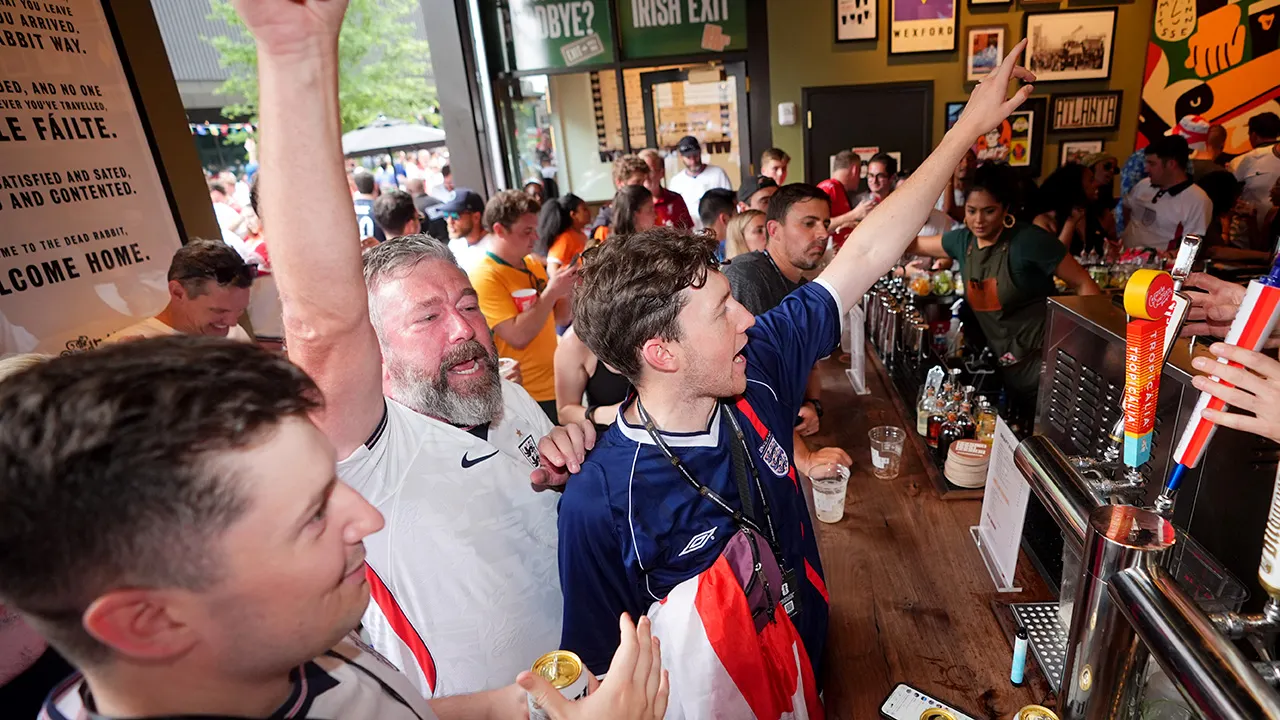
England fans celebrate a goal during the match with DR Congo at an Atlanta bar.(James Manning/PA Images via Getty Images)
A granular examination of the data reveals that the economic benefits of the World Cup are not evenly distributed but are significantly concentrated in the designated host cities. The Bank of America Institute’s analysis compared brick-and-mortar spending in World Cup host zip codes against spending in other parts of the U.S. The findings are stark: restaurants and bars in host cities saw consumer spending rise by an additional two percentage points compared to flat growth in non-host cities during the post-tournament start period. This localized boom highlights the immediate and direct impact of large-scale events on regional economies, benefiting local businesses, employment, and potentially boosting municipal tax revenues. For real estate investors, this could also signal temporary upticks in commercial property utilization in these areas.
“World Cup host cities saw a significant increase in brick and mortar spending, especially compared to the rest of the U.S.,” Wadford reiterated. This surge extends beyond just food and beverage establishments. Retail data, even when excluding restaurants, showed a noticeable gain for stores in host cities after the World Cup began, while non-restaurant retailers elsewhere experienced slower spending growth once the tournament commenced. This suggests a powerful ripple effect where increased foot traffic and celebratory moods spill over into general retail, from souvenir shops and sporting goods to other leisure-related businesses, creating a mini-boom for local economies.
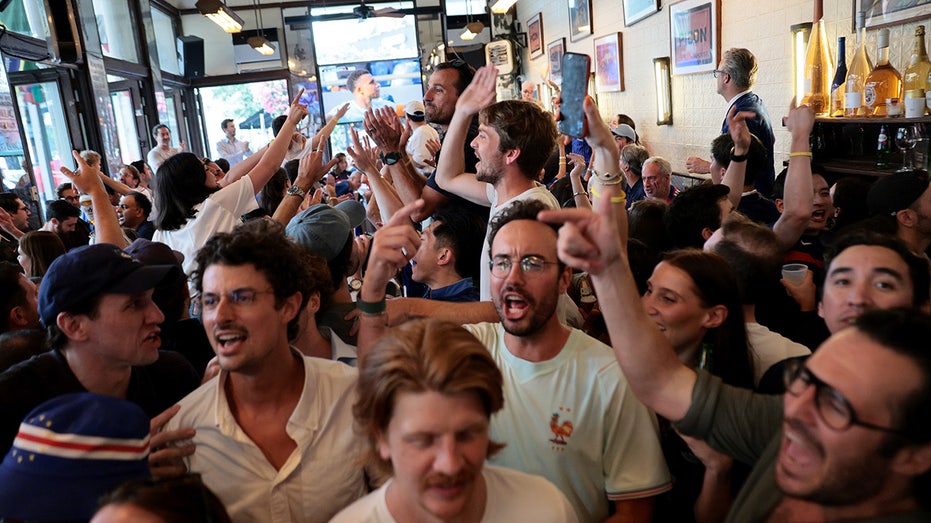
Fans at a New York bar react to a goal in the match between France and Morocco.(Michael M. Santiago/Getty Images)
“From packed stadiums to busy restaurants, the World Cup created a tailwind for the economy. But two of the main beneficiaries of the World Cup were local retailers and restaurants,” Wadford explained. “To me, this is a particularly positive story, as it suggests that a major portion of World Cup-generated spending stayed in the community.” For investors, this emphasis on local beneficiaries underscores the potential for outperformance among small and medium-sized enterprises (SMEs) located in these event-driven markets. It also highlights the importance of geographical diversification within investment portfolios, especially when considering exposure to consumer-facing sectors that thrive on localized economic stimuli.
Further dissecting the internal card data by income level reveals another critical insight for macroeconomic analysis:lower-income households provided the biggest boost to World Cup spending. While higher-income households eased their spending slightly during the same period, all income groups collectively increased their spending at brick-and-mortar restaurants from the pre-World Cup period to after its commencement. This finding challenges some prevailing narratives about widening economic inequality and suggests that the benefits of a strong labor market and rising wages are increasingly reaching lower-income segments, contributing to a more broad-based economic recovery.

Scotland fans in the famed Tartan Army at a bar in Miami.(Ryan McDougall/PA Images via Getty Images)
“Positively, lower-income households provided the biggest boost to World Cup spending. Some of this is due to the fact that younger households skew lower income, and they were likely the main ones going out to celebrate this generational event,” Wadford elaborated. “But some of the boost is due to this broader story of an improving economy for lower-income households. For example, we’re seeing a stronger labor market and higher wage growth, which in turn is helping to boost spending for lower-income families.” This perspective is crucial for understanding the sustainability of current consumer spending trends. If wage growth at the lower end of the income scale continues to outpace inflation, it could provide a durable foundation for consumer demand, even as interest rates remain elevated, influencing the Federal Reserve’s long-term outlook on economic stability.
The decline in gasoline prices observed in June played a pivotal role in freeing up disposable income, thereby enabling this surge in discretionary spending. For many households, particularly those with tighter budgets, reduced fuel costs translate directly into greater capacity for other purchases. This interaction between commodity prices and consumer behavior is a vital consideration for macroeconomic forecasts and investment strategies, as it directly impacts sector performance and inflationary dynamics, especially for goods and services beyond immediate necessities.
Market Impact
The robust consumer spending data, significantly influenced by the World Cup, presents a nuanced yet largely positive picture for financial markets. On one hand, it strongly reinforces the narrative of a resilient U.S. consumer, potentially assuaging fears of an imminent recession and supporting a ‘soft landing’ or even ‘no landing’ scenario. This could provide strong tailwinds for equities, particularly within theconsumer discretionary sector(e.g., hospitality, restaurants, entertainment, experiential retail), and boost confidence in companies with strong domestic exposure. Regional banks and small-cap companies operating in host cities might also see disproportionate benefits, as local economic activity surges. However, the sheer strength of demand, particularly in services and discretionary categories, could also fuel concerns about persistent inflationary pressures, potentially leading the Federal Reserve to maintain a hawkish stance or even consider further interest rate hikes if CPI data reflects sustained upward pressure. Investors will be closely watching upcoming inflation reports, particularly core services CPI, to gauge whether this spending spree translates into broader price increases. Furthermore, the data on lower-income households driving spending suggests a more equitable distribution of economic benefits, which could influence policy discussions around economic stimulus and social programs, potentially favoring policies that support wage growth and employment at the lower end of the income spectrum. Overall, while the immediate impact is positive for growth-oriented sectors and overall economic sentiment, the longer-term implications for monetary policy and inflation remain a key area of focus for market participants.