
The accompanying audio for this piece is presented by the Air & Space Forces Association, commemorating and assisting our Airmen, Guardians, and their families. Discover additional information at afa.org
The Air Force’s developing Collaborative Combat Aircraft (CCA) initiative is significantly outperforming former Secretary Frank Kendall’s objective of manufacturing autonomous companion drones for approximately a third of an F-35’s price, a key figure overseeing the project announced on March 25.
“We have not only achieved [Kendall’s objective], but we are significantly surpassing it,” Colonel Timothy Helfrich, who serves as the portfolio acquisition executive for fighter jets and sophisticated aerial vehicles at the Air Force Life Cycle Management Center, stated during a Defense One forum on the ‘State of the Air Force’. “Further details will emerge at a later time, however, we have been remarkably successful in reducing expenses.”
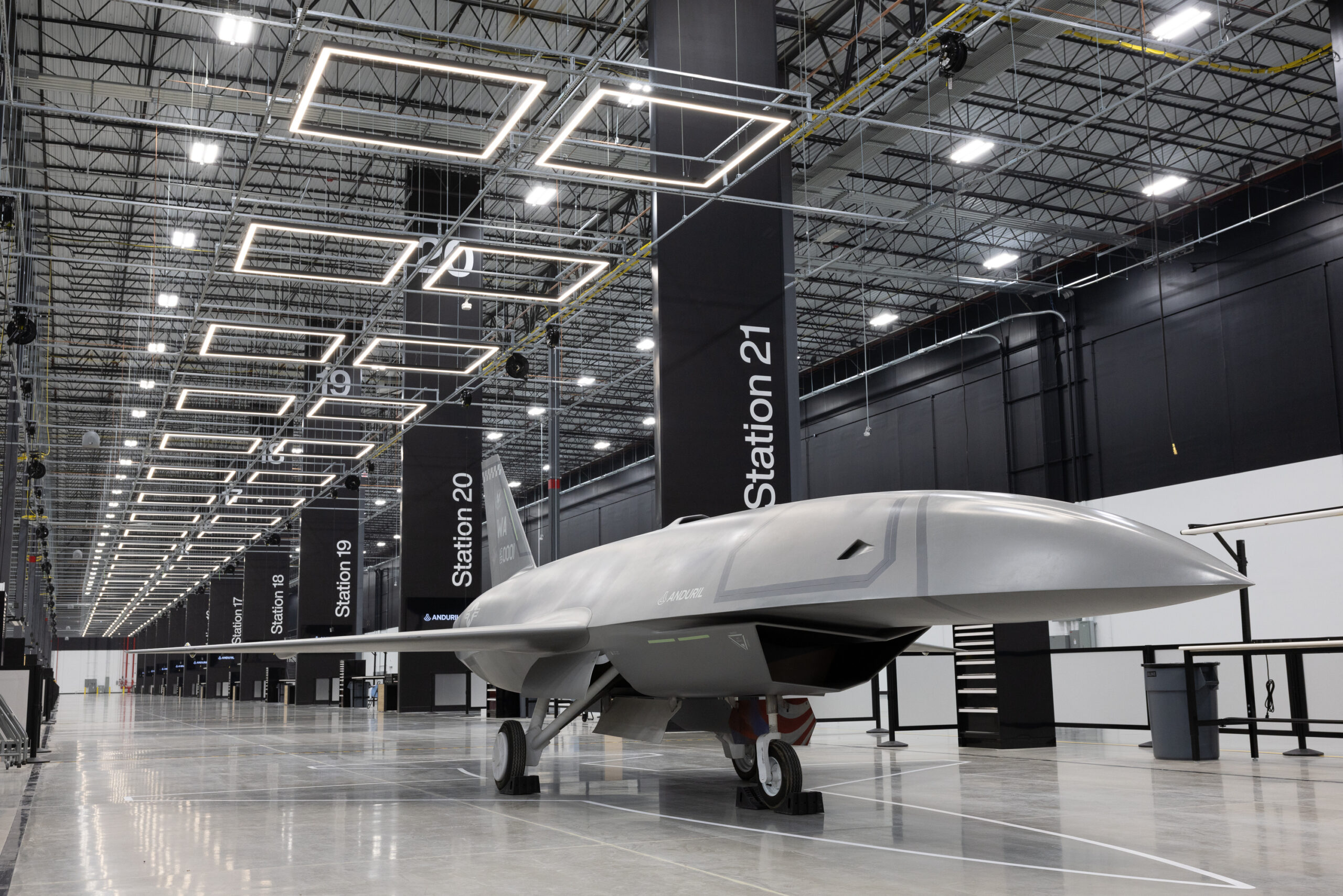
CCAs represent partially self-governing unmanned aerial vehicles designed to operate in conjunction with planes like the F-22, F-35, and F-47. They will execute diverse operations such as offensive attacks, reconnaissance, and cyber warfare with reduced expenses and hazards compared to piloted combat jets. At present, Anduril and General Atomics Aeronautical Systems are fabricating prototypes for the initial “phase” of CCAs, designated the YFQ-44A and YFQ-42A, in that order.
Helfrich chose not to disclose prospective expenditures for the CCAs being developed by Anduril and General Atomics. The latest production batches of the F-35, including its power plant, place the typical price tag near $101 million, although this figure may fluctuate considerably depending on the specific model. Consequently, the targeted cost for CCAs might be $34 million or less.
With the CCA initiative transitioning into its subsequent phase, Helfrich noted, the Air Force is collaborating with nine corporations to perfect their designs.
“During this stage, our approach involves utilizing the practical application scenarios identified via operational assessments,” Helfrich explained. “Each of these scenarios possesses fundamental characteristics. For instance, must they be capable of launching without a runway? Is a 2,000-mile range essential? Such considerations. Our team is partnering with these firms to coalesce these ideas into a defined set of conceptual models.”
Certain of these proposed designs are more affordable than the initial phase of CCAs, Helfrich stated—yet others are more sophisticated, implying they offer enhanced functionalities at a greater expenditure.
“Our strategy is to rely on empirical evidence and analytical findings to determine which option yields the most favorable return on investment,” Helfrich commented. “This is because it might be necessary to procure numerous cheaper units, or fewer of the more advanced versions.”
General Dale R. White, who serves as the Air Force’s Direct Reporting Portfolio Manager for Vital Major Weapon Systems, encompassing the CCA initiative, declared at a March 17 assembly that the projected per-unit expenses for CCAs are undergoing changes because “we are achieving a deeper comprehension of how these platform capabilities will be employed operationally.”
“As we persist in examining the potential design configurations for these aerial vehicles … this fundamentally alters our perception of expenditure,” White added. “We are currently in the initial stages of this process.”
The accompanying audio for this piece is presented by the Air & Space Forces Association, commemorating and assisting our Airmen, Guardians, and their families. Discover additional information at afa.org