
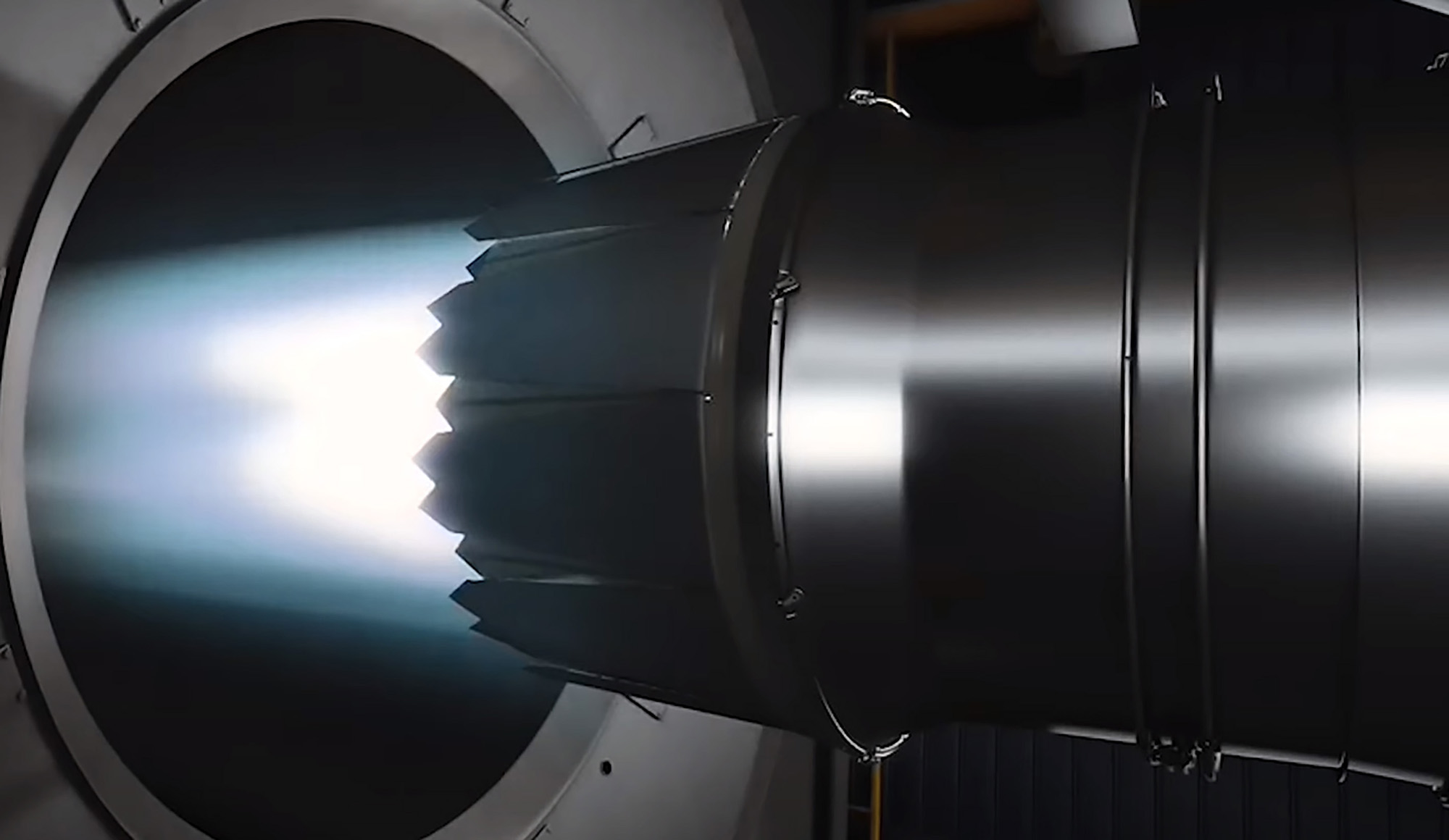
DAYTON, Ohio — The United States Air Force is advancing its efforts in developing a next-generation propulsion system, known as Next-Generation Adaptive Propulsion (NGAP), with plans to begin prototyping and testing phases. The service aims to integrate this advanced engine onto an aircraft by approximately 2030, marking a significant step in future aerial capabilities.
While the NGAP engine has frequently been associated with the Next-Generation Air Dominance (NGAD) fighter, now designated as the F-47, Air Force officials have not yet definitively determined which specific aircraft will be the first recipient of the NGAP powerplant. This strategic flexibility allows the Air Force to consider various platforms as the technology matures.
John Sneden, the Air Force’s portfolio acquisition executive for propulsion, informed reporters at the Life Cycle Industry Days conference on July 27 that the NGAP program recently concluded a critical readiness review. This review has cleared the path for the program to transition into the next stages: prototyping, constructing, and rigorously testing these adaptive engines.
This progression is reflected in the Air Force’s projected budget for NGAP, which indicates a substantial increase in funding over the coming years. Spending on the program is forecasted to rise sharply from $326 million in fiscal year 2026 to nearly $906 million in 2028. This peak will be followed by another substantial allocation of $865 million in 2029, before a planned reduction to $303 million in 2030. Sneden clarified that this budget spike is specifically allocated towards “building engines, testing engines,” with competitive development expected over several years, leading up to potential integration activities around the 2030 timeframe.
The NGAP program involves two primary contractors: GE Aerospace and RTX’s Pratt & Whitney. Both companies are engaged in the development of these “adaptive engines.” Adaptive engines represent a significant leap in propulsion technology; they are engineered to dynamically adjust their operating configuration to optimize thrust and fuel efficiency based on the aircraft’s flight conditions. This adaptability provides a performance advantage over conventional engines, which operate with a fixed design.
Previously, the Pentagon explored the possibility of retrofitting the F-35 fighter jet with adaptive engines under the Adaptive Engine Transition Program (AETP). However, that initiative ultimately led to a decision to upgrade the F-35’s existing engines instead, a separate effort that Sneden noted is also progressing towards a 2030 milestone. Despite the F-35 not receiving AETP engines, the research and development conducted under AETP have provided valuable insights and foundational knowledge that have directly informed the NGAP program.
Sneden confirmed that both GE Aerospace and Pratt & Whitney have successfully met the stringent requirements set by the NGAP program, demonstrating the readiness of their respective systems. He explained, “That means initial hardware is procured, their design meets our standards, everything is clean from that end, and both vendors have been able to do that.” A notable feature of the NGAP engines is that they are the first ever to be designed entirely through digital processes. This innovative approach has enabled the program to digitally verify their design attributes, streamlining development and testing phases.
Regarding the integration platform, Sneden reiterated that the Air Force is still evaluating options. He stated that while the sixth-generation F-47 being developed by Boeing is a candidate, the NGAP technology is designed to be versatile enough for other platforms as well. Sneden described NGAP as an “agnostic system,” emphasizing a strategy to “build the system first, open up options for the future, and then when those options come to the forefront, we’ll be able to take advantage of it. You have to lean into propulsion technology first.” This approach underscores a commitment to developing core technology independently of a specific airframe, maximizing future applicability.
Concurrently, Col. Timothy Helfrich, the portfolio acquisition executive for fighters and advanced aircraft, affirmed that the F-47 program remains “on track to fly this administration.” This statement aligns with former Air Force Chief of Staff Gen. David Allvin’s earlier promise of the F-47’s inaugural flight occurring in 2028. Due to the highly classified nature of the F-47 project, Helfrich declined to elaborate on its specific propulsion plans during his media roundtable on July 28. However, given that NGAP integration is not anticipated until 2030, it is implied that the initial flights of the F-47 will likely utilize a different engine system.
Sneden acknowledged that the NGAP program’s schedule has experienced some delays. He attributed these adjustments to the program’s deliberate decision to continue working with two viable vendors capable of providing advanced propulsion technology. Operating with a fixed budget, this commitment necessitated splitting resources between two competing developers rather than focusing solely on one. Sneden justified this strategy by highlighting the long-term benefits: “The competition is the gateway that enhances producibility, drives innovation, keeps costs down.” He also stressed its importance in “maintaining our advanced propulsion industrial base as we go into the future.”
Furthermore, Sneden clarified that NGAP is not a singular, monolithic system but rather a “host of technologies.” This modularity implies that individual components or technological advancements derived from NGAP could be separated and integrated incrementally into various platforms, including existing, older aircraft. He noted, “Not everything has to have an adaptive fan. So we can actually take that backwards as well and incorporate it in some of our legacy platforms. So there is a great utilization for this type of tech.”
Ultimately, Sneden underscored the critical importance of NGAP technology in sustaining the United States’ air superiority in the coming decades. He concluded, “If you want to stay ahead of our competitors, then you have to lean into this technology now.”
Why This Matters
The development of the Next-Generation Adaptive Propulsion (NGAP) system represents a pivotal investment in the future of U.S. air power and global security. Its significance extends across several critical domains:
Maintaining Air Superiority: In an era of evolving geopolitical tensions and rapid military modernization by rival nations, particularly China and Russia, advanced propulsion systems are paramount for maintaining a qualitative edge in aerial combat. NGAP engines are designed to offer unparalleled performance in terms of speed, range, and fuel efficiency, directly contributing to the U.S. Air Force’s ability to project power and deter aggression globally. Without continuous innovation in core technologies like propulsion, the U.S. risks losing its strategic advantage in the air, impacting its capacity for defense and foreign policy objectives.
Technological Innovation and Economic Impact: The NGAP program pushes the boundaries of aerospace engineering, particularly with its emphasis on digital design and adaptive capabilities. This fosters innovation not only within the defense sector but also has potential spillover benefits for commercial aviation and other high-tech industries. The substantial budget allocations and long-term commitment to two major aerospace companies—GE Aerospace and Pratt & Whitney—also support a critical U.S. industrial base. This investment helps sustain high-skilled jobs, stimulate research and development, and ensure that the nation retains domestic capabilities essential for national security and economic prosperity. The competition between these two vendors is explicitly designed to drive innovation and efficiency, benefiting the taxpayer and the warfighter alike.
Strategic Flexibility and Future-Proofing: The Air Force’s “platform agnostic” approach to NGAP is strategically significant. By developing the engine technology independently of a specific airframe, the program ensures maximum flexibility. This means NGAP engines, or their constituent technologies, could be integrated into a variety of future aircraft, or even potentially upgrade existing legacy platforms, extending their operational lifespan and capabilities. This adaptability future-proofs the investment, making the technology relevant across multiple generations of aircraft and mission sets. Such modularity reduces reliance on single-platform solutions and allows for more agile responses to emerging threats and technological shifts.
Efficiency and Sustainability: Adaptive engines promise significant improvements in fuel efficiency. In an era where military operations are increasingly global and logistics are complex, reducing fuel consumption translates into extended range, reduced operational costs, and a smaller logistical footprint. This not only enhances combat effectiveness but also contributes to the Air Force’s broader goals of sustainability and operational independence. The ability to achieve optimal performance across diverse flight envelopes—from high-speed sprints to long-endurance patrols—without compromising efficiency is a transformative capability for modern air forces.
In essence, NGAP is more than just a new engine; it is a strategic endeavor to ensure the U.S. maintains its technological lead, strengthens its industrial base, and secures its national interests in an increasingly complex and competitive global environment.