
Recent devastating incidents across the United States have brought into stark focus a particularly horrific manifestation of domestic violence: the killing or attempted killing of multiple family members by an individual. Experts refer to this phenomenon as “family annihilation” or “familicide,” describing acts so extreme they can seem unimaginable.
In early January, officials reported a man in Clay County, Mississippi, fatally shot six people. The victims included his father, a brother, an uncle, and a 7-year-old second cousin, highlighting the broad impact such violence can have within an extended family structure.
A separate incident occurred in February in Pawtucket, Rhode Island, where a shooter entered a hockey rink and killed his ex-wife and their adult son. Three additional individuals, including the ex-wife’s parents, sustained injuries before the perpetrator died from a self-inflicted gunshot wound.
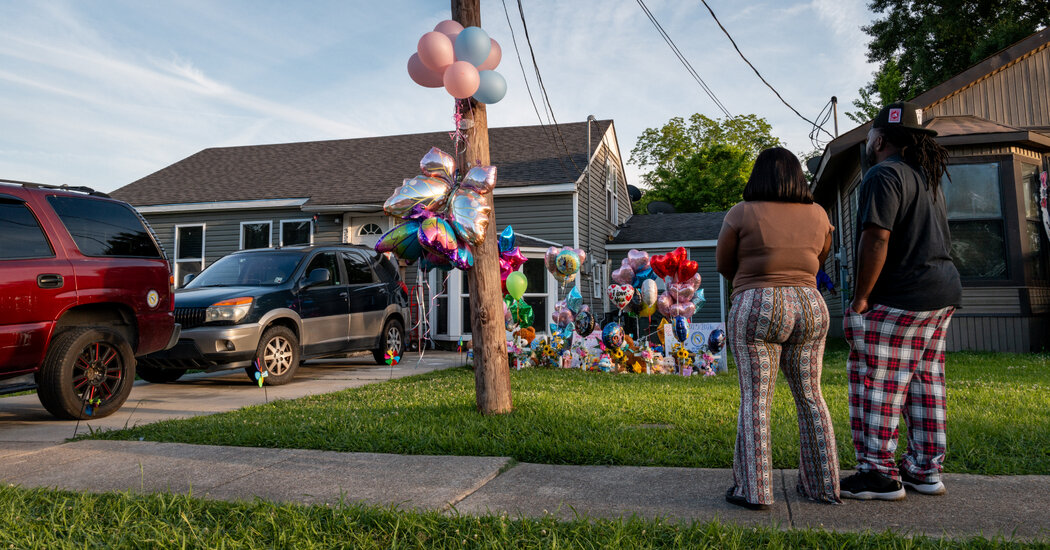
Most recently, in Shreveport, Louisiana, authorities reported a father killed eight children last Sunday, seven of whom were his own. He also wounded the two mothers of the children before taking his own life. Henry L. Whitehorn, the sheriff in Caddo Parish, Louisiana, described the killings as “the most heartbreaking tragedies that we have ever witnessed,” underscoring the profound shock and sorrow these events inflict upon communities.
These incidents, while not common, occur with a regularity that underscores a deeply disturbing aspect of violence within the home. Family annihilation represents the most extreme end of a spectrum of domestic violence, characterized by a perpetrator’s systematic slaying of their relatives, often including their spouse or partner and children, and sometimes other close family members.
While the precise definition can vary among researchers, “familicide” broadly refers to the killing of a spouse or partner and at least one child. Some experts expand this to include the attempted killing of multiple relatives. Regardless of the specific criteria, these acts share a common thread of immense personal and familial destruction.
Obtaining comprehensive, publicly available data on family annihilations presents a significant challenge. Law enforcement agencies frequently do not track or categorize data based on the specific familial relationships between perpetrators and victims in a consistent manner. Furthermore, many domestic crimes involve fewer individuals, may not include a suicide, or are carried out without a firearm, which can complicate their classification within broader statistical frameworks.
As a result, organizations dedicated to preventing gun violence, such as the non-profit Violence Policy Center, often rely on meticulous analysis of news reports to build their databases. These killings are sometimes subsumed into larger categories like murder-suicides or mass shootings, which can obscure the specific dynamics of family-centric violence.
Despite these data limitations, some statistics offer a partial understanding of the prevalence of such violence. The Violence Policy Center, after analyzing news reports from a specific six-month period in 2025, estimated that there were 22 family annihilations in the United States during that timeframe. Their criteria for this estimate specified incidents where three or more family members were killed, followed by the perpetrator’s suicide.
A consistent pattern observed in the vast majority of family annihilations is that the perpetrators are men, and firearms are the most commonly used weapon. However, there are notable exceptions. One widely cited case is that of Andrea Pia Yates, a mentally ill mother in Texas who drowned her five children in a bathtub in 2001. Her case stands out as she did not take her own life, deviating from the typical murder-suicide pattern.
Researchers studying family annihilators have identified several common psychological and situational factors. These often include the perpetrator experiencing suicidal thoughts and the breakdown of an intimate relationship, particularly a marriage or long-term partnership.
For some men, the motivation is deeply intertwined with depression stemming from significant life stressors, such as job loss or severe financial problems. In such cases, perpetrators may develop a distorted belief that their family would be better off dead than facing a future burdened by these issues.
Other underlying motivations can include intense jealousy, feelings of profound humiliation related to losing custody of children, or a deeply ingrained proprietary view of their families. Melina Milazzo, the director of public policy at the National Network to End Domestic Violence, elaborates on this perspective: “There is this sort of belief system that if I can’t have you, no one can, and that extends past the individual partner. It can extend into the family. It goes back into all power and control — the belief system that they own the individual or family unit.”
Experts unanimously identify explicit expressions of suicidal thoughts or threats of violence as critical red flags that should never be dismissed. However, Neil Websdale, the director of the Family Violence Center at Arizona State University, notes that some devastating cases occur even without a prior history of overt violence. These instances are often linked to acute threats to a man’s identity as a provider, husband, or parent. “It destabilizes their identity,” Websdale explains. “Their shame is so clear and acute that it results in violence.”
Ms. Milazzo further emphasizes that the period marking the end of a relationship is often the most dangerous time for individuals involved in any domestic violence situation, as it can escalate existing tensions and control issues to extreme levels.
In the Shreveport, Louisiana, killings, for instance, the woman who had raised the gunman indicated he had been struggling with the impending breakdown of his marriage and was deeply distressed by the prospect of losing his family.
Additionally, Jacquelyn Campbell, a professor at the Johns Hopkins University School of Nursing, points to a history of trauma among domestic abusers, including post-traumatic stress disorder (PTSD) or exposure to violence during childhood. Some studies, she adds, also suggest a correlation with brain damage from head injuries. “If anybody talks about killing themselves or others,” Professor Campbell warns, “we need to take that seriously.”
Addressing this deeply entrenched form of violence requires more than just reactive measures, according to Ms. Milazzo. While recent high-profile cases have garnered public attention, countless other incidents go unreported and unaddressed. “This is a systemic issue that requires a systemic response,” she asserts, calling for comprehensive, integrated strategies to prevent these tragedies and support those at risk.
Eduardo Medina contributed reporting.
Why This Matters
The phenomenon of family annihilation represents the most extreme and devastating outcome of domestic violence, with profound implications for public safety, mental health, and societal well-being. These acts shatter families, traumatize communities, and underscore critical failures in identifying and intervening in severe domestic and psychological crises.
Firstly, these incidents highlight an urgent public safety concern. The premeditated nature and often widespread victim count within a single family unit demand a more robust understanding of risk factors and warning signs. When an individual takes the lives of multiple family members, it signals a complete breakdown of internal controls and often a profound, untreated mental health crisis, posing an immense danger to anyone within their reach.
Secondly, the scarcity of comprehensive data on family annihilations impedes effective prevention and policy development. Without precise statistics and detailed analysis of these tragedies, it is challenging for law enforcement, social services, and public health agencies to understand the true scope of the problem, identify patterns, and allocate resources efficiently for intervention and prevention programs. Better data collection is crucial for informing evidence-based strategies.
Thirdly, these events draw critical attention to the deep-seated issues of domestic violence and mental health. The psychological profiles of perpetrators—often involving suicidal ideation, severe depression, proprietary attitudes towards family members, and responses to relationship breakdowns or financial distress—underscore the desperate need for accessible and effective mental health services. It also emphasizes the importance of taking threats seriously, particularly when individuals express suicidal thoughts or violent intentions, especially during periods of high stress like relationship dissolution.
Finally, family annihilation challenges society to confront the systemic nature of violence and control within intimate relationships. It necessitates a broader societal response that includes not only law enforcement but also community support networks, mental health professionals, and educational initiatives aimed at changing cultural norms that perpetuate violence and control. Understanding why these tragedies occur, acknowledging the warning signs, and fostering an environment where individuals can seek help—both for potential victims and for individuals struggling with severe psychological distress—is paramount to preventing future heartbreak and safeguarding the lives of countless families.