
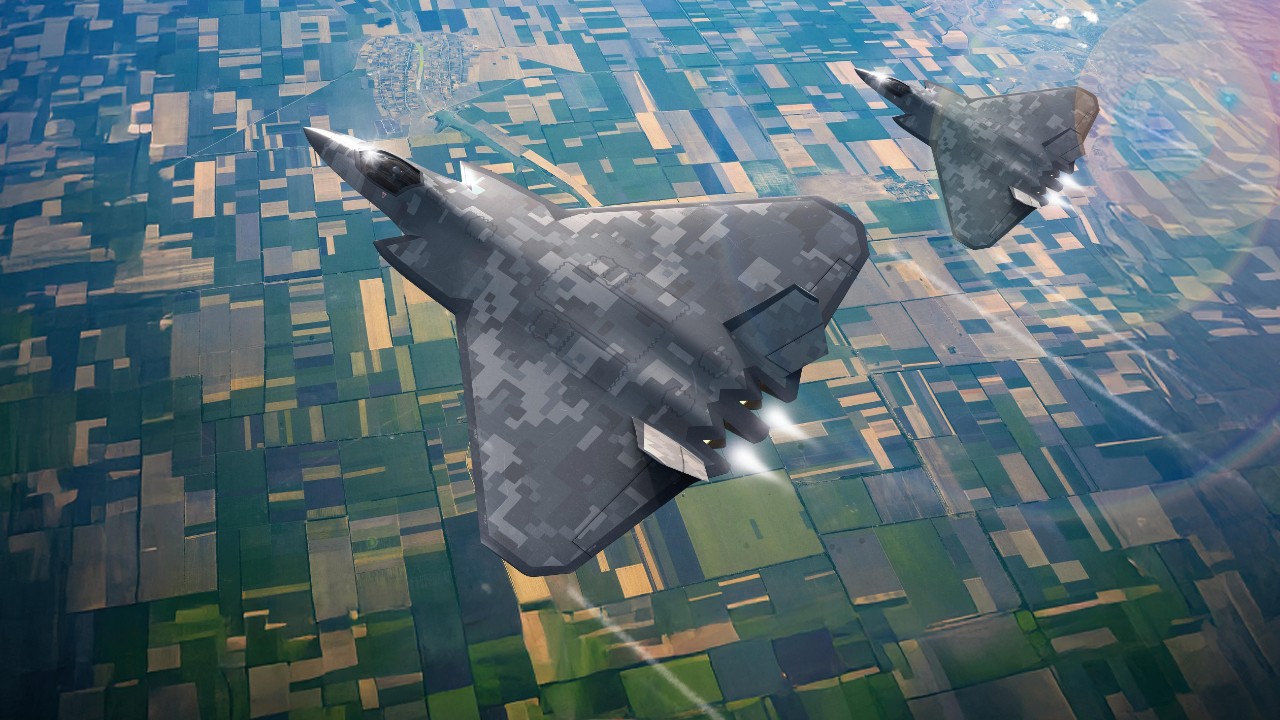
Senior defense industry figures are indicating a significant acceleration in the timeline for the Global Combat Air Programme (GCAP), the ambitious trilateral initiative between the United Kingdom, Italy, and Japan. Lorenzo Mariani, co-General Manager of Leonardo S.p.A., revealed Thursday that pressure from ministerial levels is driving efforts to bring forward the first entry into service of the advanced combat aircraft, potentially by a couple of years from its initially stated target of 2035.
Speaking during a call on the Italian group’s first-half financial results, Mariani confirmed the existence of a “strong push to bring forward the first entry into service of GCAP.” He articulated that this accelerated timeline, which would see the aircraft operational closer to 2033, is “motivated correctly, in my view, by the urgency of having such multi-domain system starting to operate as quickly as possible, as early as possible.” This urgency likely reflects the rapidly evolving global geopolitical landscape and the increasing sophistication of aerial threats.
When questioned about the industrial realism of such an accelerated schedule, Mariani affirmed its feasibility. However, he introduced a crucial caveat regarding the initial capabilities of the aircraft. He stated that achieving an earlier entry into service would be possible “by making that entry into service even more gradual than it was supposed to be, so probably modulating the requirements that this initial version will fulfil.” This suggests that the first operational GCAP aircraft might not possess its full intended capabilities on day one, with subsequent upgrades progressively meeting the final design specifications. Mariani underscored that this phased approach is a common practice in the development of complex defense programs.
GCAP is a landmark collaborative effort designed to develop a sixth-generation combat aircraft. Its primary objective is to replace the Eurofighter Typhoon fleets of the UK and Italy, and Japan’s F-2 fighter jets, aiming for an in-service target of 2035. The program is managed through Edgewing, a joint venture comprising leading defense contractors BAE Systems (UK), Leonardo S.p.A. (Italy), and Japan Aircraft Industrial Enhancement Co. Edgewing operates under contract to the trilateral government organization, GIGO (Global Combat Air Programme International Government Organisation), which is headquartered in the UK. Recent reports from the Farnborough International Airshow had already hinted at a desire from Japan, and potentially Italy, for an earlier operational date.
Mariani also addressed the increasingly narrow window for additional partner nations to join the GCAP program. His comments echoed those made a day earlier by Charles Woodburn, chief executive of BAE Systems. Mariani expressed his full agreement, stating, “The window is closing, because otherwise confidence in timescales will be lost. This is the main reason.” He acknowledged a competing perspective: “one should think if there is a point in losing some time now to reach a more stable and more healthy consortium, and then maybe gain time in the second part of the development.” However, he concluded that “normally decisions are taken on what we have on the table today. So yes, the window will close very soon,” emphasizing the immediate priority of maintaining the program’s current momentum and schedule integrity.
Several nations have been linked with potential involvement in GCAP. Germany has frequently been mentioned as a possible expansion candidate, given its historical defense ties with the UK and Italy. Saudi Arabia has also been discussed as a prospective partner, with the UK having signaled its interest in Riyadh’s involvement. In a new development, Canada has officially joined the program as an observer. Mariani described Canada’s participation in this capacity as a “very good sign for the follow-on of the programme,” indicating positive momentum for future potential partnerships or broader international cooperation.
Regarding the program’s tangible progress, Mariani highlighted the recent signing of a major international contract between GIGO and Edgewing. This week, BAE Systems valued this crucial contract in excess of £5 billion across the joint venture. The agreement covers the completion of the advanced concept and assessment phase, alongside further joint detailed design and development work. This significant financial commitment signals a robust progression from conceptual stages to concrete development, underpinning the program’s trajectory towards its ambitious goals.
These strategic announcements from Lorenzo Mariani were delivered alongside Leonardo’s strong first-half financial results. Giuseppe Aurelio, the company’s chief financial officer, reported what the group described as an “outstanding performance.” Orders surged by approximately 40% year-on-year, reaching roughly €16 billion. Revenues increased by 10%, while the return on sales rose by 110 basis points to 7.6%. Net income saw a substantial increase of 74%. In light of these impressive figures, Leonardo upgraded its full-year guidance, raising expected orders to €28.2 billion and EBITA (Earnings Before Interest, Taxes, and Amortization) to €2.21 billion. Aurelio projected that these results would position Leonardo as a double-digit margin business by 2026, a full year ahead of previous forecasts, underscoring the company’s robust health as a key contributor to GCAP.
Why This Matters
The Global Combat Air Programme (GCAP) is far more than just another defense project; it represents a critical strategic undertaking with profound implications for global security, technological innovation, and international alliances. The reported pressure to accelerate its entry into service underscores a growing sense of urgency driven by the rapidly shifting geopolitical landscape, particularly in Europe and the Indo-Pacific. Nations are increasingly facing sophisticated threats that demand cutting-edge military capabilities. Bringing a sixth-generation combat aircraft online sooner could provide a significant deterrent and tactical advantage against potential adversaries, ensuring the participating nations maintain air superiority in future conflicts.
Technologically, GCAP aims to push the boundaries of air combat. A sixth-generation aircraft is expected to feature advanced stealth, artificial intelligence integration, networked warfare capabilities (operating as part of a “system of systems”), and optionally crewed operations. The development of such a complex, multi-domain system fosters immense innovation in aerospace, electronics, materials science, and digital technologies. This not only benefits the defense sector but can also lead to significant spin-off technologies with broader economic applications, enhancing the technological sovereignty and industrial competitiveness of the UK, Italy, and Japan. The proposed “gradual entry into service” reflects the immense technical challenges of such an endeavor, balancing speed with the development of unprecedented capabilities.
Economically, GCAP is a massive investment that will generate thousands of high-skilled jobs across the three partner nations in engineering, manufacturing, and research and development. The £5 billion+ contract for the initial design and development phases is just the beginning of a multi-decade program that will funnel substantial resources into the respective economies, driving growth and securing critical industrial capabilities. For companies like Leonardo and BAE Systems, GCAP represents a cornerstone of their long-term growth strategies and their leadership in the global defense market.
From an alliance perspective, GCAP strengthens the military and industrial ties between the UK, Italy, and Japan. This trilateral partnership is a powerful demonstration of interoperability and shared strategic vision, particularly relevant in an era where multilateral cooperation is vital for addressing complex security challenges. The discussion around potential new partners like Germany and Saudi Arabia, and the inclusion of Canada as an observer, highlights the program’s potential to evolve into an even broader international consortium, further solidifying alliances and burden-sharing in defense. However, the “closing window” for new partners also signals the delicate balance between expanding alliances and maintaining the program’s critical development timeline and cost efficiencies.
Ultimately, GCAP represents a significant step in shaping the future of air combat and global defense strategy. Its progress, challenges, and strategic decisions will be closely watched by militaries and defense industries worldwide, as they navigate an increasingly complex and contested security environment. The program’s success will not only equip its partner nations with formidable aerial capabilities but also cement their positions at the forefront of defense technology for decades to come.