
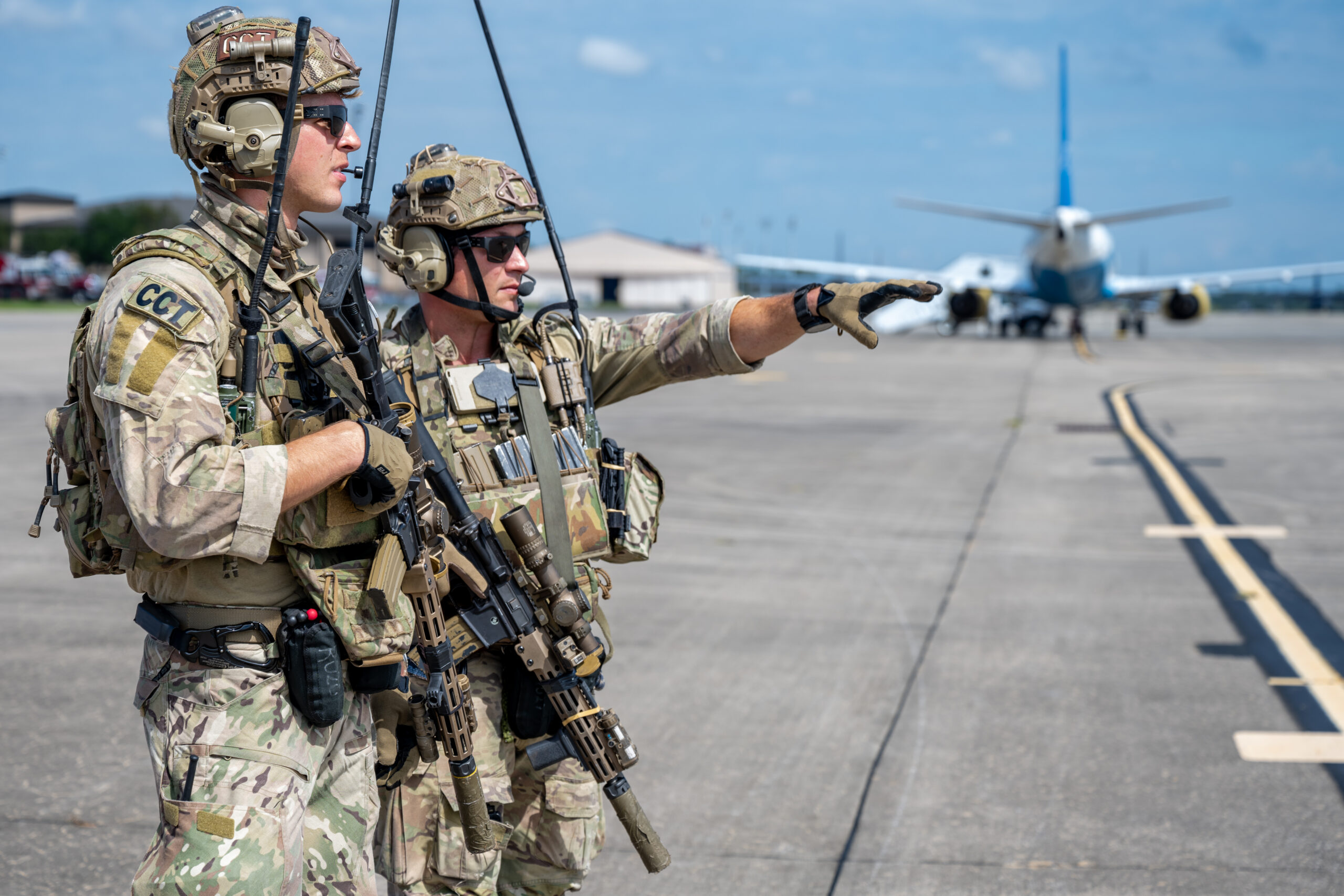
Secretary of Defense Mandates New Special Tactics Squadron for Florida Air National Guard
Washington D.C.– U.S. Secretary of Defense Pete Hegseth has directed the Air Force to establish a new Special Tactics Squadron (STS) under the Florida Air National Guard, a move that will expand a small but highly specialized group of special operations personnel within the U.S. military.
The Pentagon publicly announced Secretary Hegseth’s directive on October 21. This announcement followed an internal memo, dated September 23, from Secretary Hegseth to Air Force Secretary Troy Meink, explicitly instructing the creation of the new squadron at Hurlburt Field, Florida. The order also specifies the establishment of an associated new organizational component at MacDill Air Force Base, which is also located in Florida.
At the time of the announcement, spokespersons for both the Pentagon and the Air Force provided no additional details regarding the new unit. The Air National Guard did not immediately respond to inquiries for further information, leaving many logistical and operational specifics yet to be clarified.
The strategic placement of the new squadron leverages Florida’s significant role in special operations. Hurlburt Field serves as the headquarters for Air Force Special Operations Command (AFSOC), while MacDill Air Force Base is home to U.S. Special Operations Command (USSOCOM), which oversees all U.S. special operations forces. According to the Pentagon’s official statement, this dual placement is intended to forge “an unparalleled ecosystem of combat-ready training and mission execution.” The statement further elaborated that this arrangement “maximizes joint-force synergy, ensures seamless operational readiness, and provides the President with highly responsive, lethal options to counter pacing threats.”
Special Tactics Squadrons are among the Air Force’s premier ground combat units, comprising highly trained special operators. These units are typically composed of four primary specialist roles:
- Combat Controllers (CCTs):These operators are air traffic control specialists and certified joint terminal attack controllers (JTACs). They infiltrate austere or hostile environments to establish airfields, direct air traffic, and coordinate precision close air support for ground forces.
- Pararescuemen (PJs):PJs are elite combat medics and rescue specialists. They are responsible for personnel recovery in all environments, including contested territories, and provide advanced emergency medical care in extreme conditions.
- Special Reconnaissance (SR) operatives:These specialists conduct clandestine surveillance and reconnaissance missions, gathering critical intelligence in denied or sensitive areas, often operating deep within enemy territory.
- Tactical Air Control Party (TACP) specialists:TACPs integrate air power into ground operations, directing combat aircraft and coordinating air-to-ground fires to support both conventional and special operations units on the battlefield.
Collectively, these teams conduct a wide spectrum of missions in covert, remote, or hostile areas. Their responsibilities include combat search and rescue, the seizure and establishment of airfields, providing emergency air traffic control, and coordinating close air support for joint forces.
Special Tactics Squadrons are a limited asset within the U.S. Air Force, with only a small number currently in operation. Within the Air National Guard, only two such squadrons currently exist: the 123rd Special Tactics Squadron based in Kentucky and the 125th Special Tactics Squadron in Oregon. The Florida Air National Guard does currently possess one special operations unit, the 249th Special Operations Squadron, which operates the CV-22 Osprey tiltrotor aircraft, a distinct role from the ground-focused special tactics missions.
The timeline for the establishment and full operational manning of the new squadron remains undetermined. Secretary Hegseth’s memo indicates that any subsequent resourcing required for this directive, including military construction, equipment procurement, and manpower authorizations, will be developed within the framework of the President’s Budget 2028 budget cycle. This suggests a multi-year phased approach before the squadron achieves full operational capability.
The memo also specifies that both the National Guard Bureau and the Air Force must adhere to existing Air Force policy for the unit’s creation. This includes complying with the applicable Department of the Air Force (DAF) Strategic Basing process and all pertinent environmental legal requirements, emphasizing the structured and regulatory path required for such military installations.
Military analysts and observers have noted that a direct order from the Secretary of Defense for the establishment of a squadron-level unit, particularly within a component like the Air National Guard, is highly unusual, if not unprecedented. Decisions regarding the formation of new units are typically initiated and processed through service-specific chains of command, often originating at lower echelons and working their way up for approval. This direct intervention by the Secretary of Defense underscores the high priority and strategic significance attributed to the creation of this specific new unit.
Secretary Hegseth, a former Army officer, has consistently praised special operations forces throughout his tenure, often presenting them as a model for military innovation and acquisition reform. Special operations units have played key roles in several operations during his leadership, including those internally cited as Operation Absolute Resolve, aimed at seizing Venezuelan President Nicolás Maduro in January, Operation Rough Rider in Yemen in 2025, and ongoing strikes against alleged drug trafficking vessels in the Caribbean and eastern Pacific regions. This directive aligns with Secretary Hegseth’s publicly articulated emphasis on developing highly capable and adaptable forces to address complex global challenges.
Why This Matters
The directive from the Secretary of Defense to establish a new Special Tactics Squadron in the Florida Air National Guard has significant implications for U.S. national security, the structure of its military forces, and its posture in addressing global threats.
Enhanced Special Operations Capabilities:This decision signals a strategic intent to bolster the nation’s elite special operations capabilities. Special Tactics Squadrons provide unique and critical skills—ranging from precision strike coordination and personnel recovery to special reconnaissance—that are vital for modern asymmetric warfare and rapid crisis response. Expanding these forces increases the U.S. military’s flexibility and capacity to respond decisively to emergent threats worldwide, providing the President with more options for high-stakes and complex missions.
Strategic Location and Joint Synergy:The placement of this new squadron in Florida, proximate to both Air Force Special Operations Command (AFSOC) at Hurlburt Field and U.S. Special Operations Command (USSOCOM) at MacDill Air Force Base, is strategically vital. This co-location is designed to optimize joint training, inter-service cooperation, and rapid deployment capabilities. It fosters an environment where operational planning and execution can be seamlessly integrated across different special operations components, thereby enhancing overall combat effectiveness and readiness against what the Pentagon refers to as “pacing threats”—a term often used for near-peer adversaries or rapidly evolving global challenges.
Increased Role for the Air National Guard:The decision to embed this elite unit within the Air National Guard, rather than solely within the active-duty Air Force, represents a notable expansion of the Guard’s role in critical special operations missions. The National Guard provides both federal and state capabilities, offering a unique blend of experience and a potential surge capacity, while also connecting these high-tier units to local communities. This could set a precedent for future integration of specialized units into reserve components, leveraging their distinct advantages and cost-effectiveness.
Long-Term Resource Commitment:While the operational timeline for the new squadron is not immediate, linking its funding to the President’s Budget 2028 cycle indicates a substantial, multi-year commitment of resources. This investment will cover military construction, equipment acquisition, and personnel development, underscoring the Pentagon’s long-term strategic importance placed on growing these specialized capabilities. It ensures the unit will be built to the highest standards, albeit over an extended period, reflecting a deliberate approach to force development.
Secretary of Defense’s Direct Influence:The unusual nature of a direct SecDef order for a squadron-level unit highlights Secretary Hegseth’s personal emphasis on special operations forces and potentially signals a more centralized approach to strategic force development within the Department of Defense. This direct involvement could streamline future initiatives related to elite units but also raises questions about traditional chains of command and decision-making processes. It reflects a strategic priority of the current defense leadership to invest heavily in agile and specialized forces capable of addressing a wide spectrum of contemporary and future threats, from counter-terrorism to competition with advanced state actors.