
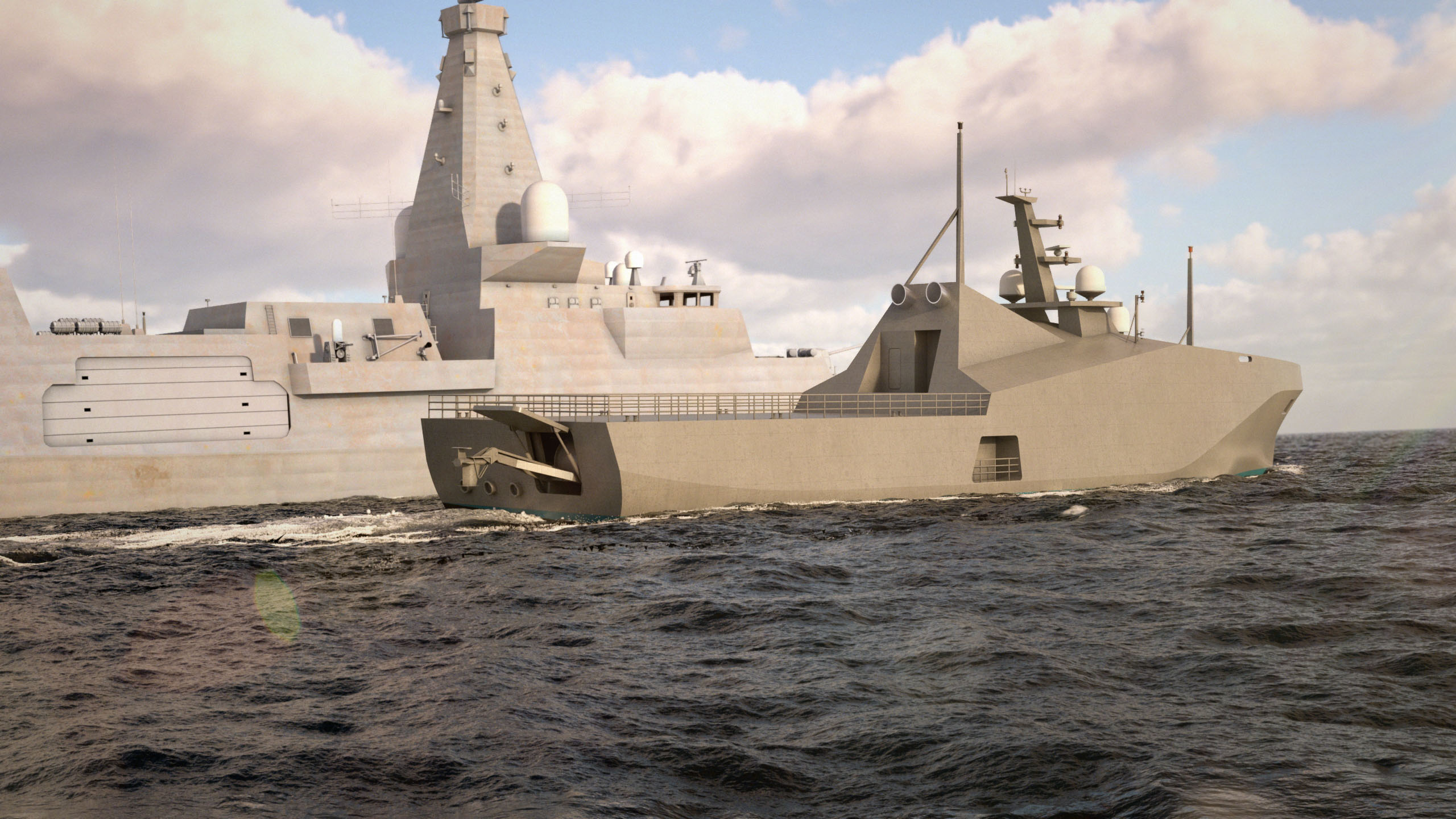
Oslo, Norway – A significant step towards strengthening maritime security in the North Atlantic and Arctic regions is underway, with Norwegian defence technology firm Kongsberg Maritime proposing an uncrewed anti-submarine warfare (ASW) vessel, provisionally named “Arctic Hunter.” The design, which aligns with the Royal Navy’s plans for a Type 92 Sloop, aims to provide continuous sensor coverage in challenging Arctic conditions, leveraging advanced autonomous capabilities and international partnerships.
The proposed vessel is designed for extended missions, capable of operating for up to 60 days at sea. Its primary role would be to enhance existing anti-submarine forces by providing persistent surveillance and detection capabilities, particularly from a support base north of the Arctic Circle. This region is increasingly vital due to its strategic shipping lanes, natural resources, and growing geopolitical significance. Kongsberg Maritime has stated that its underlying technology for uncrewed vessels has already received crucial approval from the classification society DNV and the Norwegian Maritime Authority, indicating a readiness for autonomous operations.
The “Arctic Hunter” concept envisions a streamlined construction process, with the vessels being built rapidly at commercial shipyards. Following this initial build, specialist defence partners would integrate military-specific systems. Key among these are UK-developed sonar technologies and secure military communications systems provided by Thales UK, highlighting a collaborative approach to defence innovation. Kongsberg Maritime also emphasizes the design’s inherent flexibility, noting that ample space has been allocated on board for the integration of additional systems as operational requirements evolve over time. The company has suggested that this adaptable design could appeal to other NATO and Joint Expeditionary Force (JEF) navies, facilitating broader interoperability and burden-sharing among allies.
The construction phase for the vessels is planned to take place at Balaena Maritime’s shipyard in Birkenhead, United Kingdom. Kongsberg Maritime anticipates that vessels could be delivered from this facility, ready for military fitting and subsequent operations, by the end of the current decade. This timeline underscores the urgency placed on enhancing maritime domain awareness in critical strategic areas. In a move to solidify these international collaborations, Kongsberg Maritime is expected to formalize technology cooperation agreements with both Thales UK and Balaena Maritime at the Atlantic Future Forum, scheduled to take place in Oslo this week.
The “Arctic Hunter” proposal directly addresses requirements outlined in the UK Ministry of Defence’s strategic plans. The Type 92 Sloop, a designation under which the Arctic Hunter would operate, first appeared in official Ministry of Defence documents in February 2025. These plans form part of the Royal Navy’s broader initiative to establish a comprehensive uncrewed anti-submarine network in the North Atlantic. Under this vision, the Royal Navy would own and operate these autonomous surface vessels in conjunction with Type 93 uncrewed underwater vehicles, creating a multi-layered detection and surveillance capability. While the strategic intent is clear, specific numbers of vessels or precise in-service dates for the Type 92 Sloop have not yet been formally announced.
The initiative also aligns with and supports the Lunna House agreement, a significant bilateral pact announced last December between Britain and Norway. This agreement designates the two nations as leaders within NATO for the development and deployment of autonomous systems in the High North. The Lunna House agreement also encompasses closer cooperation on the Type 26 frigates, a class of warships that both the Royal Navy and the Royal Norwegian Navy are set to operate, further deepening their defence ties. Lisa Edvardsen Haugan, CEO of Kongsberg Maritime, conveyed the strategic importance of this development in a company statement, emphasizing that “Atlantic security is the highest priority.” She described the “Arctic Hunter” as a “robust and practical answer to the growing need for submarine detection,” drawing on Kongsberg Maritime’s more than 50 years of experience designing vessels specifically for Arctic conditions.
Why This Matters
The proposed development and deployment of the “Arctic Hunter” represents a critical juncture in naval strategy and international defence cooperation, with far-reaching implications across several domains:
1. Geopolitical Significance of the Arctic and North Atlantic:The Arctic and North Atlantic are increasingly important strategic theaters. Melting ice caps are opening new shipping routes, while competition for natural resources and military influence in the region is intensifying, particularly with Russia’s renewed focus on its northern flank. The ability to monitor submarine activity in these areas is paramount for safeguarding critical infrastructure, maintaining freedom of navigation, and deterring potential adversaries. The “Arctic Hunter” aims to fill crucial surveillance gaps, providing persistent presence in an environment where manned vessels face significant operational constraints.
2. Advancement in Autonomous Naval Warfare:This initiative underscores a global shift towards uncrewed systems in defence. Autonomous vessels offer distinct advantages, including extended endurance, reduced risk to human personnel in hazardous environments, and potentially lower operational costs compared to traditional crewed platforms. The “Arctic Hunter” exemplifies how cutting-edge sensor technology and artificial intelligence are being integrated into practical naval applications, pushing the boundaries of what is possible in maritime domain awareness. Its approval by classification societies like DNV highlights the growing maturity and trustworthiness of such technologies.
3. Strengthening NATO and Allied Interoperability:The project is a tangible outcome of the Lunna House agreement, solidifying the UK and Norway’s leadership in autonomous systems within NATO. By fostering collaboration with partners like Thales UK and Balaena Maritime, it reinforces the alliance’s collective defence capabilities. The potential for the “Arctic Hunter” design to be adopted by other NATO and Joint Expeditionary Force navies would enhance interoperability and standardize critical surveillance tools across allied forces, presenting a more unified front against shared threats. This cooperation is vital for maintaining a robust deterrent posture in the Euro-Atlantic area.
4. Economic and Industrial Impact:The decision to build these vessels at Balaena Maritime’s shipyard in Birkenhead, UK, signifies a boost for the UK’s shipbuilding industry and its broader defence sector. Such contracts create high-skilled jobs, stimulate technological innovation, and strengthen the domestic industrial base. For Norway, it reaffirms Kongsberg Maritime’s position as a leading innovator in maritime technology, particularly in demanding environments like the Arctic, further cementing its role in international defence exports and cooperation.
5. Future of Anti-Submarine Warfare:The “Arctic Hunter” is a key component of the Royal Navy’s strategy to develop an uncrewed anti-submarine network, signalling a paradigm shift in how ASW will be conducted. By combining uncrewed surface vessels with uncrewed underwater vehicles (Type 93), navies can create a more comprehensive, resilient, and cost-effective surveillance grid. This network approach, rather than relying solely on individual crewed ships or aircraft, promises to enhance the detection and tracking of increasingly quiet and sophisticated submarines, thereby bolstering overall maritime security and deterrence for decades to come.