
In April 2024, as a Louisiana state legislative committee prepared to consider a bill, Richard Nelson, then the state’s revenue secretary, received a directive from Governor Jeff Landry. The newly elected Republican governor communicated the importance of passing the bill for an unstated purpose.
Mr. Nelson approached the bill’s author, Republican state representative Chris Turner, in Louisiana’s State Capitol building in Baton Rouge.
“‘Hey, we need to hijack your bill,’” Mr. Nelson reportedly told Mr. Turner. “‘I can’t really tell you what it’s about. All I can tell you is that it’s important.’”
Representative Turner consented to the change. The initial purpose of the bill, a tax rebate for fiber-optic equipment, was altered. By the time it was voted on by the state House of Representatives less than two months later, it had been amended to provide a tax rebate for equipment utilized in data centers.
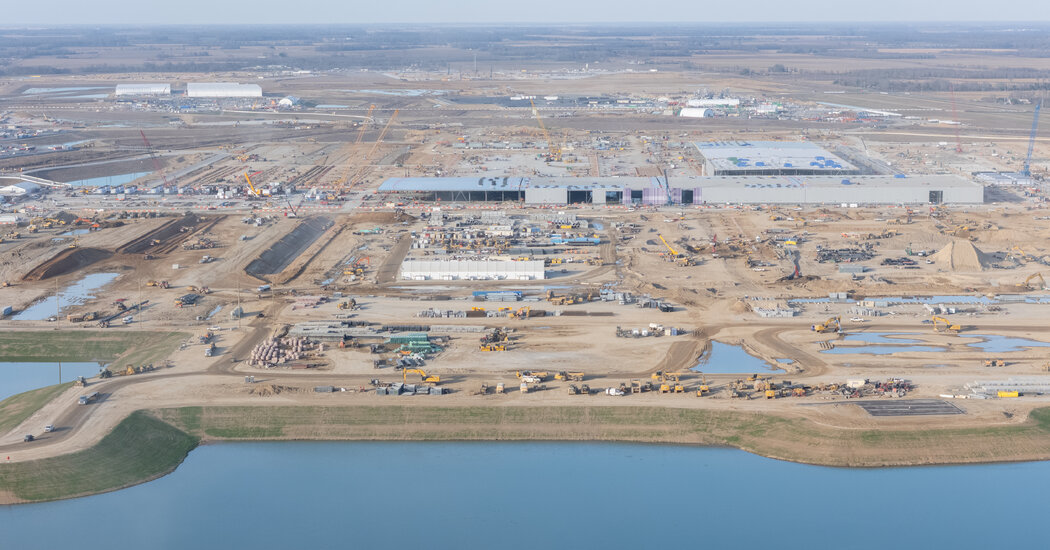
Representative Turner had been involved in facilitating what is described as Louisiana’s largest development: a $50 billion data center project for Meta, a major technology company. Projections indicate the facility could span approximately six square miles and consume energy equivalent to seven times the usage of New Orleans.
Meta sought the rebate for its data center development in Richland Parish, a rural agricultural area in northeastern Louisiana. The company also pursued an expedited agreement, and state officials expressed willingness to facilitate this process.
The amendment of the bill was a key component of a nine-month process during which Meta engaged in negotiations, reportedly aiming to mitigate local opposition and transfer financial risk. This account is based on interviews with over 40 individuals and an examination of corporate filings, tax records, property records, and meeting transcripts.
Confidentiality regarding the negotiations was reportedly maintained by most parties involved, including utility executives, representatives from the governor’s office, and a local elected official who was aware of the discussions with Meta and subsequently sold 300 acres of his personal property for the project site.
The resulting agreement structure reportedly positioned Meta with significant protections, with other involved parties assuming a majority of the potential financial risks. Furthermore, the terms included provisions allowing Meta to withdraw from the agreement years in advance of its partners.
These partners include Entergy Louisiana, the state’s largest power company, and Blue Owl, a Wall Street investment firm, according to public statements from the companies and investor documents. In the event Meta withdraws from the project due to a natural disaster, Blue Owl and its investors could face substantial debt obligations, potentially amounting to tens of billions of dollars. If Meta terminates its lease prematurely for other reasons, even with associated penalties, Entergy and its customers might incur increased costs.
The project’s risk profile is further heightened by its location within the Louisiana Delta flood plains and its scale, factors that reportedly led insurance companies to decline full coverage for the facility.
This examination reveals the methods employed by Meta, including confidentiality and rapid execution, to advance its large-scale project, named Hyperion. During a significant period of growth in artificial intelligence, Hyperion’s development approach could potentially serve as a model for other companies seeking to expedite the construction of substantial data centers while minimizing local opposition.
Major technology companies, including Google, Amazon, and Microsoft, are projected to invest over $1 trillion in data centers in the coming years. However, some communities have expressed concerns regarding these developments, citing issues such as water consumption, potential increases in electricity rates, construction-related disruptions, and noise pollution from large computing facilities operating continuously.
Between January and March, 75 data center construction projects, valued at an estimated $130 billion, experienced delays or halts due to local or political impediments, as reported by Data Center Watch, a project of the A.I. research firm 10a Labs.
While the tax incentives, private negotiations, and limited public involvement do not appear to violate existing laws, they prompt ethical considerations regarding the state’s engagement with Meta, according to Dane Ciolino, a professor of legal ethics at Loyola University New Orleans College of Law.
Ciolino stated that such practices affect “the basic, public confidence we need to have that state power is not being used to enrich insiders.”
Meta executives have indicated that Hyperion, projected to be the company’s largest data center, is essential for its artificial intelligence objectives and anticipate sustained investment in Louisiana for years to come.
Rachel Peterson, Meta’s head of data centers, affirmed the company’s commitment, stating, “We’re committed to the state, we’re committed to Richland Parish, and we’re committed to putting the best compute infrastructure in the world into that single location.”
Ashley Settle, a Meta spokeswoman, issued a statement asserting that characterizing the Louisiana agreement as ‘secret’ was inaccurate, noting that it “went through established state and local economic development processes and approvals,” with oversight provided by local tax and development boards.
Louisiana state officials have expressed satisfaction with the agreement, anticipating significant economic benefits. These include the creation of 1,000 permanent jobs, thousands of temporary positions, and tens of millions of dollars in tax revenue. Richland Parish has already seen a 2,000 percent increase in sales tax revenue since construction commenced, which contributed to a $50,000 bonus for some local teachers.
The long-term assessment of the agreement, including the extent of state concessions such as potential tax breaks up to $10 billion and the use of public land for a private enterprise, remains to be determined. State officials contend that the project’s outcomes will surpass the previous condition of the predominantly undeveloped farmland.
Why This Matters
This situation in Louisiana highlights several critical issues with broader implications for economic development, corporate strategy, and public governance. The increasing demand for data centers, driven by advancements in artificial intelligence, is leading to a surge in large-scale infrastructure projects across the globe. As companies like Meta seek locations for these energy-intensive facilities, the methods used to secure land, tax incentives, and regulatory approvals are coming under scrutiny.
For state and local governments, the promise of significant investment and job creation presents a compelling incentive, particularly in economically challenged regions. However, this pursuit of economic growth can also lead to complex negotiations where the long-term costs and risks, such as extensive tax breaks or environmental impacts (e.g., energy consumption, water usage, flood plain development), may not be fully transparent or equitably distributed. The shifting of financial risk from large corporations to public utilities or local investors raises questions about accountability and public protection.
Furthermore, the process by which such deals are struck – including limited public input, rapid legislative changes, and confidentiality clauses – can erode public trust and prompt ethical concerns about insider influence or the equitable application of state power. As communities grapple with the environmental footprint and operational demands of data centers, the transparency of these agreements becomes crucial. The Louisiana case may serve as a precedent or a cautionary tale, influencing how similar projects are pursued and negotiated in other jurisdictions worldwide, underscoring the ongoing tension between technological advancement, economic ambition, and the public interest.
Louisiana has secured a significant economic development project with Meta Platforms’ decision to construct a $10 billion data center, named Hyperion, in Richland Parish. The initiative, aimed at establishing one of the world’s largest data center complexes, was facilitated by a rapid and largely confidential negotiation process spearheaded by Governor Jeff Landry and supported by state utility provider Entergy.
Governor Landry formalized elements of the agreement through an executive order he termed “Louisiana Lightning Speed.” This order is designed to streamline the process for attracting large-scale projects, reflecting a broader strategy to position Louisiana as a hub for technology investment. The state has already seen interest from other tech giants, including Amazon, which has plans for a $12 billion data center in Louisiana’s northwest region.
In an interview, Governor Landry commented on the strategic approach, stating, “How did Mark Zuckerberg build a successful company? He didn’t do it by going out there and telling everybody what he was doing, what his game plan was.” This statement reflects the administration’s preference for discreet negotiations in attracting major corporations.
However, the economic benefits of the Hyperion project have not been uniformly distributed. In Delhi, a town located approximately 10 minutes from the Hyperion construction site, residents have experienced a sharp increase in housing costs. Delhi is a poor, majority Black community where the influx of construction workers has driven up demand for housing, leading to rising rents.
Tracy Williams, 41, described being evicted from her trailer park in July due to a rent increase from $250 to $1,495 per month. Given only a month’s notice, she was unable to afford the relocation of her trailer. She recounted watching as her home of over a decade was dismantled and destroyed. For three weeks following her eviction, Ms. Williams and her four children resided in their car. She expressed the sentiment, “Not everyone is making Meta money,” highlighting the disparity between the economic gains for some and the severe hardships faced by others.
Part I: The Pursuit of ‘Heaven and Earth’
The journey to secure the Hyperion project for Louisiana began in an unexpected manner. Just one year prior to Meta breaking ground on the site, a stretch of land predominantly comprising abandoned rice and soybean farms, Louisiana was not even among the states under consideration for the vast data center complex.
In January 2024, amid a global surge in artificial intelligence following the success of OpenAI’s ChatGPT chatbot, Meta initiated its search for a state willing to accommodate one of the planet’s largest data centers and offer a competitive deal.
The prospect of Louisiana as a contender emerged during a meeting at Copper Vine, a New Orleans bistro. Three Meta employees met with executives from Entergy, the state’s utility provider, to hear a pitch for the Richland Parish site. Phillip May, Entergy’s chief executive, presented Louisiana as a dark horse option, competing against states like Arkansas and Mississippi.
During the private dining room discussion, Mr. May affirmed Entergy’s capacity to supply the necessary power. He also highlighted the availability of state-owned land—1,440 acres in Richland Parish, acquired in 2006 for a failed Toyota plant bid, which sat largely vacant. He noted that Meta could also acquire an additional 2,300 acres nearby.
The region of Richland Parish was in significant need of economic development. Decades of declining profits from local farms, partly due to global trade agreements, had led to a substantial outflow of jobless residents. Previous attempts by the state to attract major manufacturers such as Jaguar, Mercedes, Hyundai, Daimler Chrysler, John Deere, and Caterpillar had been unsuccessful.
Initially, Meta informed Mr. May that Louisiana was not a viable option because it lacked a crucial incentive offered by other states: a sales tax exemption on data center equipment. Furthermore, as the state legislature was in a “nonfiscal” session, it was not scheduled to consider new tax exemptions until the following year.
“I asked them, ‘If we can get you that exemption this year, would we be a contender?’” Mr. May recalled. “They told me, ‘Yes.’”
Meta expressed a strong desire for the negotiations to remain confidential, a condition that utility executives and later state officials agreed was essential to prevent potential opposition from derailing the talks. Consequently, no public meetings were held to discuss the project before its official announcement. Meta also stipulated other requirements, including sufficient access to electricity, water, and land, with an emphasis on rapid progress.
The data center project presented a significant opportunity for Entergy, as Meta would become the largest customer in the utility’s 112-year history. Mr. May was confident that the newly elected governor, Jeff Landry, an ally of President Trump who had campaigned on promises to increase oil and natural gas drilling, would support a project aimed at revitalizing a struggling part of the state.
Later that January, Mr. May and other Entergy executives attended an event in Washington where Susan Bourgeois was sworn in as Louisiana’s new secretary of economic development. As Ms. Bourgeois concluded her remarks, Ed Jimenez, an Entergy vice president, approached her.
Ms. Bourgeois recounted Mr. Jimenez telling her, “We have a really, really significant project, and we have a shot. But in order to do this, we as a state are going to have to move heaven and earth.”
To facilitate the deal, Ms. Bourgeois and her team signed nondisclosure agreements (NDAs) with both Entergy and Meta.
During the negotiations, the state presented one key request: to expand the scope of the project. “We told Meta, the larger you can make it, the more aggressive we can be to get you what you need,” Ms. Bourgeois stated. While the project was initially estimated at $10 billion, she noted it was “always $10 billion with a wink,” implying potential for further investment.
Meta set an August deadline for the deal, a tight seven-month timeframe for a project that typically requires years of planning. (Meta later clarified that the August date was a “working target and suggestion.”) All parties involved mutually agreed to maintain strict secrecy throughout the process.
Governor Landry convened a meeting at the governor’s mansion for all relevant cabinet members. His chief of staff distributed a stack of NDAs alongside freshly baked peanut butter cookies. The governor addressed his cabinet, stating that “Louisiana has an opportunity for something very, very, very big.”
Why This Matters (2)
The Meta Hyperion data center project in Louisiana encapsulates several critical trends and policy considerations with far-reaching implications:
- Economic Development and Diversification: For Louisiana, a state historically reliant on the oil and gas industry, securing a $10 billion tech investment represents a significant step towards economic diversification. It signals an aggressive strategy to attract high-tech companies and potentially create jobs, moving beyond traditional sectors. However, the reliance on substantial tax incentives raises questions about the true net benefit to state coffers and the sustainability of such an approach.
- Governance and Transparency in Corporate Recruitment: The speed and secrecy with which this deal was negotiated—including the use of NDAs, the circumvention of normal legislative processes (due to a “nonfiscal session”), and the lack of public meetings—highlight a tension between expedient economic development and government transparency. This approach ensures rapid decision-making but can limit public input and scrutiny, leading to concerns about accountability and the democratic process.
- Social Equity and Community Impact: While large-scale projects bring economic promises, their benefits are often unevenly distributed. The situation in Delhi, where vulnerable residents face rent spikes and evictions, underscores the potential for “development” to exacerbate existing social inequalities. It raises important questions about affordable housing, community protection, and whether economic gains trickle down to those most affected by infrastructure changes. This highlights the need for comprehensive impact assessments and safeguards for local populations.
- The AI Boom and Infrastructure Demands: Meta’s Hyperion project is a direct consequence of the exponential growth in artificial intelligence, which demands immense computing power, energy, and cooling. This project illustrates the scale of infrastructure required to support the global AI revolution, including the need for vast tracts of land, reliable electricity, and water. It also brings into focus the environmental footprint of data centers and the planning challenges for communities to meet these demands.
- Precedent for Future Investments: Louisiana’s “Louisiana Lightning Speed” executive order and its success in attracting Meta (and Amazon) could set a precedent for how other states pursue similar tech investments. This aggressive model, combining significant incentives with streamlined processes, might become a blueprint for competitive corporate recruitment, intensifying the “race to the bottom” in tax breaks among states seeking to attract major industry.
**Louisiana Secures Major Data Center Deal Amid Secrecy and Transparency Concerns**
Louisiana has successfully attracted a massive $10 billion data center investment, initially codenamed “Project Delta” and later unveiled as “Hyperion,” which is understood to be a Meta Platforms facility. The deal, spearheaded by Governor Jeff Landry’s administration, promises significant economic benefits for the state, particularly in Richland Parish. However, the process has been marked by an unusual level of secrecy, extensive use of non-disclosure agreements (NDAs), and expedited regulatory actions, raising questions about transparency, public accountability, and potential conflicts of interest.
The negotiations for the Meta data center began swiftly after Governor Landry took office in January 2024. State officials, including Ms. Bourgeois, a key figure in the Governor’s economic development group, and her deputy Anne Villa, emphasized strict confidentiality. Ms. Bourgeois reportedly warned staff that leaks would result in immediate termination, stating, “leaks kill deals. If this leaks and we lose this deal, if I find out it was you, you’re fired. Are we clear?”
This approach led to over 50 government officials signing NDAs with Mr. Landry’s economic development office since his term began. Records obtained by Gulf States Newsroom and Type Investigations, and shared with The Times, indicate that such widespread use of NDAs was not common during the previous governor’s administration. While legal, experts have expressed concerns that using NDAs between public officials and private companies can hinder transparency, especially when dealing with projects of this scale and public impact.
To finalize the deal, one of Governor Landry’s initial priorities was securing a sales tax exemption for Meta. Given that the request came in the middle of a legislative session and Meta sought quick action, the administration opted to amend an existing bill. The chosen vehicle was a proposed rebate related to fiber-optic equipment, which was deemed sufficiently similar to data center infrastructure. Mr. Nelson, the state’s revenue secretary, who had previously been an outspoken critic of tax breaks, reportedly reversed his stance to support the measure. He explained his change of heart by stating, “To do these deals, you have to be competitive with neighboring states, and that’s what this bill did.”
Beyond the sales tax exemption, Meta also sought property tax incentives and upgrades to local infrastructure, specifically nearby roads. Despite these significant public concessions and investments, the negotiations were conducted without public disclosures, maintaining the high level of secrecy that characterized the entire process. Remarkably, Ms. Bourgeois noted that the deal never leaked during this sensitive phase.
Hyperion Is Revealed
The project, officially named Hyperion, was publicly unveiled by state officials in December 2024. The initial announcement valued the deal at $10 billion, though current plans suggest it could be even larger. Upon completion, the data center is projected to be a massive consumer of electricity, potentially using nearly half of the energy supplied by Entergy, the local utility, according to Mr. May.
Governor Landry openly acknowledged the unconventional secrecy surrounding the deal, defending it as a necessary strategy to secure such a substantial project. He remarked, “Transparency is a very interesting word. Because what we’ve seen is people have used the word transparency to basically kill deals like this.” Ms. Bourgeois echoed this sentiment, asserting that her team acted in Louisiana’s best interest. “I will never apologize for putting this state, and a parish like that, in a position to be able to enjoy the benefits of billions and billions of dollars,” she stated.
Further scrutiny has fallen on Republican state Senator Jay Morris, a native of Richland Parish, where the data center is being built. Senator Morris was a vocal proponent of Hyperion, co-authoring legislation that facilitated the state’s agreement with Meta, voting in favor of the data center tax rebate, and advocating for the project before the state’s power commission approved Entergy’s expansion plans. Last September, it was revealed that Senator Morris, who had signed an NDA with Entergy, sold 300 acres of co-owned land near the data center site to the energy company. Property filings confirm the transaction, although the sale price was not disclosed. Local real-estate appraiser Sherry Hough noted a dramatic increase in land value in the area, from $3,000 to $5,000 an acre before the announcement to more than $50,000 an acre subsequently. Senator Morris, whose transactions were first reported by Floodlight, confirmed the sales but denied any conflict of interest, attributing the project’s success to the tax incentives. “I’m probably more popular now in my district than I ever have been,” he added.
Final Hurdles and Financial Structures
Around the time of Senator Morris’s land sale, Meta faced critical items on its to-do list: securing power, insurance, and identifying financing mechanisms. In August 2025, Louisiana’s power commissioners voted 4 to 1 to approve the construction of three new gas turbines specifically to power the data center. Notably, the commission bypassed the standard procedure of having an independent administrative judge review whether the project was in the public’s best interest, a step typically taken in Louisiana but one that would have delayed the project. The commission was legally permitted to skip this review.
Under the terms of the agreement, Meta committed to paying for the maintenance and operational costs of the new turbines for half of their projected 30-year lifespan. Entergy, in turn, reserved the right to potentially increase energy prices for all its customers to cover the remaining costs. Davante Lewis, the lone dissenting power commissioner, expressed significant reservations about the rushed process. “I believe my most important job as a regulator is to trust, but verify,” he stated during the meeting, adding, “And the truth is there’s a lot of things that I just cannot verify at this moment.”
Local consumer groups have voiced concerns that if Meta were to withdraw from the project, some of the plant costs could ultimately fall onto ratepayers. However, Brandon Scardigli, an Entergy spokesman, countered these fears, asserting that customers were not being put at risk. He stated that Meta would face “substantial penalties” if it withdrew and suggested that the new power plants could eventually replace the state’s aging infrastructure even if Meta were to leave. The same day the power commissioners approved the new plants, Meta established a legal entity in Delaware named Beignet Investor LLC, a name referencing Louisiana’s popular deep-fried pastry. This entity is designed to allow Meta to transfer most of the project’s ownership, potentially insulating the tech giant from certain liabilities while still benefiting from the significant state incentives and infrastructure investments.
Why This Matters (3)
The Meta data center deal in Louisiana, while promising economic development, raises fundamental questions about governmental transparency, public accountability, and the long-term implications of attracting large-scale industrial projects. The extensive use of NDAs and the deliberate secrecy surrounding negotiations challenge the principles of open government, limiting public and media oversight of decisions that commit substantial public resources and create significant environmental and economic impacts. Critics argue that such practices can erode public trust and shield potential conflicts of interest from scrutiny.
Furthermore, the expedited legislative and regulatory processes, including the rewriting of tax bills and the skipping of independent administrative reviews for critical infrastructure, highlight the lengths to which states may go to secure major investments. This raises concerns about whether due diligence and consideration for broader public interest are adequately maintained when speed is prioritized. The financial arrangements for power, particularly Entergy’s right to potentially shift costs to other ratepayers, underscore the need for careful regulatory oversight to protect consumers from bearing unforeseen burdens.
Finally, the case of Senator Jay Morris, who voted for legislation benefiting the project and sold land to a key partner (Entergy) near the site, illustrates the delicate balance between public service and private financial interests. While he denies any conflict, the significant increase in his land’s value and his legislative actions raise important ethical questions about the integrity of public officials and the potential for personal gain from their positions. This deal thus serves as a critical case study for how states balance economic ambition with commitments to transparency, fair process, and ethical governance.
Massive Meta Data Center Project in Louisiana Sparks Economic Boom, Environmental Concerns, and Financial Scrutiny
RICHLAND PARISH, Louisiana – A colossal data center project by Meta Platforms, dubbed “Hyperion,” is transforming a rural stretch of Northeast Louisiana, bringing an unprecedented economic boom but also raising significant questions about environmental impact, public subsidies, and the long-term financial risks for the state and local communities. Initially estimated at $100 million, the project’s scale has ballooned to an anticipated $50 billion, demanding a new, dedicated power infrastructure and involving complex financial arrangements.
The venture, shrouded in secrecy until recently, has drawn both enthusiastic support from state officials and local residents hoping for economic revitalization, as well as sharp criticism from environmental groups and financial analysts concerned about the terms of the deal and its potential consequences.
The Deal’s Origins and Controversial Incentives
The journey of Hyperion began in 2021 under strict non-disclosure agreements, code-named “Project Hyperion” by Louisiana state officials. The negotiations, led by former Louisiana Economic Development Secretary Don Pierson, were designed to attract a major tech investment. Meta, the parent company of Facebook, Instagram, and WhatsApp, secured a substantial package of tax incentives, including a 30-year property tax exemption and a sales tax waiver, collectively estimated to save the company over $1 billion. State officials argue that these incentives are essential to attract such large-scale investments to a state with significant economic challenges.
Opponents, however, contend that these generous tax breaks deplete local and state coffers that could otherwise fund public services like schools, police, and infrastructure. Louisiana State Treasurer John Fleming criticized the property tax exemption as excessive, arguing that local parishes should be able to collect a fair share of revenue from such a massive industrial operation. He pointed to the deal’s structure, where a shell company effectively owns the data center, making it eligible for the exemption, as a loophole.
Despite these concerns, the Louisiana State Bond Commission, chaired by Governor Jeff Landry, approved the tax exemptions in February. Supporters, including Governor Landry, argue that the project generates significant revenue through sales taxes and job creation, outweighing the foregone property taxes. They point to the initial sales tax payment of $22.4 million in May as evidence of immediate financial benefits for Richland Parish.
Powering the Megaproject: Energy Demands and Environmental Impact
One of the most contentious aspects of the Hyperion project is its immense energy demand, primarily driven by Meta’s artificial intelligence (AI) ambitions. Data centers are notoriously power-intensive, and Hyperion is projected to require as much electricity as three major cities combined. To meet this need, Entergy, Louisiana’s largest utility, is embarking on a $14 billion expansion of its natural gas-fired power generation capacity. This includes the construction of ten new gas turbines, a significant increase from the initial plan for three, signaling a major pivot away from the utility’s earlier commitments to renewable energy.
Environmental groups, including Earthjustice, have vociferously opposed Entergy’s plan, arguing that it locks Louisiana into decades of fossil fuel reliance, exacerbating climate change and local air pollution. They contend that the state’s Public Service Commission failed to adequately scrutinize the deal and its environmental implications. Furthermore, critics raise concerns about “stranded assets” – the risk that these expensive gas plants could become economically unviable before the end of their operational life if energy policies shift towards cleaner sources, leaving ratepayers to bear the cost. Entergy and state officials counter that the new plants are necessary to ensure reliable power for the data center and other industrial growth, and that natural gas remains a viable bridge fuel.
Complex Financial Engineering and Risk Assessment
To mitigate its own financial exposure to the massive project, Meta structured a joint venture in October 2025 with Blue Owl, a private credit firm specializing in lending to companies with higher risk profiles. Blue Owl contributed $7 billion to the venture, with Meta adding $2 billion to several billion it had already invested. This partnership saw Blue Owl commit to owning Hyperion for 24 years, although Meta retains an option to exit the deal after just four years. Should Meta choose to withdraw, it would be liable for the difference between any outstanding debt and what a new tenant or owner would pay, a sum Blue Owl acknowledges would not be “costless” but remains impossible to quantify precisely.
Blue Owl financed its substantial investment by issuing approximately $27 billion in bonds, one of the largest private bond issues in history. Among the major institutional investors purchasing these bonds was PIMCO, a global investment management firm known for its work with large pension funds, including those for teachers. This intricate financial layering distributes risk across various entities, but also raises questions about the ultimate accountability should the project encounter unforeseen difficulties.
Further complicating the risk profile is the project’s location in a flood plain. Despite being built in an area that experienced significant flooding in 1927 and 2016, insurers were unwilling to provide full coverage for Hyperion due to its immense size and location. Project planners managed to secure up to $4 billion in insurance coverage. However, investor documents reveal a clause allowing Meta to walk away from its lease obligations without penalty if a natural disaster renders the data center inoperable for more than two years. Meta and Blue Owl have downplayed these concerns, asserting that tornadoes pose a greater risk than flooding, and that “there is no scenario” where such a massive project could be destroyed by a natural catastrophe.
Local Impact: Boom, Displacement, and Uncertainty
The arrival of Hyperion has dramatically reshaped Richland Parish, a region historically marked by poverty and a struggle to attract major investment. The construction phase has brought approximately 6,000 temporary workers into a parish of 20,000 residents, leading to an immediate economic surge. Hourly wages for contract workers hover around $40, property values have soared, and local businesses, including hotels in nearby Monroe, are experiencing unprecedented demand. Local officials and residents largely welcome the boom, seeing it as a long-awaited opportunity for job creation and community development.
However, this rapid transformation has also brought challenges. The influx of workers has strained local infrastructure and led to significant increases in housing costs. At least five trailer parks in Richland Parish have been repurposed or redeveloped for data center workers, often into “man camps” with upgraded amenities, driving out long-term residents. People like Ms. Williams, who lost her home in a trailer park, have been forced to relocate to other parishes, disrupting their lives and their children’s schooling. While some neighbors found employment with Meta, others left the area permanently, highlighting a growing concern about social equity and potential displacement within the economic development.
Louisiana Governor Jeff Landry envisions replicating this success across the state, aiming to create a “Silicon Bayou” where tech investments drive sustained growth. While Hyperion is expected to generate 1,000 permanent jobs, the construction of additional data centers could extend the current boom for years. Meta has also committed $1 billion to local infrastructure upgrades and $5 million for job training at a community college, alongside bonuses for local teachers. Yet, Delhi Mayor Jesse Washington voices a prevalent sentiment of uncertainty, questioning what will remain of the local communities once the temporary construction phase concludes and thousands of workers depart, a question for which “nobody really has an answer.”
Why This Matters (4)
The Meta Hyperion project in Louisiana is more than just a local story; it is a microcosm of global trends and challenges at the intersection of technology, energy, economics, and environmental policy. It highlights:
- The Insatiable Demand of AI: The project underscores the staggering energy requirements of advanced artificial intelligence and how the rapid expansion of AI infrastructure is driving unprecedented demand for electricity, often pushing utilities towards traditional, high-carbon power sources.
- The Future of Energy Infrastructure: It exemplifies the tension between immediate energy needs for economic growth and long-term climate goals. The decision to build ten new gas turbines for a single project illustrates a significant deviation from renewable energy pathways for some regions, raising questions about energy transition strategies and the potential for “stranded assets.”
- Public-Private Partnerships and Tax Incentives: The substantial tax breaks offered to Meta spark a crucial debate about the efficacy and fairness of such incentives. Do they genuinely benefit the public in the long run, or do they primarily subsidize profitable corporations at the expense of local services and taxpayer equity? This case provides a high-stakes example for policymakers globally.
- Economic Development vs. Social Equity: While bringing significant economic opportunities and jobs to historically underserved regions, large-scale industrial projects can also lead to social displacement, increased cost of living, and strain on local resources. The Hyperion project raises critical questions about ensuring equitable distribution of benefits and mitigating negative impacts on vulnerable communities.
- Risk Transfer and Financial Complexity: The intricate financial engineering involving private credit firms and bond markets demonstrates how major corporations mitigate risk, but also how public entities and pension funds can become indirectly exposed to the long-term viability of these ventures. The insurance challenges in a flood-prone area further highlight the complex risk landscape of modern infrastructure.
- Transparency and Governance: The initial secrecy surrounding “Project Hyperion” and the subsequent debates over tax exemptions and environmental approvals raise important questions about transparency in large public-private deals and the robustness of regulatory oversight.
As the global economy increasingly relies on data and AI, the choices made in places like Richland Parish, Louisiana, will set precedents for how societies balance technological advancement with environmental stewardship, economic fairness, and sustainable development.