
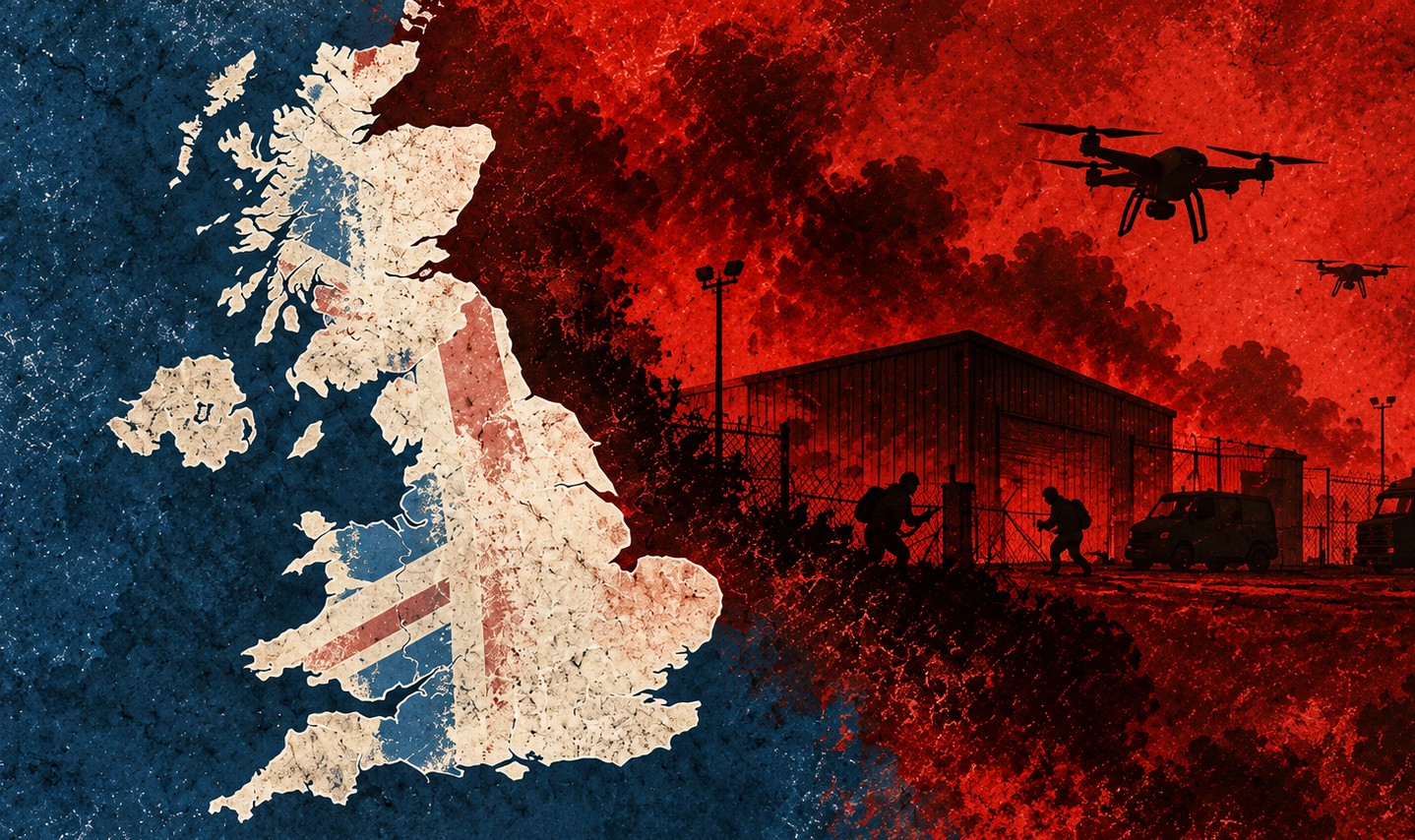
UK Counter-Espionage Efforts Intensify as State Threats Reach Post-Cold War High, Minister Confirms
The United Kingdom’s primary domestic intelligence agency, MI5, has seen its workload dedicated to countering state threats quadruple over the past decade, now demanding greater resources than at any point during the Cold War. This assessment was shared by Louise Sandher-Jones, Minister for the Armed Forces, in a statement to Parliament, responding to an inquiry concerning hostile activity directed against the UK.
The Minister’s remarks came in response to a question from Conservative MP Stuart Anderson, who sought an assessment of the levels of hostile activity below the threshold of armed conflict targeting the nation. Ms. Sandher-Jones directly quoted the Director General of MI5, emphasizing the significant escalation in such threats. These activities, she clarified, encompass a range of insidious tactics including espionage, deliberate political interference in democratic processes, acts of sabotage against vital infrastructure, sophisticated cyber operations, and the strategic use of proxy actors. Critically, these actions are often designed to remain precisely “below the threshold of armed conflict,” thereby avoiding a direct military response while still undermining national security and stability.
In detailing the government’s comprehensive approach, the Minister stated that the Ministry of Defence collaborates extensively with various other government departments, intelligence agencies, and international partners. This multi-agency strategy aims to proactively identify emerging threats, deter potential adversaries, and mount robust responses when such activities occur. She affirmed the government’s commitment to continuously reviewing the evolving threat landscape and maintaining a diverse array of capabilities specifically designed to safeguard the UK’s population, its democratic institutions, and its critical national infrastructure against these complex and persistent dangers.
The revelation regarding the heightened threat level arrives amid renewed scrutiny of Russian activities in close proximity to British territory. A notable incident occurred on November 9th, when approximately 140 aircraft operating over northern Europe and the North Sea experienced significant GPS interference. Dutch reporting subsequently linked this disruption to a Russian military cargo convoy, raising concerns about deliberate electronic warfare capabilities. Matt Western MP, who chairs the influential Joint Committee on the National Security Strategy, underscored the seriousness of such events this week, stating that these acts “are also test runs for offensive capabilities and testing preparedness,” suggesting a deliberate intent to gauge and challenge the UK’s defensive measures and readiness.
The parliamentary discourse surrounding foreign interference has grown increasingly stark. During a Commons debate on the subject last December, Calvin Bailey, now the Minister for Veterans and People, articulated a grave perspective, asserting, “This is more than interference—it is conflict.” Echoing this sentiment, Liberal Democrat MP James MacCleary characterized the situation as Britain being “under sustained attack” from hostile foreign states, highlighting the pervasive and continuous nature of these non-conventional forms of aggression. This legislative and political emphasis on state threats has been further formalized with the recent passage of a dedicated state threats bill, designed to enhance the UK’s legal framework for countering espionage and foreign interference. Furthermore, the existence of a specialized body, the Joint State Threats Assessment Team (JSTAT), tasked with evaluating and coordinating responses to hostile state activity, has been officially confirmed. Members of Parliament have consistently warned that Russia, Iran, and China collectively pose a “multi-faceted” and evolving threat to the United Kingdom, necessitating a vigilant and adaptive national security posture.
Why This Matters
The confirmed escalation of state threats against the United Kingdom, reaching levels unprecedented since the Cold War, carries profound implications for national security, economic stability, and democratic integrity. Understanding “why this matters” is crucial for appreciating the challenges facing the UK and its allies in the contemporary geopolitical landscape.
Firstly, the nature of these “below the threshold of armed conflict” activities – encompassing espionage, cyberattacks, political interference, and sabotage – signifies a fundamental shift in warfare. It means that adversaries are actively seeking to undermine the UK not through conventional military invasion, but through covert, insidious means designed to erode national resilience from within. This can lead to the theft of vital intellectual property, disruption of critical national infrastructure (such as energy grids, transport networks, and financial systems), and the manipulation of public discourse and elections, all of which directly threaten the functioning of society and the economy.
Secondly, the comparison to the Cold War highlights the scale and sustained nature of the challenge. During the Cold War, the focus was largely on conventional military threats and ideological confrontation. Today’s threats are often more amorphous, technologically advanced, and originate from multiple, diverse state actors (Russia, China, Iran, among others). The quadrupling of MI5’s state threat workload indicates that these adversaries are not merely opportunistic but are engaging in persistent, sophisticated campaigns. This necessitates a significant diversion of resources, expertise, and intelligence capabilities, potentially impacting other areas of national security work.
Thirdly, the incident of GPS interference near the UK is a tangible example of how these threats can impact daily life and critical operations. Modern society relies heavily on GPS for navigation, logistics, emergency services, and even financial transactions. Deliberate interference demonstrates a capacity to disrupt essential services and potentially create chaos or even endanger lives, serving as a “test run” for more significant attacks. Such actions also raise questions about the UK’s preparedness and resilience against electronic warfare.
Finally, the parliamentary consensus, reflected in the passage of the state threats bill and the establishment of JSTAT, underscores the urgency and seriousness with which the UK government views these challenges. It signifies a national commitment to strengthening legal frameworks, intelligence coordination, and defensive capabilities. For citizens, this means a greater need for vigilance against misinformation and cyber threats, and an understanding that national security extends beyond traditional military defense to include the protection of information, democracy, and critical services in an increasingly complex and contested global environment.