
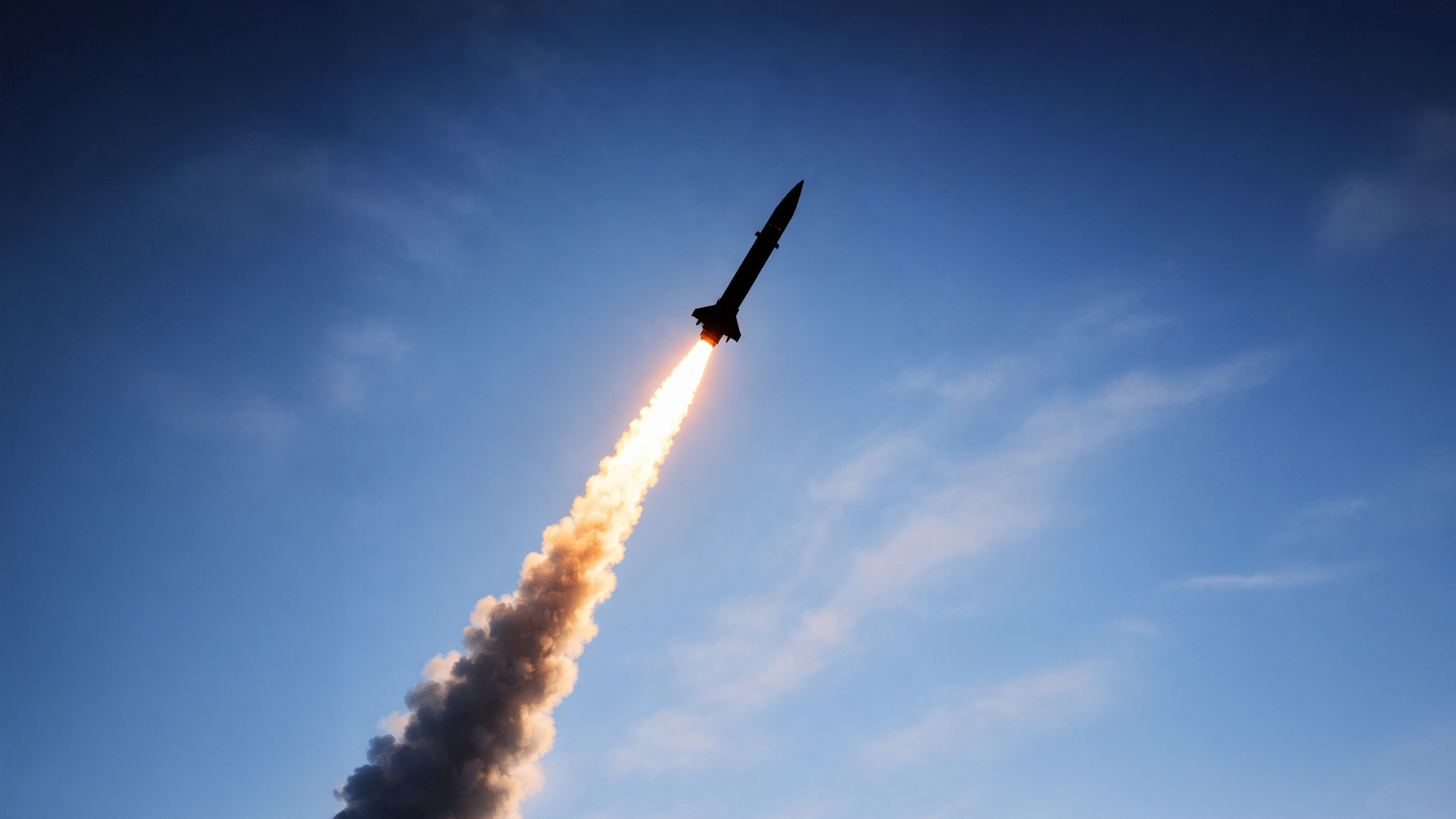
On the morning of July 30, a Russian missile, identified by Polish authorities as a Kh-101 cruise missile, entered Polish airspace and subsequently crashed in an undeveloped field near the village of Tarnawa-Kolonia in Lublin province. The incident occurred approximately 100 kilometers from the Ukrainian border amidst one of Russia’s most extensive overnight aerial assaults on Ukraine in recent weeks, prompting a swift activation of air and ground defenses by Poland and NATO.
The impact in Tarnawa-Kolonia left a crater approximately 10 meters wide, with debris scattered across the surrounding field. Local residents reported hearing a significant explosion around 4:00 AM local time, which was powerful enough to shake the windows of their homes. Sirens briefly sounded in nearby Lublin following the event.
Polish authorities detailed the sequence of events leading to the crash. The Polish Operational Command reported detecting an object approaching the border at 3:29 AM local time. This object reportedly came within five kilometers of Polish airspace before turning back eastward towards Ukraine. Ten minutes later, at 3:40 AM, a separate unidentified object was tracked moving westward inside Polish airspace. This prompted the immediate scrambling of a standby F-16 fighter jet. However, the object disappeared from radar six minutes later, before the jet could achieve a positive identification. Subsequently, a Polish Mi-24 helicopter crew located the probable impact site.
Visiting the site later that Thursday afternoon, Polish Prime Minister Donald Tusk addressed journalists, stating, “From the analysis of most of the traces, the recovered fragments point to a Russian Kh-101 missile.” He further indicated that there was “no reason to think the target was Poland,” suggesting the missile was likely an unintended incursion. Tusk also noted that Ukrainian fighter pilots had actively attempted to intercept missiles approaching the Polish border during the concurrent large-scale Russian attack on Ukraine.
The incident triggered a robust response from Poland and NATO. Following a conversation with Prime Minister Tusk, Dutch Prime Minister Mark Rutte, writing on X (formerly Twitter) on July 30, affirmed, “Discussed with @donaldtusk the violation of Poland’s airspace by a Russian missile. Poland and #NATO activated their air and ground defences. We stand in solidarity with Poland and will continue to strengthen our readiness to defend against any threat, including missile attacks.” Rutte characterized the event as “yet another reckless act by Russia and a dangerous consequence of its war against Ukraine,” also condemning the “deadly strikes across Ukraine.”
Colonel Martin O’Donnell, a spokesman for NATO’s European headquarters, confirmed the alliance’s response. He stated that General Alexus Grynkewich, NATO’s Supreme Allied Commander Europe (SACEUR), had engaged with Poland’s chief of defense and “underlined that NATO will continue to take all necessary measures to defend NATO territory.” O’Donnell elaborated on the activated defenses: “In response to a Russian missile of currently unknown type that entered Polish airspace and later crashed into Polish territory, one of many missiles fired by Russia at Ukraine overnight, NATO and Poland activated their air and ground defences.” The deployed assets included “two NATO fighter jets, which were Polish F-16s, a NATO Multinational Multi-Role Tanker Transport Unit Airbus A330 refuelling aircraft, a Polish Saab 340 Airborne Early Warning aircraft, and a Polish Mi-24 helicopter.”
Reports also indicated that NATO forces were prepared to intercept the missile. CNN reported that these forces were “seconds from shooting the missile down” before assessing that it would crash on its own. Prime Minister Tusk corroborated this during an emergency government meeting, with his office confirming, “we were prepared to shoot down the missile if it had continued its flight.”
The incursion into Polish airspace occurred during a major Russian offensive targeting Ukraine overnight into Thursday. This extensive barrage resulted in at least eight civilian deaths, including children, and injured more than 50 people, with casualty figures continuing to rise throughout the day. Russia’s defense ministry asserted that it had conducted a “massive strike” using long-range precision weapons launched from land, air, and sea, alongside attack drones, against what it termed “military sites” in Ukraine. As of the time of reporting, Moscow had not issued any public comment regarding the missile’s landing in Poland.
Ukrainian President Volodymyr Zelensky attributed the civilian casualties to insufficient or delayed air defense supplies, reiterating his appeals for more interceptors as Ukraine faces a critical shortage of Patriot munitions. Notably, President Zelensky had met with Prime Minister Tusk in Lublin, not far from the subsequent crash site, just the day before the incident as he was returning home.
Ukrainian Foreign Minister Andrii Sybiha was among the first to publicly identify the weapon as a Russian Kh-101 cruise missile. He emphasized the broader implications, stating, “This is yet another clear demonstration that strengthening Ukraine’s air defense now is urgent and serves as a guarantee for the protection of the entire Euro-Atlantic community.” Sybiha urged for immediate decisions to bolster Ukrainian air defenses.
Poland has experienced repeated incursions into its airspace since the full-scale invasion of Ukraine began in February 2022. In previous incidents, such as one in September 2023 when Russian drones crossed into Polish airspace, Warsaw invoked Article 4 of the North Atlantic Treaty, which triggers formal consultations among NATO allies. On this occasion, Prime Minister Tusk convened an emergency coordination group and engaged with other European leaders. He reported that all had declared full solidarity and readiness to assist, but clarified that Poland had not invoked Article 4 while the investigation into the missile incident was ongoing. The Kh-101 itself is an air-launched cruise missile, typically carried by Russian long-range aviation, and has been routinely employed against Ukrainian targets, including strikes on western regions bordering Poland.
Despite the recent incident, Prime Minister Tusk reaffirmed Poland’s unwavering support for Ukraine. He indicated that Poland would consider providing further aid, including the potential provision of additional Patriot air defense systems, highlighting the ongoing commitment to Ukraine’s defense capabilities.
Why This Matters
The crash of a Russian Kh-101 cruise missile on Polish territory carries significant implications for regional security, the ongoing conflict in Ukraine, and the cohesion of the NATO alliance. While Polish authorities currently assess that Poland was not the intended target, this incident underscores several critical aspects of the current geopolitical landscape.
Firstly, it represents a direct violation of NATO airspace and sovereign territory by a Russian munition. Regardless of intent, such an event poses an inherent risk of escalation, particularly given the hair-trigger nature of air defense systems. The fact that NATO forces were reportedly “seconds from shooting down” the missile before it crashed highlights the delicate balance and rapid decision-making required in such high-stakes scenarios. Any miscalculation or failure in communication could have led to a far more dangerous confrontation, potentially invoking NATO’s collective defense clause, Article 5, which states that an attack on one member is an attack on all.
Secondly, the incident vividly illustrates the “spillover” effects of the war in Ukraine. As Russia continues its extensive aerial bombardments against Ukrainian cities and infrastructure, the risk of munitions unintentionally straying into neighboring countries, especially those sharing long borders with Ukraine, remains constant and elevated. This places immense pressure on border nations like Poland to maintain heightened vigilance and robust air defense capabilities, not only for their own protection but also to contribute to regional stability.
Thirdly, the event reinforces the urgent calls from Ukraine for more comprehensive and advanced air defense systems. Ukrainian Foreign Minister Sybiha’s immediate reaction, linking the incident to the necessity of strengthening Ukraine’s air defenses, reflects the belief that a more robust Ukrainian air shield would reduce the likelihood of such incidents occurring in the first place. Enhanced Ukrainian air defense capabilities would serve as a buffer, offering a layer of protection not just for Ukraine, but also for its Western neighbors, by intercepting Russian missiles further from NATO borders.
Finally, the measured response from Poland and NATO, while activating defenses, also demonstrates a strategic effort to avoid unnecessary escalation while simultaneously sending a clear message of solidarity and readiness. Prime Minister Tusk’s decision not to invoke Article 4 immediately, opting instead for ongoing investigation and coordination, suggests a careful and deliberate approach to managing the crisis. However, the activation of numerous air and ground assets, coupled with strong condemnation from NATO leaders, signifies the alliance’s unwavering commitment to defending its territory against any threat emanating from the conflict in Ukraine.
This event serves as a stark reminder of the unpredictable and dangerous consequences of the ongoing war, emphasizing the need for continued vigilance, robust defensive capabilities, and coordinated diplomatic efforts to de-escalate tensions and prevent broader regional conflict.