
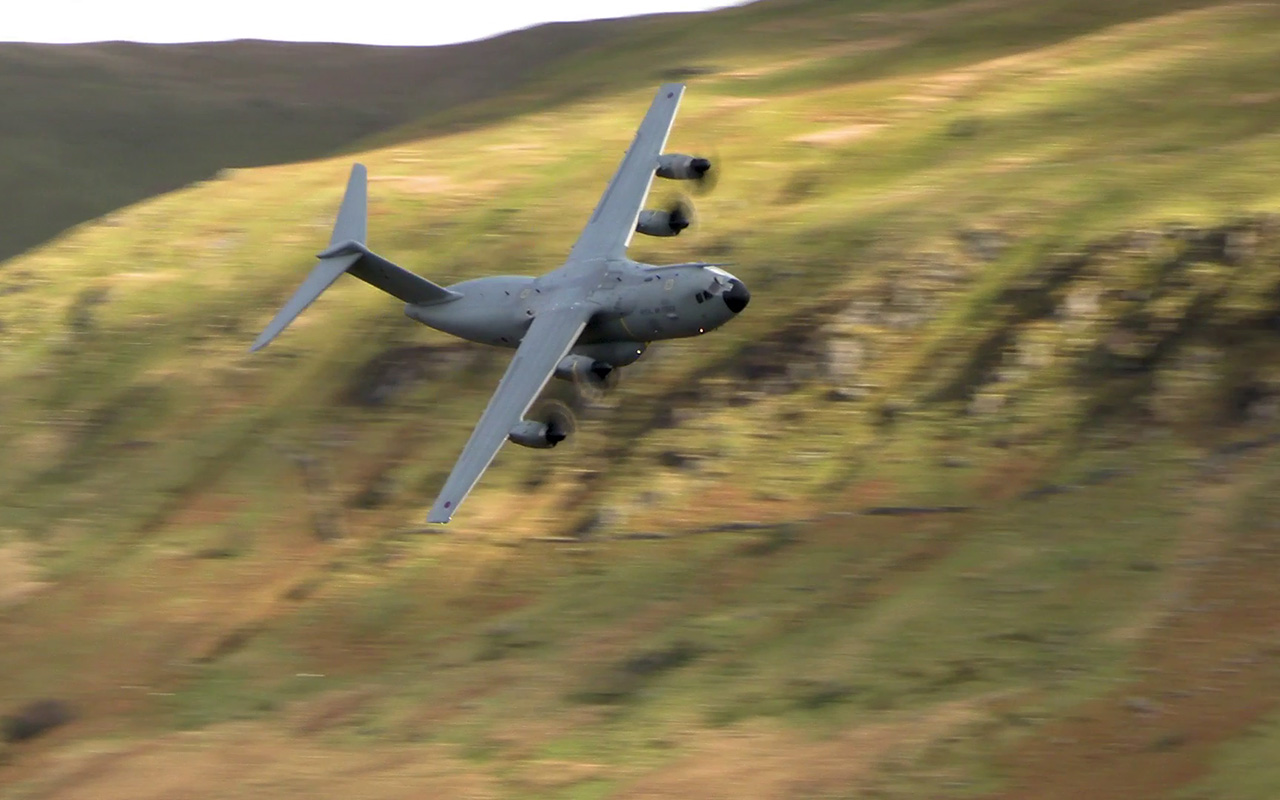
UK Ministry of Defence Extends Airbus A400M Support Contract to Boost RAF Fleet Availability by 30%
The United Kingdom’s Ministry of Defence (MoD) has announced a significant contract extension with Airbus for the Royal Air Force’s (RAF) A400M Atlas transport aircraft fleet. This deal, valued at just under £190 million, aims to substantially enhance the daily operational readiness of the RAF’s strategic and tactical airlift capabilities. The stated objective is to increase the number of mission-capable A400M aircraft available each day from the current ten to thirteen by the end of 2027, representing a projected 30 percent improvement in fleet availability for a platform critical to national and international defence operations.
The MoD confirmed that this extension will also sustain more than 350 highly skilled jobs across the United Kingdom. Airbus will continue to provide essential maintenance, repair, and support services from its dedicated UK Support Centre, strategically located at RAF Brize Norton in Oxfordshire, which serves as the main operating base for the entire Atlas force.
The contract details indicate an award decision date of September 8, with the estimated contract dates running from October 1, 2024, to April 30, 2029. A provision for a possible twelve-month extension is included, allowing the contract to potentially run until April 2030 if required to ensure continuous in-service support for the fleet. The procedure utilized for this award was a direct procurement under the defence and security special regime, a mechanism often employed for highly specialized defence capabilities where competitive tendering may not be feasible or in the national interest due to intellectual property, security concerns, or the unique nature of the existing supplier relationship.
The primary supplier listed for the contract is Airbus Military Sociedad Limitada, registered in Getafe, near Madrid, Spain. This entity trades in Britain as Airbus Defence and Space Limited. Furthermore, Airbus Military UK Limited, based in Carterton, Oxfordshire – the town directly adjoining RAF Brize Norton – is recorded as an associated organization, underscoring the collaborative and localized nature of the support operation. The geographical scope of the contract covers both the United Kingdom and Spain, reflecting the international nature of Airbus’s operations and supply chain.
The A400M Atlas fleet, comprising twenty-two aircraft, has been in service with the Royal Air Force since deliveries began in 2014. Designed as a multi-role military transport aircraft, the A400M is capable of performing both tactical airlift operations, such as short-field landings, paradropping troops and cargo into austere environments, and strategic airlift, involving long-range heavy lift missions across continents. The aircraft is also equipped for air-to-air refuelling, significantly extending the reach and endurance of other RAF aircraft, including fighter jets and other transport assets. However, like many sophisticated, newly developed platforms, the A400M program has faced persistent challenges globally since its inception, particularly concerning initial operating capabilities and, critically, fleet availability across various operating nations. For the RAF, availability has been a more consistent concern than the inherent capabilities of the aircraft itself.
The importance of improving A400M availability has been significantly amplified following the controversial withdrawal of the RAF’s C-130J Hercules fleet in 2023. The Hercules, a venerable workhorse of tactical transport for decades, possessed unique capabilities, particularly for specialist operations and access to smaller, unpaved airstrips, which critics argued were not fully replicated by the A400M at the time of its retirement. This strategic decision, driven by budgetary and modernization considerations, drew considerable criticism from defence analysts, parliamentarians, and former military personnel, who warned of potential gaps in the UK’s airlift capabilities and an over-reliance on a smaller number of platforms. The departure of the C-130J left the A400M Atlas and the larger C-17 Globemaster III as the primary heavy and tactical airlift assets for the UK, placing increased pressure on the A400M fleet to shoulder a wider range of transport tasks and maintain a high operational tempo.
Therefore, moving the daily figure of mission-capable aircraft from ten to thirteen represents a more profound change than the raw numbers might suggest. For a fleet of twenty-two aircraft, this improvement signifies a crucial shift from approximately half of the fleet being usable to closer to three-fifths. Operationally, this translates into greater flexibility for the RAF to undertake concurrent missions, respond more rapidly to emergencies, and deploy personnel and equipment globally without compromising overall fleet readiness. The £190 million investment with Airbus, as the original equipment manufacturer, is specifically designed to address the complex interplay of factors affecting availability, including comprehensive spare parts management, optimized maintenance scheduling, and the provision of highly specialized technical support, leveraging the manufacturer’s deep expertise and supply chain to optimize fleet performance and turnaround times.
From an economic standpoint, the sustenance of over 350 jobs underscores the broader economic benefits of defence investment. These roles are typically high-tech and specialized, contributing significantly to the UK’s industrial base and fostering expertise in advanced aerospace engineering and logistics. Strategically, a more available A400M fleet enhances the UK’s ability to meet its NATO commitments, support United Nations peacekeeping operations, conduct humanitarian relief efforts, and respond rapidly to emerging global crises, thereby bolstering the nation’s defence posture and its capacity to act as a global partner.
Why This Matters
This significant contract extension for the Royal Air Force’s A400M Atlas fleet carries substantial implications for the United Kingdom’s national security, operational readiness, and strategic influence on the global stage.
National Security and Operational Readiness:At its core, this agreement directly addresses a critical aspect of military capability: the ability to deploy forces and equipment rapidly and efficiently. Increasing the number of mission-capable A400Ms from ten to thirteen by 2027 means that the RAF will have a significantly more robust and flexible airlift capacity. This translates into an enhanced ability to respond to domestic emergencies, support international humanitarian aid missions, and crucially, project military power and sustain operations far from home. In an increasingly complex global security environment, reliable air transport is fundamental to troop deployment, resupply of forward operating bases, and the rapid movement of specialist equipment, directly contributing to the UK’s defence posture.
Strategic Capability and Global Reach:The A400M Atlas is a cornerstone of the UK’s strategic airlift capability, particularly after the retirement of the C-130J Hercules. Its multi-role capabilities, including tactical airlift, heavy lift, and air-to-air refuelling, mean that a more available fleet enhances the RAF’s ability to operate independently or as part of coalition forces. This improved readiness underpins the UK’s commitments to NATO and other allies, reinforcing its role as a capable international partner. Whether it’s deploying forces for deterrence operations, supporting allied exercises, or providing logistical backbone to peace enforcement missions, a healthier A400M fleet ensures the UK can deliver on its strategic objectives.
Economic Impact and Industrial Base:Beyond the immediate operational benefits, the contract sustains over 350 high-skilled jobs in the United Kingdom. This investment supports the UK’s defence industrial base, fostering expertise in aerospace engineering, maintenance, and logistics. Such contracts are vital for maintaining a skilled workforce, driving innovation within the defence sector, and contributing to regional economies. It demonstrates continued investment in UK-based support infrastructure, which has long-term benefits for defence capabilities and national prosperity.
Taxpayer Value and Defence Spending:For the UK taxpayer, a £190 million investment represents a significant allocation of public funds. The objective of this spending is to ensure that existing military assets are optimally utilized and available when needed, thereby maximizing the return on investment for the original procurement of the A400M fleet. By addressing persistent availability issues, the MoD aims to ensure that the RAF can extract the full operational value from its modern transport aircraft, justifying the ongoing expenditure on sustainment and support. It reflects a commitment to maintaining a capable and effective armed force, ensuring that the nation’s defence assets are fit for purpose.