
UK Royal Navy Advances Drone Strike Capabilities with Carrier Launches
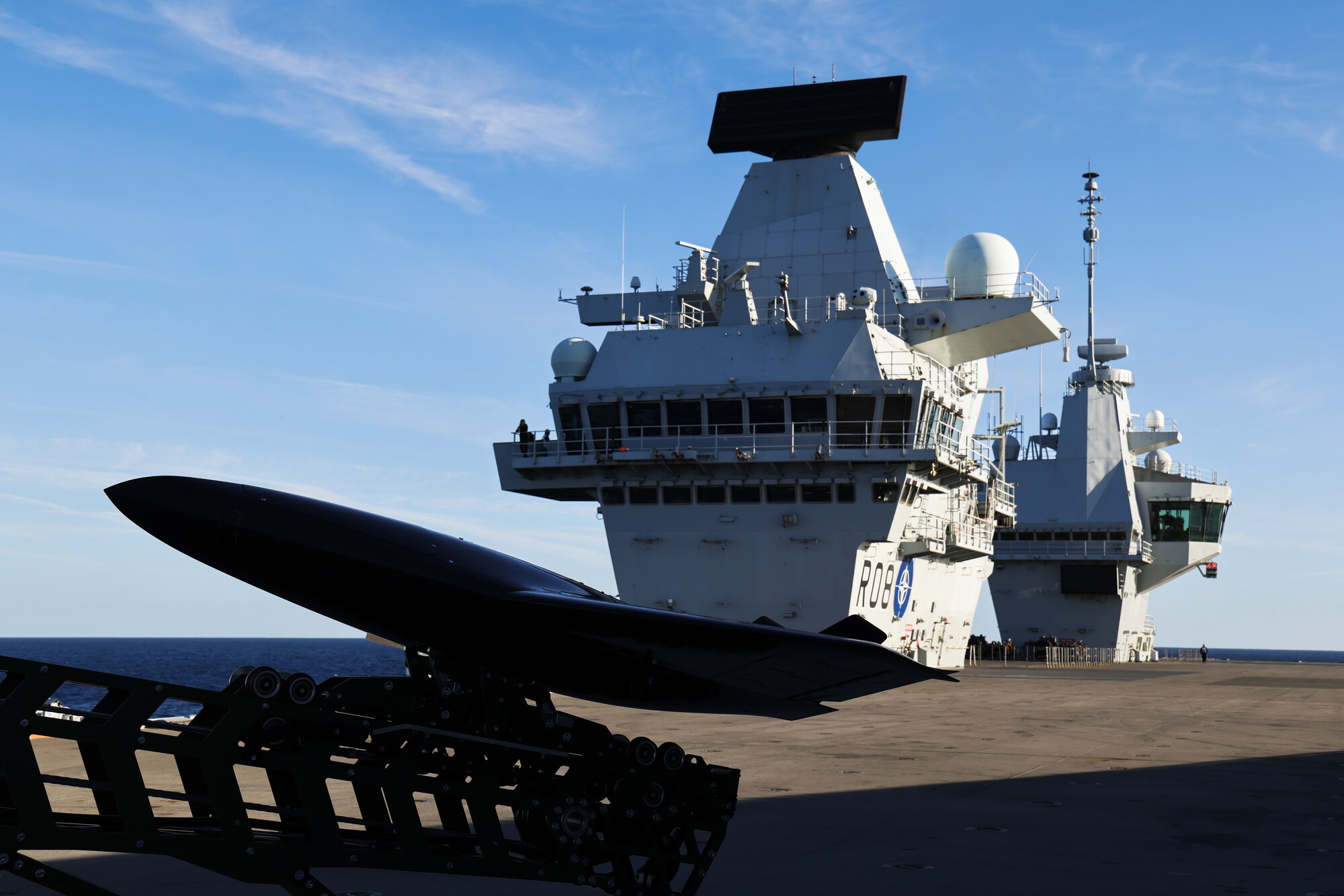
In a significant step towards integrating uncrewed systems into its operational doctrine, the United Kingdom’s Royal Navy successfully launched a series of “Nyan” strike drones from its flagship aircraft carrier, HMS Queen Elizabeth, during Exercise Neptune Reach B in October. These trials form a crucial part of Project Vantage, an ambitious initiative designed to accelerate the testing and deployment of maritime strike drones through collaborative efforts involving the Royal Navy, British Army, and Royal Air Force.
The Nyan, a compact uncrewed aircraft featuring a 2.9-meter wingspan, is the product of Callen-Lenz, a BAE Systems subsidiary known for its expertise in autonomous systems. Its recent deployment from the deck of a Queen Elizabeth-class aircraft carrier marks a pivotal moment in the UK’s pursuit of advanced maritime warfare capabilities.
Matt Foster, CEO of BAE Systems’ Callen-Lenz, emphasized the broader implications of these successful operations. “The effective operation of Nyan from HMS Queen Elizabeth provides yet another clear demonstration of how this capability can support future force development and the ongoing evolution of the Royal Navy’s vision for a hybrid navy,” Foster stated. He further added, “As operational requirements continue to develop, we are steadfast in our investment in uncrewed systems that can offer affordable, scalable combat mass and enhance the impact of existing capabilities within the fleet.” This highlights a strategic shift towards leveraging cost-effective, remotely operated systems to augment traditional naval assets.
Lieutenant Commander David Burton, a Capability Sponsor for the Royal Navy, underscored the strategic importance of Exercise Neptune Reach B. “This exercise represents a critical milestone in the Royal Navy’s understanding of how Maritime One-Way Effectors will contribute to future Carrier Strike operations,” Burton explained. The term “One-Way Effectors” refers to uncrewed systems designed for specific, often singular, missions that may culminate in their expenditure, such as reconnaissance, targeting, or strike. “Through Project Vantage, we are generating the essential evidence, operational insight, and confidence required to inform future capability decisions, while simultaneously supporting the wider Defence One-Way Effector programme across all branches of the armed forces.”
Burton elaborated on the practical benefits of the carrier-based trials: “Conducting these activities from HMS Queen Elizabeth allows us to comprehensively explore how uncrewed strike drones might operate cohesively alongside both crewed and other uncrewed capabilities within a complex maritime task group. The lessons identified from these exercises will directly contribute to our Maritime Aviation Transformation strategy and our overarching vision for a ‘Hybrid Navy’ – a force that seamlessly integrates conventional platforms with advanced autonomous systems to deliver greater operational choice and effect.” The concept of a Hybrid Navy signifies a future where human-crewed vessels and aircraft work in tandem with a diverse array of autonomous drones, enhancing flexibility, reach, and survivability.
These launches from HMS Queen Elizabeth follow earlier sea trials of the Nyan drone. The type’s inaugural launch at sea took place earlier this year from the experimental vessel XV Patrick Blackett, off the south coast of England. That exercise saw personnel from the British Army’s 26 Regiment Royal Artillery and the Royal Navy’s 744 Naval Air Squadron participate, laying the groundwork for the more extensive carrier-based operations. The cross-service utility of the Nyan was further demonstrated in May when the British Army utilized the same drone and launcher system during Exercise Spring Storm in Estonia, showcasing its adaptability across different operational environments.
The procurement of the Nyan drones by the Ministry of Defence underscores their immediate operational relevance. In February, Callen-Lenz was awarded a contract worth approximately £5 million to supply Nyan systems for UK forces deployed on Operation Cabrit, the UK’s enhanced forward presence in Estonia. The Ministry of Defence highlighted Nyan as the sole “off-the-shelf product of its type” currently listed on the Military Aircraft Register, indicating its proven readiness and compliance with military aviation standards for immediate deployment.
Why This Matters
The successful integration of Nyan strike drones onto HMS Queen Elizabeth represents a critical advancement for the UK’s military capabilities and holds significant implications for the future of naval warfare globally. Firstly, it signals a tangible shift towards a “Hybrid Navy” concept, where traditional crewed platforms are augmented by autonomous systems. This paradigm offers substantial advantages: drones can undertake missions deemed too risky for human pilots, extend the reach of reconnaissance and strike capabilities, and provide “scalable combat mass” at a potentially lower cost than crewed alternatives. This approach enhances operational flexibility and resilience in contested environments.
Secondly, the multi-service collaboration evident in Project Vantage (Royal Navy, British Army, Royal Air Force) and the participation of units like 26 Regiment Royal Artillery and 744 Naval Air Squadron highlight a unified national effort to accelerate military technological adoption. This cross-domain synergy is vital for developing integrated warfare concepts that are responsive to evolving threats. The Army’s use of Nyan in Estonia, for example, demonstrates its potential beyond maritime roles, possibly informing future land-based strike or reconnaissance applications.
Furthermore, the designation of Nyan as an “off-the-shelf product” on the Military Aircraft Register and the £5 million contract for Operation Cabrit underscore a pragmatic and accelerated approach to procurement. Rather than embarking on lengthy and expensive bespoke development cycles, the UK is leveraging mature, readily available technology to address immediate operational needs. This strategy allows for quicker fielding of advanced capabilities to forces deployed abroad, strengthening deterrence and defense postures, particularly in regions of strategic importance like Eastern Europe.
Finally, these developments position the UK as a leading innovator in autonomous warfare systems. As nations worldwide grapple with the challenges and opportunities presented by AI and drone technology, the Royal Navy’s embrace of uncrewed strike capabilities from its most advanced warships sets a precedent. It contributes to the global discourse on the ethics, effectiveness, and strategic implications of autonomous weapons, pushing the boundaries of what is possible in modern military operations and potentially influencing doctrine and procurement strategies for other naval powers.