
Royal Navy Reports Significant Increase in Monitoring of Russian Vessels Amid Sanctions Enforcement Efforts
The Royal Navy has reported a significant 25% increase in its activations to monitor Russian vessels operating in waters around the United Kingdom during the first eight months of 2026, compared with the same period last year. This heightened activity saw British warships dispatched on four separate operations involving Russian vessels in August alone, underscoring an intensified focus on maritime surveillance.
The surge in monitoring coincides with repeated transits by Russian warships, auxiliary vessels, and sanctioned commercial ships through strategically vital waterways such as the North Sea and the English Channel. These movements have prompted a robust response from the UK’s naval forces, often involving multiple assets in coordinated surveillance operations.
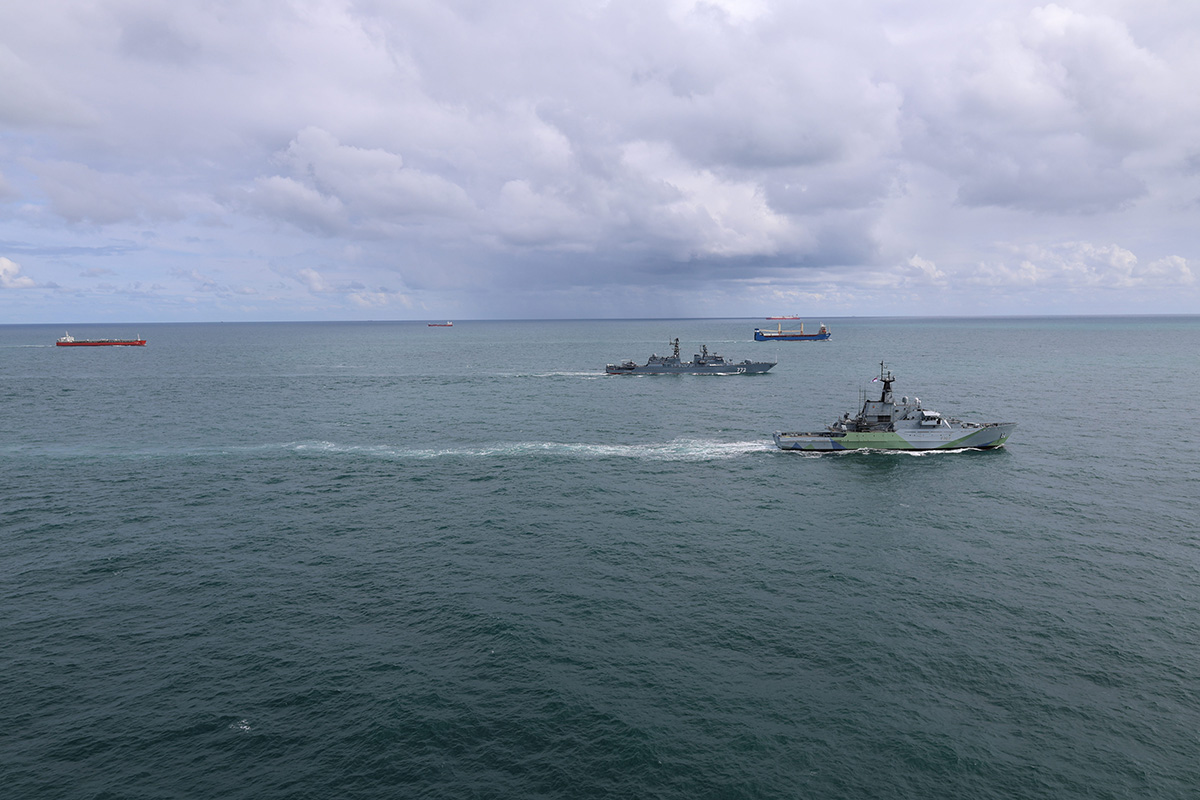
One recent high-profile operation, spanning 72 hours, involved HMS *Duncan*, a Type 45 destroyer, HMS *St Albans*, a Type 23 frigate, and HMS *Severn*, a River-class patrol vessel. These units were tasked with tracking the Russian destroyer *Admiral Levchenko* alongside the sanctioned cargo vessels *General Skobelev* and *Sparta*. During this mission, a Merlin helicopter from HMS *St Albans* provided aerial surveillance, enhancing the tracking capabilities. Separately, HMS *Mersey* was engaged in monitoring the Russian replenishment vessel *Akademik Pashin*. The Russian group was tracked south through the North Sea and English Channel before responsibility was handed over to a NATO ally near Ushant.
The Ministry of Defence confirmed that Royal Navy ships were activated for four distinct operations in August to either intercept or monitor Russian vessels. HMS *Severn*, a key asset in coastal patrol, was notably dispatched three times during the month. Its earlier missions included tracking the Russian frigate *Neustrashimy* as it transited the Channel. Subsequently, HMS *Severn* collaborated with HMS *Tyne* to monitor another group of Russian vessels, which included the frigate *Admiral Gorshkov*, the hydrographic vessel *Romuald Muklevich*, and the *Akademik Pashin*.
This increase in monitoring activity follows a notable incident in June, when the UK successfully interdicted the sanctioned tanker *Smyrtos* in the English Channel. This action served as a clear demonstration of the UK’s intent to enforce international sanctions.
First Sea Lord General Sir Gwyn Jenkins commented on the significance of the *Smyrtos* interdiction, stating: “The interception of the *Smyrtos* was a clear demonstration that the UK and Royal Navy will act against those who seek to evade sanctions to fund Russia’s egregious war on Ukraine.” According to Jenkins, this decisive action has prompted Russian-linked vessels to alter some of their typical routes, and Moscow has reportedly begun using naval vessels to accompany sanctioned shipping more frequently.
Jenkins further elaborated on the impact of these enforcement efforts: “Since that successful operation, we have seen Russian shadow fleet vessels increasingly forced to change their routes, imposing significant cost and delays to their journeys.” He added that this strategic approach, alongside allied efforts, is compelling Moscow to divert Russian warships from their primary operational purposes. “That is because Russia knows we stand ready to act again, should it be required,” Jenkins affirmed.
The UK has taken a firm stance against Russia’s so-called “shadow fleet,” a term commonly used to describe vessels involved in transporting Russian oil and other cargoes while actively attempting to circumvent Western sanctions and regulatory controls. More than 500 vessels associated with this shadow fleet have been sanctioned by the UK. British authorities have progressively linked enhanced maritime surveillance around the UK with broader efforts to enforce sanctions imposed following Russia’s full-scale invasion of Ukraine.
Despite these successes, General Jenkins cautioned against complacency. He stated: “While this is a welcome development, we know there is no room for complacency. Shadow fleet vessels continue to pose an unacceptable risk to maritime security and the environment, wherever they sail.” He reiterated the Royal Navy’s commitment to ongoing vigilance: “That is why we remain vigilant and will continue to work alongside allies to uphold and enforce international law.”
Commander Oli Ayers, Commanding Officer of HMS *St Albans*, confirmed that his frigate was operating as part of a wider NATO effort to monitor Russian naval and merchant movements. He stated: “As part of the UK’s response to increased Russian activity within UK waters, St Albans was part of a group of NATO warships and aircraft escorting Russian warships and merchant vessels through the North Sea and English Channel, monitoring their activity.” This statement highlights the collaborative nature of these surveillance missions, extending beyond national efforts to a broader allied commitment.
The Ministry of Defence anticipates that similar operations will continue over the coming months, reflecting the ongoing presence and transit of Russian military and commercial vessels through waters critical to UK and European security.
Why This Matters
The significant increase in Royal Navy activations to monitor Russian vessels is a critical indicator of several evolving geopolitical and security dynamics, with far-reaching implications:
- Heightened Geopolitical Tensions:The sustained presence and increased monitoring of Russian naval and commercial vessels near UK waters underscore the ongoing tensions between NATO members and Russia, particularly in the wake of the conflict in Ukraine. Each interaction carries the potential for miscalculation, making robust and professional surveillance essential to de-escalate rather than inflame situations.
- Enforcement of International Sanctions:The Royal Navy’s actions are directly linked to the UK’s commitment to enforcing sanctions against Russia. The “shadow fleet” poses a significant challenge to the effectiveness of these sanctions, which aim to restrict Russia’s ability to finance its military operations. Successful interdictions and continuous monitoring demonstrate that Western nations are actively working to close loopholes and increase the economic pressure on Moscow.
- Maritime Security and Environmental Risks:The “shadow fleet” often operates with reduced adherence to international maritime safety and environmental regulations, frequently using older vessels with questionable insurance or maintenance records. Their presence in busy shipping lanes like the North Sea and English Channel significantly increases the risk of accidents, collisions, or oil spills, posing threats to marine ecosystems, critical infrastructure, and global trade routes.
- NATO Alliance Cohesion and Deterrence:The involvement of HMSSt Albansin a “wider NATO effort” highlights the collective security response of the alliance. Coordinated monitoring and interdiction efforts demonstrate NATO’s unity, resolve, and shared commitment to upholding international law and deterring potential aggression. This reinforces the alliance’s defensive posture and collective readiness.
- Sovereignty and International Law:By actively monitoring and, when necessary, interdicting vessels, the Royal Navy asserts the UK’s sovereignty within its territorial waters and Exclusive Economic Zone (EEZ), while also upholding the principles of freedom of navigation in international waters. This commitment to the rules-based international order is crucial for global stability and predictability.
- Economic Impact on Russia:The UK’s efforts to force Russian-linked vessels to alter routes and incur delays directly translates into increased costs and reduced efficiency for Russia’s oil and commodity exports. This economic pressure is a key component of the international strategy to curtail Russia’s financial capacity to sustain its military campaigns.
- Naval Readiness and Capabilities:The frequent and complex nature of these monitoring operations serve as a crucial test and demonstration of the Royal Navy’s operational readiness, technological capabilities, and strategic flexibility. It ensures that the navy remains proficient in conducting sustained surveillance, intelligence gathering, and, if necessary, enforcement actions in a dynamic maritime environment.