
A joint military operation involving forces from the United States and Venezuela resulted in the death of Héctor Rusthenford Guerrero Flores, a prominent leader of the transnational criminal organization Tren de Aragua. The operation, confirmed by U.S. President Donald Trump and officials from both countries on Friday, marks a significant action against a syndicate that U.S. authorities have identified as a growing threat responsible for illicit drug trafficking and violent crime across the Americas.
Defense Secretary Pete Hegseth stated that the strike occurred earlier this week in conjunction with Venezuelan security forces. While a precise date was not disclosed, Hegseth confirmed the target was a compound believed to house Guerrero Flores. The Venezuelan Ministry of Communication further elaborated, indicating the operation took place in the southeastern Venezuelan state of Bolívar. Both U.S. and Venezuelan officials corroborated that Guerrero Flores was killed during the engagement.
Héctor Rusthenford Guerrero Flores, 43, was widely known by his alias, “Niño Guerrero,” which translates to “Warrior Child.” He was a founding figure of Tren de Aragua and was a high-value target for international law enforcement. In the United States, federal charges against him included directing acts of terrorism, racketeering, drug importation, and firearms offenses, brought forth in a New York federal court. The Biden administration had previously offered a reward of up to $5 million for information leading to his apprehension.
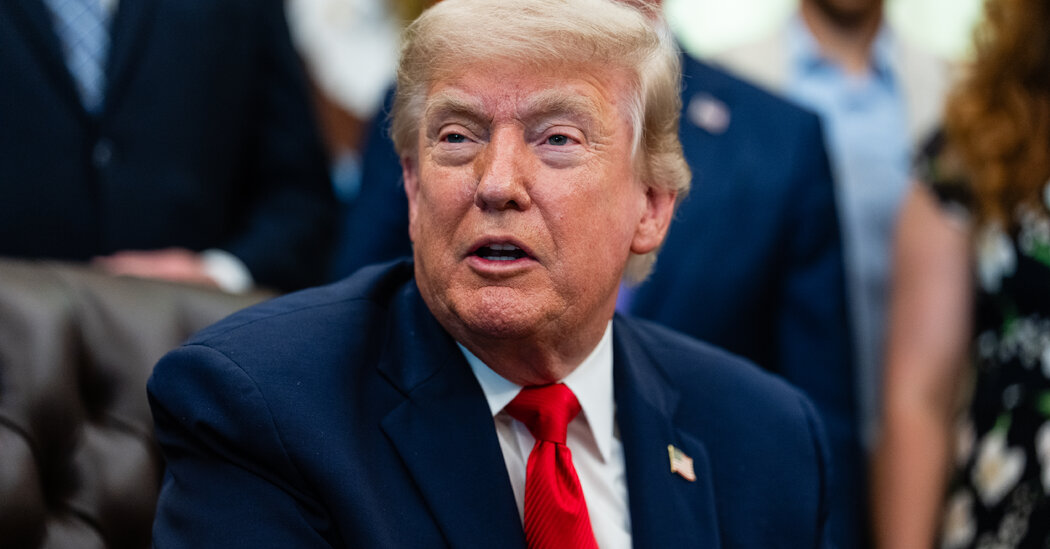
President Trump announced the successful operation via Truth Social, his online platform, stating that the U.S. military’s Southern Command carried out the strike under his direct orders. He characterized the action as part of his administration’s broader commitment to dismantling foreign criminal organizations. The Trump administration had officially designated Tren de Aragua as a foreign terrorist organization the previous year, underscoring its perceived threat level.
President Trump further stated that the operation was conducted with the cooperation of the Venezuelan government. He posted a video purportedly showing an exploding building and referenced crime victims in U.S. states like Georgia and Texas, describing the operation as “retribution” for their families. Throughout his term, President Trump has frequently cited Tren de Aragua in public discourse, linking it to U.S. border security concerns and advocating for enhanced deportation policies, as well as justifying military interdiction efforts against suspected drug-carrying vessels originating from Venezuela.
General Francis L. Donovan, who commands the U.S. Southern Command, publicly acknowledged and thanked Venezuelan security forces for their support in what he also described as a joint operation. This level of cooperation between the U.S. and Venezuela is particularly notable given the historically strained diplomatic relations and the ongoing sanctions imposed by Washington on Caracas. The Venezuelan government’s statement confirmed a combined operation aimed at organized crime structures, emphasizing that the mission was facilitated by the exchange of intelligence between the two nations.
Tren de Aragua originated in the mid-2000s as a prison gang within Venezuela, leveraging its control over penitentiary systems to establish a vast criminal network. Over the past decade, the organization has expanded its operations significantly beyond Venezuelan borders, establishing a presence across numerous Latin American countries, including Colombia, Peru, Chile, Ecuador, and Brazil, and has also been reported in several U.S. cities. Its criminal activities are diverse and extensive, encompassing sex trafficking, human smuggling, drug trafficking, extortion, kidnapping, and illegal mining. The gang’s brutal tactics and transnational reach have drawn intense scrutiny from U.S. law enforcement agencies and international bodies concerned with regional security.
Why This Matters
The killing of Héctor Rusthenford Guerrero Flores represents a significant blow to the leadership of Tren de Aragua, one of the most powerful and ruthless transnational criminal organizations operating in the Western Hemisphere. The decapitation of a gang’s central leadership can disrupt its operations, create power vacuums, and potentially lead to internal instability or a temporary reduction in criminal activity, at least until new leadership emerges.
Furthermore, this joint operation signals a rare moment of pragmatic cooperation between the United States and Venezuela, two nations with a deeply adversarial relationship marked by diplomatic estrangement, economic sanctions, and political tensions. Such collaboration on a high-stakes security matter could indicate a willingness from both sides to engage on shared threats, potentially setting a precedent for future intelligence sharing or joint actions against transnational crime, irrespective of broader political disagreements. This could be a tactical alignment driven by mutual security interests, particularly Venezuela’s domestic challenges with organized crime and the U.S.’s focus on stemming the flow of illicit drugs and human trafficking.
For regional security, the targeting of Tren de Aragua underscores the growing concern over the destabilizing impact of transnational organized crime across Latin America. The gang’s expansion has contributed to increased violence, corruption, and humanitarian crises, particularly through its involvement in migrant smuggling routes. The success of this operation may bolster international efforts to combat such groups and demonstrates that coordinated international action can yield results against resilient criminal networks. Domestically, for the United States, the operation addresses a stated priority of the Trump administration to counter foreign gangs perceived as contributing to crime and drug problems within U.S. borders, directly linking foreign policy actions to national security and domestic concerns.