
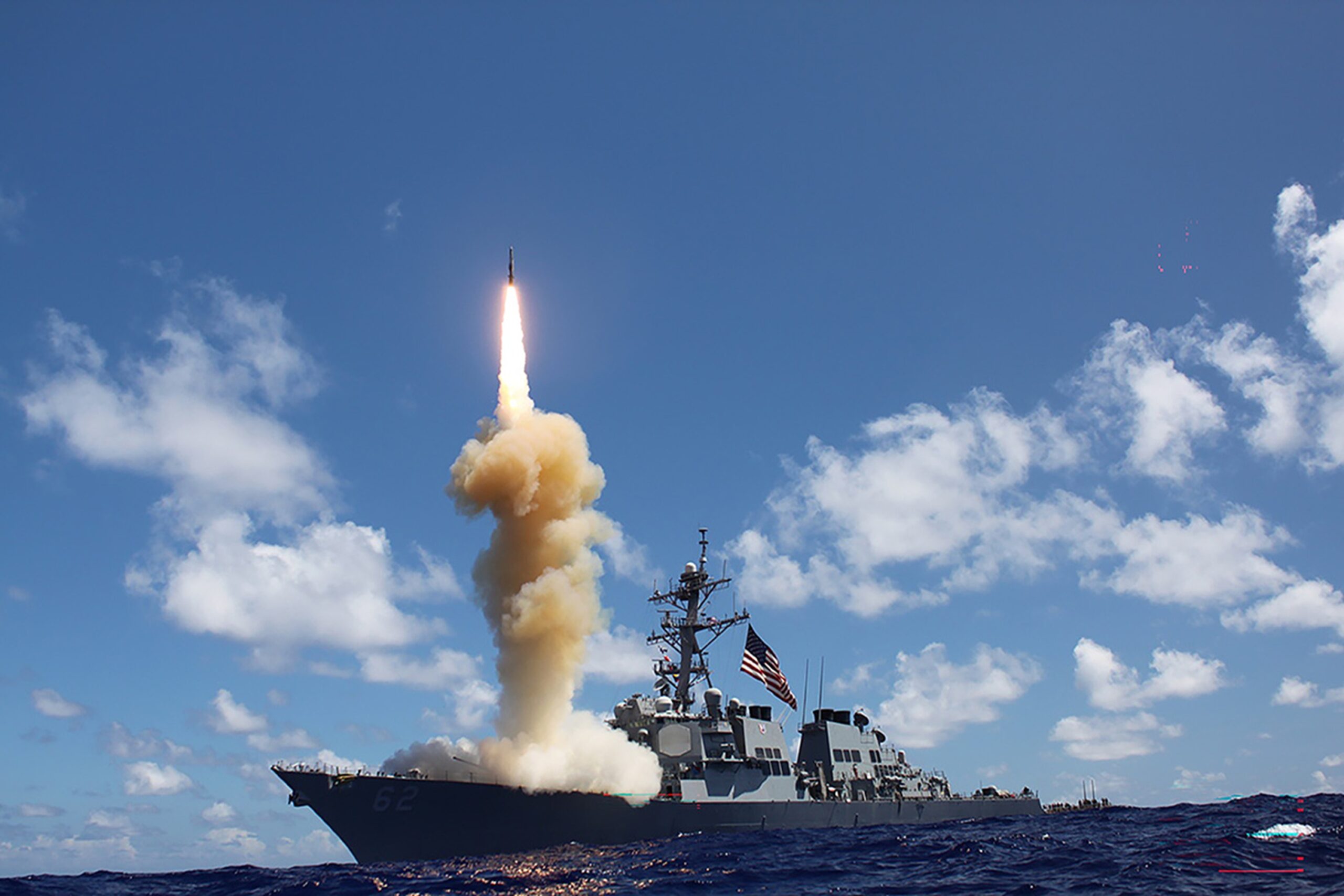
Boeing Signs Seven-Year Agreements to Boost Production of SM-3 Missile Components
The United States is moving to significantly increase its production capacity for Standard Missile-3 (SM-3) anti-ballistic missile interceptors. Boeing has announced new seven-year framework agreements designed to boost its output of critical hardware for both the SM-3 Block IB and Block IIA variants of the missile.
These agreements involve Boeing, the U.S. Department of Defense, and Raytheon, an RTX business and the prime contractor for the SM-3 missile program. The primary objective is to enhance Boeing’s manufacturing capabilities for avionics and ejector assemblies, essential components required for higher production rates of complete SM-3 interceptors. Boeing stated that all three parties will initiate a production ramp-up ahead of a final multi-year contract award, with negotiations continuing under the new framework.
The SM-3 is a sophisticated ship-launched anti-ballistic missile, forming a crucial part of the Aegis Ballistic Missile Defense (BMD) system. Its principal mission is to intercept incoming ballistic missiles during the midcourse phase of their flight, a segment where the target can travel outside the Earth’s atmosphere. Unlike traditional missiles that rely on an explosive warhead, the SM-3 employs a “kinetic kill vehicle.” This technology is designed to destroy the target purely through the force of a direct collision, often referred to as a “hit-to-kill” mechanism, without the need for an explosive charge.
This design distinguishes the SM-3 from shorter-range air-defense weapons, which are primarily intended to engage aircraft, cruise missiles, or other atmospheric threats. The SM-3 is purpose-built for ballistic missile defense, providing the U.S. and its allies with a unique exo-atmospheric interception capability. This capability is deployed from Aegis-equipped warships and integrated with various land-based missile-defense infrastructure, such as the Aegis Ashore sites.
Bob Ciesla, vice president of Boeing Precision Engagement Systems, emphasized the strategic importance of these agreements. “This gives us a clear demand signal to build and deliver SM-3 interceptors at the levels needed to counter threats,” Ciesla stated in a recent news update. He further highlighted the missile’s role, adding, “The SM-3 is an essential part of the layered air and missile defense architecture that protects the U.S. and its allies worldwide.”
The new production arrangement encompasses both the Block IB and the more advanced Block IIA variants of the SM-3. The Block IIA represents a significant evolution of the weapon, featuring a larger rocket motor and an enhanced kinetic warhead, designed to provide greater range, speed, and engagement capability against more complex and longer-range ballistic missile threats. Boeing’s specific contribution involves the production of precision avionics and ejector assemblies – components that are fundamental to the missile’s guidance and deployment, and whose availability directly impacts Raytheon’s ability to increase the overall output of complete missiles.
The decision to commence increased production prior to the finalization of a multi-year contract is a strategic move by the Department of Defense. This approach is intended to provide the defense industrial base with a clearer and more immediate “demand signal,” thereby minimizing the typical delays between a procurement decision and the actual delivery of higher quantities of weapons. Boeing indicated that this framework aligns with the current U.S. administration’s stated efforts to strengthen the nation’s defense capabilities and reflects broader Pentagon acquisition reforms aimed at accelerating the delivery of priority weapon systems.
This SM-3 agreement is not an isolated initiative. It follows a similar existing arrangement involving Boeing, the Department of Defense, and Lockheed Martin. That previous agreement focuses on increasing the production of seekers – a critical guidance component – for the PAC-3 Missile Segment Enhancement (MSE) interceptor. The PAC-3 MSE is another key element in the layered U.S. and allied missile defense architecture, designed for lower-tier, endo-atmospheric interception.
Why This Matters
The accelerated production of SM-3 interceptors carries significant implications for global security, defense strategy, and industrial policy. Here’s why this development is important:
- Addressing Evolving Threats:The decision to ramp up SM-3 production reflects a growing global concern over the proliferation and sophistication of ballistic missile technology. Nations like North Korea and Iran continue to develop and test increasingly capable ballistic missiles, posing direct threats to the U.S. and its allies. Enhancing the supply of interceptors is a direct response to this evolving threat landscape, aiming to bolster deterrence and defense capabilities.
- Strengthening Allied Defense:The SM-3 is a cornerstone of the Aegis Ballistic Missile Defense system, which is deployed by the U.S. Navy and several key allies, notably Japan, South Korea, and various NATO members. Increased production means a more robust defense umbrella for these nations, reinforcing alliances and potentially enabling partners to acquire more interceptors to protect their own territories and assets. This contributes to burden-sharing in collective security.
- Technological Superiority and Deterrence:The SM-3’s “hit-to-kill” technology represents a highly advanced form of missile defense, requiring immense precision. A greater inventory of these sophisticated interceptors strengthens the credibility of U.S. and allied deterrence strategies. The ability to credibly intercept ballistic missiles discourages potential adversaries from using such weapons, thereby contributing to regional stability.
- Impact on the Defense Industrial Base:Seven-year framework agreements provide long-term stability and predictability for defense contractors like Boeing and Raytheon. This allows companies to invest in manufacturing infrastructure, hire and train skilled labor, and optimize supply chains. Such long-term commitments are crucial for sustaining a healthy and responsive defense industrial base, which is vital for national security.
- Streamlining Defense Procurement:The initiative to begin production ramp-up before the final multi-year contract award signals a shift in defense acquisition strategy. By providing a “clear demand signal” early, the Department of Defense aims to reduce lead times and accelerate the delivery of critical capabilities. This approach seeks to make the procurement process more agile and responsive to urgent operational needs, especially in times of heightened geopolitical tension.
- Layered Defense Strategy:The SM-3 is part of a broader “layered” missile defense strategy, which includes systems like the PAC-3 MSE for lower-altitude intercepts. Increased production across different components of this architecture ensures a comprehensive defense against various types of missile threats at different altitudes, enhancing overall protection.