
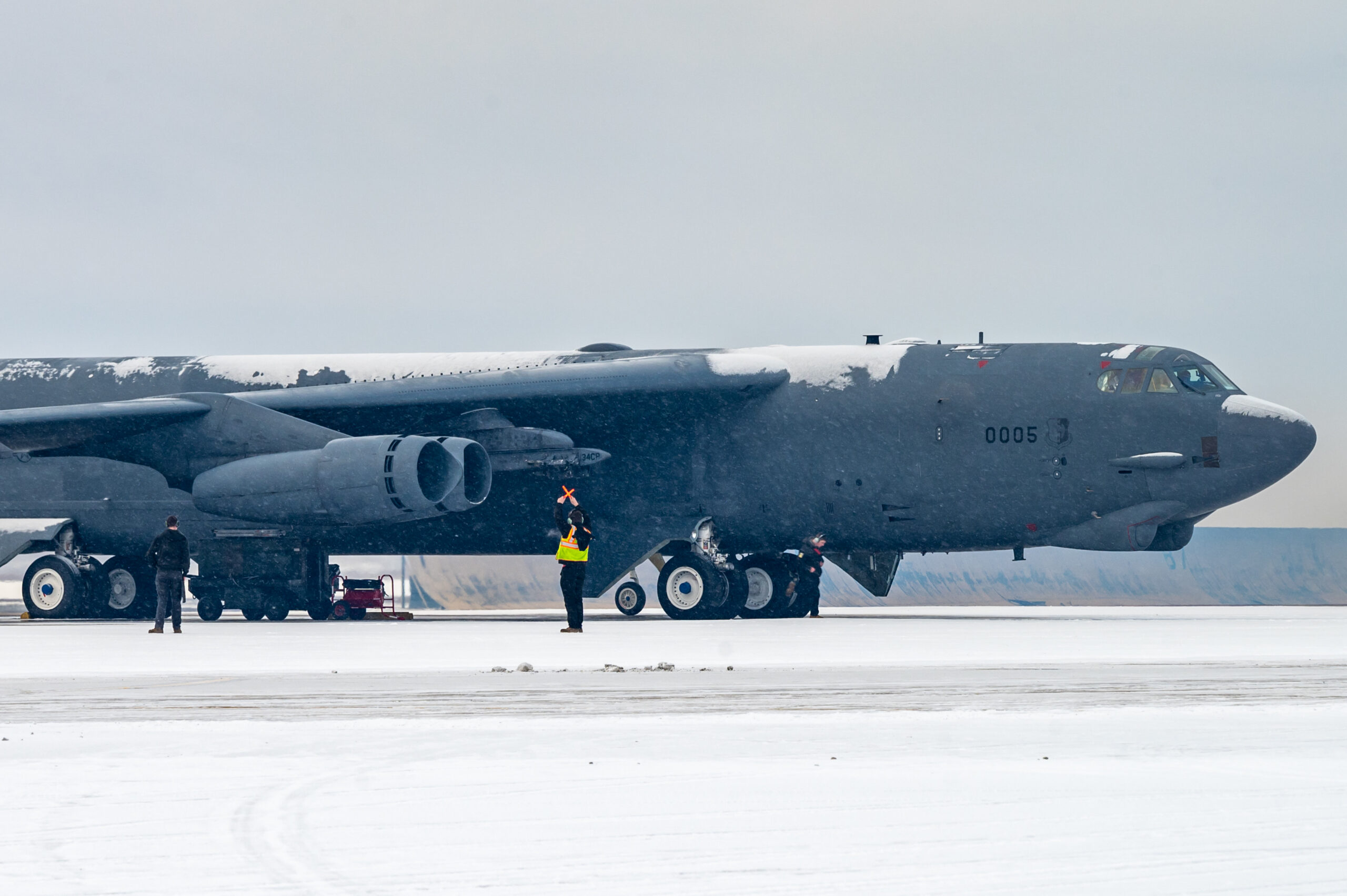
A new government report indicates that vital infrastructure across U.S. military bases worldwide, including critical facilities at Minot Air Force Base (AFB) in North Dakota and Andersen Air Force Base (AFB) in Guam, is deteriorating due to years of deferred maintenance and escalating climate-related stressors. This situation presents a growing risk to the Pentagon’s operational readiness and the quality of life for service members.
The Government Accountability Office (GAO) released a report on August 21 detailing the widespread challenges facing the Department of Defense’s (DoD) infrastructure. The report highlights that a significant portion of the Pentagon’s more than 736,000 facilities globally—approximately one-third—are over 50 years old, well past their intended lifespans. This aging infrastructure requires consistent and comprehensive maintenance to remain operational and safe.
Despite the Pentagon’s stated goal of funding 90 percent of its annual maintenance needs, the GAO found that actual funding levels consistently fall short, reaching only about 80 percent. This persistent underfunding has led to a substantial accumulation of deferred maintenance, resulting in damage, corrosion, and mold issues in various facilities, from troop housing and dining halls to critical runways and maintenance depots. The consequences extend beyond structural damage, impacting the operational effectiveness of military installations.
The financial backlog associated with these unmet maintenance needs has expanded dramatically. In fiscal year 2020, the DoD reported a deferred maintenance cost of $137 billion. Just five years later, this figure has more than doubled, reaching an estimated $285 billion. The GAO characterized this escalating backlog as “a significant and growing risk to the department’s ability to support its missions,” signaling potential challenges to national security capabilities.
Specifically, the Air Force faced a substantial funding gap for its facilities sustainment. For fiscal year 2025, the Air Force required $5.6 billion but received only $4.3 billion, equating to 77 percent of its identified needs. This shortfall is more pronounced at strategically important bases such as Andersen AFB and Minot AFB.
At Andersen AFB, a key U.S. outpost in the Indo-Pacific region, the situation was particularly severe. In fiscal year 2025, the base needed $122 million for facilities sustainment but was allocated only $34.7 million, representing a mere 28 percent of the required amount. Averaging funding levels from fiscal years 2023 through 2025, Andersen AFB received only 37 percent of its necessary sustainment funding.
Minot AFB, which houses critical strategic assets, also experienced significant underfunding. The base averaged 40 percent funding for sustainment between fiscal years 2021 and 2025. In fiscal year 2025, Minot AFB required $75 million but received $23.5 million, or 31 percent, of its needs. Such persistent shortfalls directly affect the base’s ability to maintain its infrastructure and support its missions.
The GAO report also noted that while the Air Force and Marine Corps had not precisely quantified their unfunded military construction and facility repair needs, officials from both services acknowledged “substantial unfunded needs” as of May 2025. Other branches provided more concrete figures: Army officials identified approximately $140 billion in unfunded construction and repair projects, while the Navy identified $70 billion in construction requirements and an additional $37 billion in needed repairs that remain unfunded.
These deferred repairs have a dual negative impact, affecting both the quality of life for service members and the installations’ capacity to accomplish their assigned missions. The GAO report highlighted several specific examples of these issues within Air Force infrastructure.
At Minot AFB, officials informed the GAO that the base’s B-52 parking area is more than 30 years past its expected lifespan, with a critical project to replace its aging pavement long overdue. Despite Air Force leaders instructing Minot officials to repair the parking area in phases, and a subsequent plan being developed, the project has struggled to compete for funding amidst other pressing maintenance needs. As of September 2024, only about one-third of the parking area had been replaced. Base officials reported that relying on multiple smaller repairs to maintain the old pavement is less cost-efficient than a complete overhaul, with these stopgap measures costing approximately $3.5 million. Photographs included in the GAO report vividly depict the Minot B-52 parking area with visible cracks, crumbling sections, and large patches completely devoid of asphalt, illustrating the long-standing nature of the problem with images taken in 2018, 2022, and 2024.
Similarly, at Andersen AFB, the construction of a new hangar designed for repainting low-observable aircraft coatings is years behind schedule. This delay necessitates the continued use of older hangars to house these advanced aircraft and frequently requires flying them to other locations for repainting. Such logistical complexities increase operational costs, consume valuable resources, and reduce the overall mission availability of critical assets, potentially compromising readiness in a strategically vital region.
The GAO report further emphasized that many Pentagon facilities are not only rapidly aging but have also been utilized well beyond their intended operational lifespans. During their audit, GAO investigators visited a building at Minot AFB dating back to the 1960s. This facility exhibited considerable age-related decay, with inoperable lights and elevators, and a photograph in the report showed water leakage into the building’s foundation, raising significant structural concerns. While the Air Force plans to demolish this particular building due to its extensive problems and has consequently scaled back its maintenance, the facility continues to provide essential services to Airmen and veterans, and its workspace remains in high demand, creating a paradoxical situation where a decaying structure must still serve active duty.
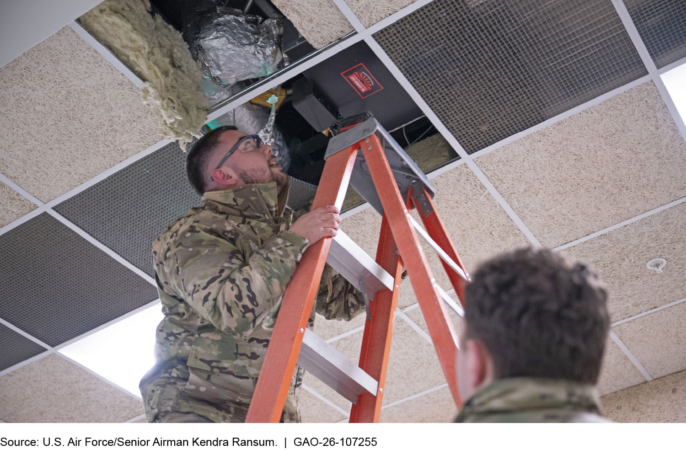
Beyond the challenges of aging infrastructure and underfunding, extreme weather and climate conditions are significantly exacerbating repair needs at certain bases. Minot AFB, notoriously known for its severe cold and freezing temperatures, faces unique challenges. Base officials reported to the GAO that frequent broken furnaces lead to pipes freezing and bursting, causing extensive water damage. Furthermore, snow melting on leaking roofs contributes to pervasive water intrusion, and freezing temperatures accelerate the deterioration and cracking of pavements, including critical areas like the B-52 parking lot.
Conversely, coastal and island bases such as Andersen AFB confront different but equally destructive climate-related issues. Base officials informed the GAO that the constant exposure to salt air rapidly corrodes building systems, plumbing, and essential equipment like HVAC units. The high heat and humidity prevalent in these tropical environments also foster the growth of mold and mildew, which are difficult and costly to eradicate. The GAO report included a photograph of an HVAC condenser unit showing pronounced rust, illustrating the rapid deterioration caused by environmental factors.
Extreme weather events further compound these infrastructure vulnerabilities. Officials from both Andersen AFB and Naval Base Guam reported that Typhoon Mawar in 2023 caused extensive damage to their facilities, much of which remains unrepaired, highlighting the long-term recovery challenges posed by increasingly intense climate events.
In response to its findings, the GAO issued several key recommendations to the Pentagon. These included urging the DoD to fully assess the risks to missions and the quality of life for service members stemming from underfunded facility sustainment and repair backlogs. The GAO also recommended developing a comprehensive strategy to address maintenance workforce shortages and reevaluating existing standards and processes for facility maintenance across all installations.
The Pentagon acknowledged some recommendations but disagreed with others. While the DoD stated that its current sustainment plans already aid in determining risks from underfunding and lagging repairs, and that planned software improvements would enhance these assessments, the GAO countered that these efforts must be augmented by department-level studies to thoroughly understand the systemic effects of sustainment backlogs. The Pentagon also disagreed with the recommendation to strengthen oversight of installation maintenance programs, asserting that it already provides maintenance standards and lacks the workforce capacity for additional oversight. The GAO maintained that without a clear department-level policy to oversee installation maintenance performance, there remains a limited understanding of how effectively maintenance is executed across the vast network of military installations.
This report from the GAO aligns with earlier warnings from other oversight bodies. The Pentagon’s Inspector General, in a separate report released earlier in August, also raised alarms about pervasive issues such as mold, corrosion, and other substandard conditions at various military bases in the Pacific region, including major Air Force installations like Kadena and Yokota in Japan. These converging reports underscore a systemic and urgent challenge facing the U.S. military’s global infrastructure.
Why This Matters
The deterioration of vital military infrastructure, as highlighted by the Government Accountability Office (GAO), carries profound implications for national security, the welfare of service members, and long-term economic stability. The staggering and growing $285 billion maintenance backlog is not merely an accounting problem; it is a tangible threat to the operational readiness of the United States military.
From a national security perspective, dilapidated runways, compromised hangars, and failing support facilities directly impede the military’s ability to project power, conduct training, and respond effectively to global threats. When critical assets like B-52 bombers at Minot AFB are housed on crumbling pavement, or when advanced aircraft at Andersen AFB cannot receive essential maintenance due to delayed construction, it translates into reduced mission availability and increased operational risk. In an increasingly complex geopolitical landscape, particularly in the Indo-Pacific where Andersen AFB plays a crucial role, any degradation in infrastructure can undermine deterrence and response capabilities, potentially emboldening adversaries and prolonging conflicts.
For service members and their families, the impact is immediate and significant. Living and working in facilities plagued by mold, corrosion, structural decay, and unreliable utilities directly affects morale, health, and overall quality of life. Issues like leaking roofs, inoperable elevators, and extreme temperatures due to failing HVAC systems create an environment that can compromise physical well-being and psychological resilience. Such conditions can hinder recruitment and retention efforts, as prospective and current personnel may be deterred by substandard living and working conditions. Ensuring a high quality of life for those who serve is fundamental to maintaining a strong, motivated, and effective fighting force.
Economically, the ongoing deferral of maintenance represents a false economy. The GAO report underscores that temporary fixes, such as the $3.5 million spent on piecemeal repairs at Minot’s B-52 parking lot, are often less cost-efficient than comprehensive overhauls. As infrastructure continues to age and deteriorate, the cost of eventual repairs will only escalate further, leading to a greater burden on taxpayers. Proactive, sustained investment in infrastructure maintenance is generally more economical and strategically sound than reacting to catastrophic failures. The burgeoning backlog signals a need for a more deliberate and robust long-term funding strategy.
Finally, the report highlights the compounding effect of climate change on military infrastructure. Extreme weather events, from the freezing temperatures at Minot to tropical storms like Typhoon Mawar impacting Guam, are accelerating the degradation of facilities. This necessitates a forward-looking strategy that not only addresses the existing backlog but also incorporates climate resilience into future infrastructure planning and investment. Failure to do so will result in a perpetual cycle of damage and repair, placing immense strain on resources and readiness.