
The Pentagon’s Office of Strategic Capital (OSC) has announced a series of conditional loans, totaling $450 million, to three private companies operating within the U.S. space sector. These investments are part of a broader initiative by defense officials to strengthen and diversify the nation’s space industrial base, ensuring reliable access to space and bolstering critical capabilities for national security and commercial endeavors.
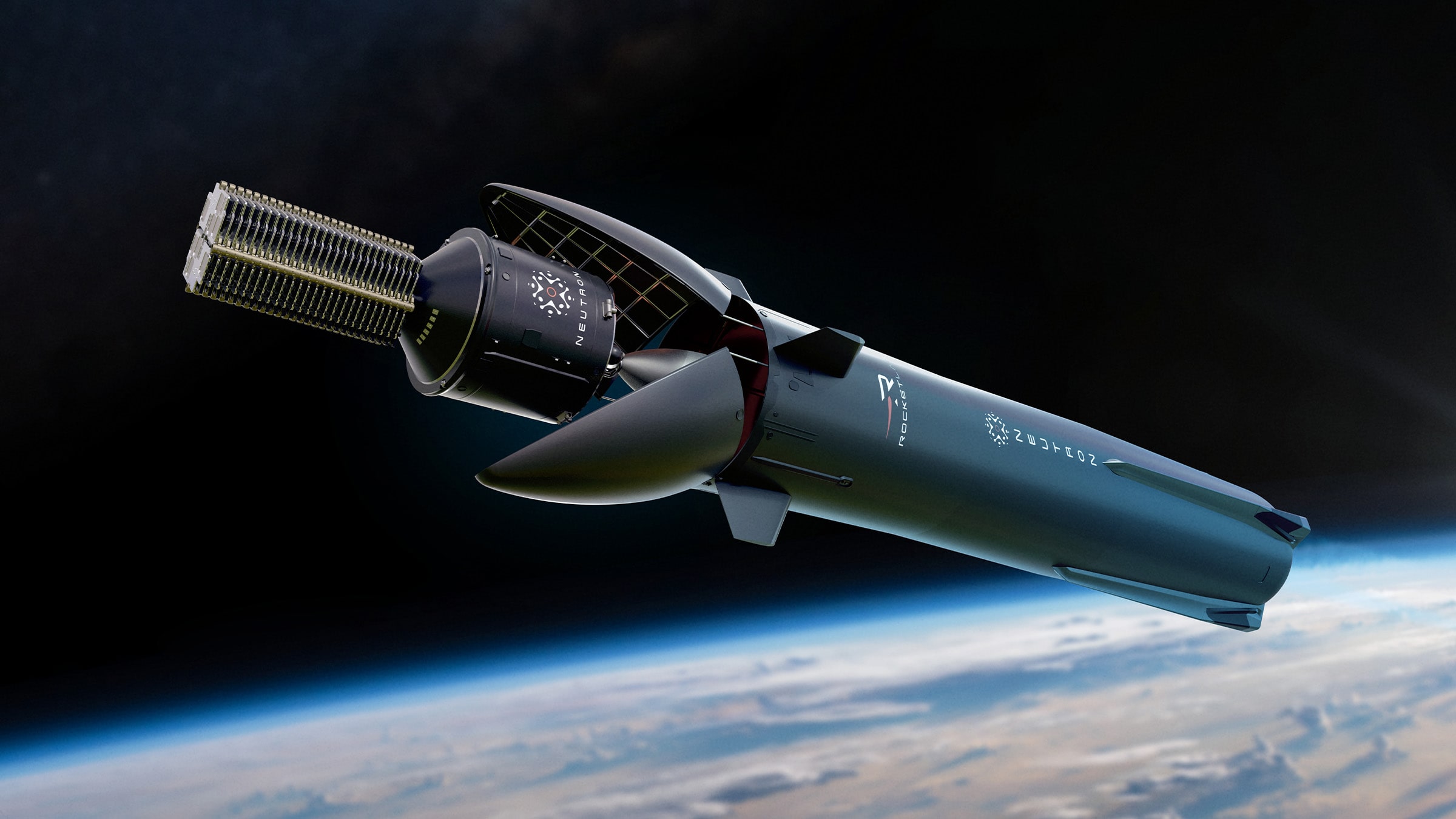
The most recent commitment, a $150 million conditional loan, has been awarded to Rocket Lab, a prominent launch service provider. This funding is specifically earmarked to enhance the production and operational tempo for Rocket Lab’s new medium-lift reusable Neutron rocket, which is currently scheduled for its maiden flight in 2027. The loan is intended to accelerate the launch cadence of the Neutron once it becomes operational, rather than expediting its initial test flight.
This is the third such $150 million loan disbursed by the OSC in recent weeks, underscoring the Pentagon’s focused investment strategy in the burgeoning space industry. Prior to the Rocket Lab announcement, the office committed similar loans to Stoke Space, an emerging launch company, and Leo Labs, a space intelligence firm. The loan to Stoke Space is intended to facilitate the construction of a second launch pad at Cape Canaveral Space Force Station in Florida, expanding critical launch infrastructure. Leo Labs’ funding is directed towards scaling up its manufacturing capabilities and significantly expanding its global network of space-tracking radars.
It is important to note that all these loans are contingent upon the recipient companies successfully meeting various financial, legal, and technical benchmarks established by the OSC. This conditionality ensures that the government’s investment is tied to concrete progress and adherence to specified performance metrics.
Rocket Lab has established itself as a significant player in the U.S. launch market, trailing only industry giant SpaceX in terms of launch frequency. Its small-lift Electron rocket has demonstrated a high operational tempo, executing 18 launches in a recent year, a figure surpassed only by SpaceX’s Falcon rocket family and China’s Long March series. The Electron rocket is designed for deploying small satellites and offers dedicated or rideshare options for customers requiring precise orbital insertion for lighter payloads.
The Neutron rocket represents Rocket Lab’s strategic expansion into the medium-lift launch segment, offering substantially greater payload capacity and reach. Designed to transport payloads up to 25 times heavier than the Electron, the Neutron will be capable of reaching a variety of orbits, including geosynchronous orbit (GEO), which is crucial for many communication and reconnaissance satellites. A key feature of the Neutron is its reusable first stage booster, a technology aimed at reducing launch costs and increasing turnaround times, aligning with broader industry trends towards more sustainable and efficient space access. While Rocket Lab had initially aimed for a late 2026 first flight, a manufacturing issue led to a revised target date of 2027, as announced on October 14.
The Pentagon’s loan to Rocket Lab is specifically designed to support the operational scaling of the Neutron rocket following its inaugural mission. A Pentagon release clarified the loan’s purpose: “The proposed loan would support faster vehicle delivery and processing and allow Rocket Lab to expand its fleet of maritime vessels with additional equipment for Neutron recovery and transport. It would also enable manufacturing upgrades to increase the production of composite structures and engines, and support infrastructure that would reduce turnaround time between launches once the reusable rocket makes its operational debut.” This indicates a focus on sustained high-cadence operations rather than accelerating the initial development phase.
Rocket Lab has reported substantial market demand for the Neutron rocket. In a November 9 statement, the company announced that it has already secured bookings for the rocket’s first 16 missions, pushing availability for new customers into the 2030s. These early missions include a critical launch for the Space Force’s Airborne Moving Target Indicator program, highlighting the rocket’s anticipated role in national security space. Furthermore, the Space Force has selected Rocket Lab to compete for missions under its National Security Space Launch (NSSL) Phase 3 Lane 1 contract, specifically for smaller payloads with less stringent requirements, contingent upon the Neutron achieving its first successful flight.
The Pentagon’s proactive investment through the OSC comes amidst growing concerns within the space industry regarding a potential launch bottleneck. This apprehension is partly fueled by public statements from SpaceX indicating its intention to gradually retire its highly successful Falcon 9 rocket in favor of focusing resources on its Starship super heavy-lift rocket. A significant portion of Starship’s initial launch manifest is expected to be dedicated to internal SpaceX missions, particularly for expanding its Starlink satellite internet constellation, potentially reducing commercial and government launch opportunities for other payloads.
Brig. Gen. Eric Zarynisky, portfolio acquisition executive for space access at the Space Force, addressed these concerns during an October 21 media briefing. Responding to a question about the Space Force’s perspective on SpaceX’s evolving business model, Gen. Zarynisky affirmed the service’s ongoing engagement with both current and prospective NSSL providers. “I’m seeing a lot of growth in those new providers, and being able to use those to support the customers that we see coming on in the national security space launch side,” he stated to Air & Space Forces Magazine. He emphasized the continuous dialogue: “We’re talking to all of the providers . . . about their future plans and then talking to them about where we see our manifest going. It is an ongoing conversation.” This suggests the Space Force is actively monitoring the market and fostering a diverse base of launch providers to mitigate risks and ensure future access to space.
Why This Matters
The Pentagon’s significant financial commitments to Rocket Lab, Stoke Space, and Leo Labs represent a strategic investment in the future of U.S. space capabilities, with far-reaching implications for national security, economic competitiveness, and technological advancement. These conditional loans underscore a proactive approach by the Department of Defense to address emerging challenges and opportunities in the rapidly evolving space domain.
Bolstering National Security and Resilience:For the U.S. military, reliable and diverse access to space is paramount. Satellites play a crucial role in communication, navigation, intelligence gathering, missile warning, and environmental monitoring, directly supporting military operations globally. By investing in multiple launch providers and critical infrastructure like new launch pads, the Pentagon aims to reduce reliance on any single entity, thereby enhancing the resilience and redundancy of its space access. This diversification is vital in an era of increasing geopolitical competition in space, particularly from adversaries like China and Russia, who are actively developing anti-satellite capabilities. Ensuring the ability to launch national security payloads promptly and securely, even in contested environments, is a fundamental component of national defense.
Addressing the Launch Bottleneck:The concern over a potential launch bottleneck, particularly with SpaceX’s shift towards its Starship program and internal Starlink missions, poses a genuine risk to both government and commercial entities needing space access. The Pentagon’s loans to Rocket Lab and Stoke Space directly address this by fostering the growth of alternative, high-cadence launch options. Rocket Lab’s Neutron, with its medium-lift capacity and reusability, is positioned to become a critical asset for a variety of missions, from deploying constellations of smaller satellites to launching larger, more complex payloads. Stoke Space’s new launch pad will further expand the nation’s capacity to host multiple launch providers simultaneously, preventing infrastructure limitations from becoming a choke point.
Fostering Innovation and Economic Growth:These investments are not merely about military requirements; they are also a significant boost to the broader U.S. commercial space industry. By providing capital to innovative companies, the Pentagon is accelerating technological development in areas like reusable rocket technology, advanced manufacturing, and sophisticated space intelligence systems. This governmental backing helps these companies mature, create high-tech jobs, and compete more effectively on the global stage. A vibrant and competitive space industry contributes to U.S. economic growth, attracts private investment, and drives innovation that can benefit numerous sectors beyond defense.
Enhancing Space Domain Awareness:The loan to Leo Labs, a company specializing in space intelligence, directly supports the critical need for enhanced Space Domain Awareness (SDA). As Earth’s orbits become increasingly congested with satellites and debris, the ability to accurately track and predict the movement of objects is vital for collision avoidance, protecting national assets, and understanding the operational environment. Expanding Leo Labs’ radar network contributes to a more comprehensive and robust picture of objects in space, benefiting both commercial satellite operators and national security space operations.
In essence, the Pentagon’s Office of Strategic Capital is acting as a catalyst, using targeted financial instruments to shape the future landscape of space. By strategically injecting capital into key areas, it aims to cultivate a robust, resilient, and innovative space industrial base capable of meeting the complex demands of national security while simultaneously spurring broader economic and technological advancements.