
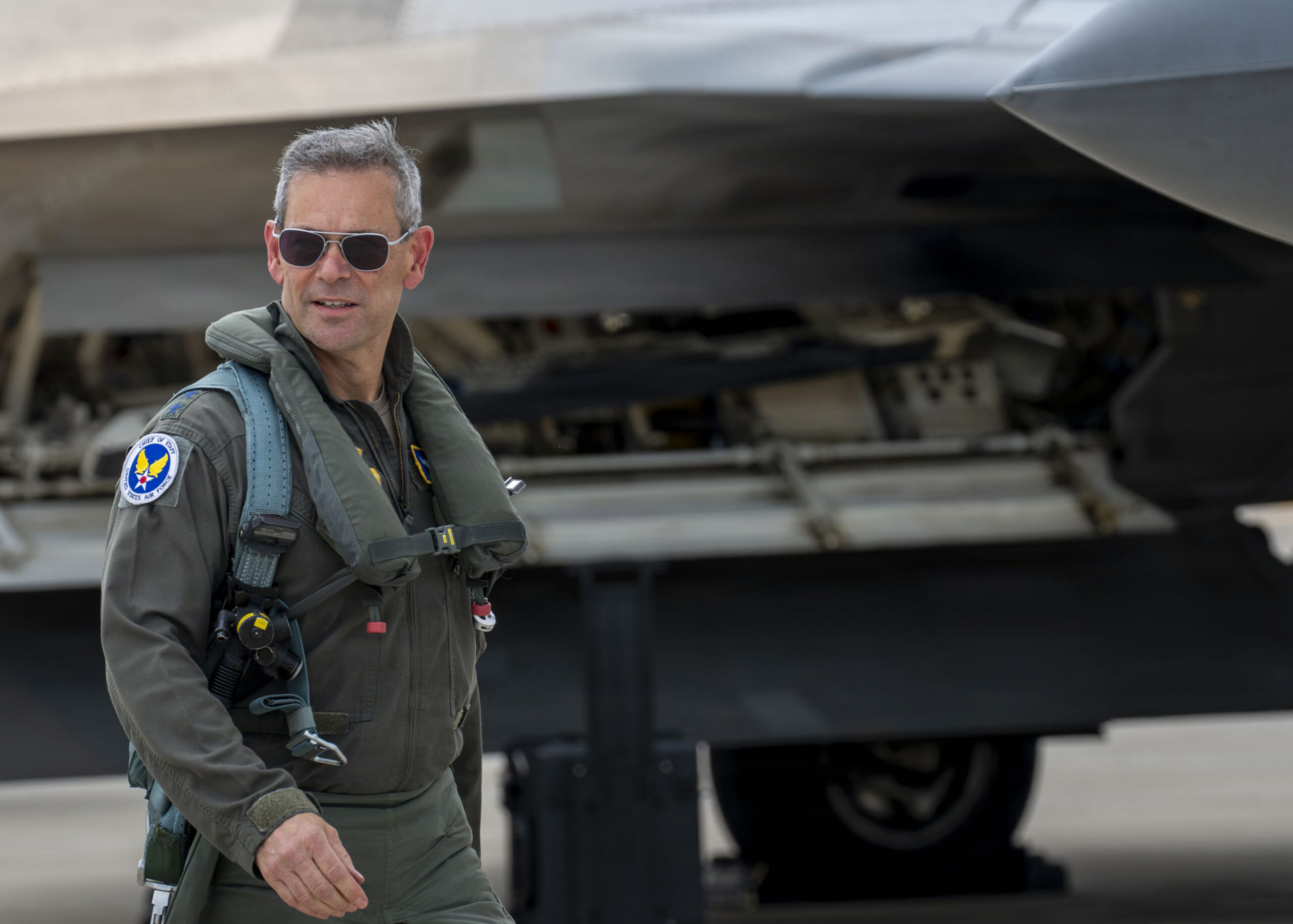
LONDON—General Kenneth S. Wilsbach, who assumed the role of Chief of Staff of the U.S. Air Force in November 2025, introduced a straightforward guiding principle upon taking office: “Fly and Fix”—a strategy designed to ensure forces are prepared to fight if required. In the nine months since his appointment, U.S. Airmen have been engaged in an exceptionally high operational tempo, consistently flying, maintaining aircraft, and participating in combat operations across multiple global theaters.
Since the beginning of 2026, the Air Force has maintained an almost continuous presence in combat operations. Its fleet of fighter jets, bombers, and airlift aircraft played a crucial role in supporting the removal of Venezuela’s Nicolas Maduro in January. Following this, U.S. air assets rapidly redeployed to commence round-the-clock combat operations in what has become the largest air war in a generation against Iran. Concurrently, the Air Force has sustained operations in other parts of the Western Hemisphere and maintained a persistent presence in the Western Pacific region, underscoring a broad and demanding operational commitment.
This intense period of global engagement has rigorously tested General Wilsbach’s commitment to enhancing readiness across the Air Force. Speaking in London in July 2026, after delivering keynote remarks at the Global Air and Space Chiefs Conference, General Wilsbach addressed concerns about the strain on resources. “You’ve heard the stories of stressed readiness and maintenance availability,” Wilsbach stated, refuting these claims for deployed assets. “Not true for the jets that are deployed. They’ve been performing marvelously, largely because we focused on spare parts and sustainability forward.”
He emphasized the imperative of keeping aircraft operational to meet mission requirements. “We didn’t have jets sitting around doing nothing,” he added. “We needed them in the air to execute missions.” General Wilsbach articulated a clear objective for military engagement: “When we commit U.S. forces to a conflict, the only reasonable outcome, in my view, is winning.”
The ongoing air war with Iran, designated Operation Epic Fury, has brought renewed focus on critical areas such as air-base defense, modernization efforts, and overall readiness. This conflict represents the largest air campaign since Operation Desert Storm against Iraq in 1991. For General Wilsbach, whose distinguished career includes commanding two major Air Force commands—Pacific Air Forces and Air Combat Command—and amassing over 6,200 flight hours in aircraft like the F-15C Eagle and F-22 Raptor, leading the Air Force through this challenge is his most pressing task.
Operation Epic Fury has seen the deployment of nearly every platform in the U.S. Air Force inventory. This includes fifth-generation fighters such as the F-22 Raptor and F-35 Lightning II, multi-role fighters like the F-15E Strike Eagle and F-16 Fighting Falcon, and ground-attack aircraft like the A-10 Thunderbolt II. Uncrewed MQ-9 Reaper drones have also been extensively utilized. These combat aircraft have been supported by a diverse tanker fleet, ranging from the venerable, six-decade-old KC-135 Stratotanker to the newer KC-46 Pegasus, alongside various transport and specialized support aircraft.
The conflict, however, has not been without significant cost. Official casualty figures from the Defense Department report over 50 Airmen wounded in action due to hostile fire during Operation Epic Fury and other “overseas operations.” Additionally, 18 service members have been killed in the conflict. This includes six Airmen who died when a KC-135 crashed in Iraq after a midair collision with another tanker. While officially classified as a “non-hostile” incident, it occurred under strenuous wartime operating conditions. Furthermore, Wilsbach and other U.S. officials have previously acknowledged substantial equipment losses, including KC-135 Stratotankers damaged on the ground, the destruction of an E-3 Sentry AWACS aircraft, and multiple fighter jets shot down due to a combination of Iranian and friendly fire. Approximately 30 Reaper drones have also been lost during the campaign.
General Wilsbach commended the performance of Air Force fighters, particularly the F-35, despite previously documented maintenance challenges. As recently as 2025, the Government Accountability Office reported that only one in four F-35s was fully mission capable at any given time. Wilsbach attributed these challenges primarily to parts shortages rather than a lack of skilled maintainers. “What happens normally when you’re not prioritizing the parts is if the jet comes back and it’s not flyable, the part is not on the base—and so we have to order the part, and then it takes a couple of days to get there,” Wilsbach explained. He highlighted the lesson learned: “buy the parts, have them on the shelves, and have those spares available for our folks. Because we’re not short on maintainers, but we are short on parts for the F-35 and many other things.”
He emphasized that investing in and stocking spare parts significantly boosts aircraft availability. “When you invest in those things and they’re available, the jet flies really good,” Wilsbach stated. “When it flies, it’s also extremely effective. We’ve done really well with the F-35. So has Israel. So we are creating some fantastic effects with the F-35.”
Defending Bases and Adapting to New Threats
Iran’s missile and drone attacks on military installations in the Middle East have served as a critical wake-up call for U.S. Airmen deployed overseas, highlighting an urgent need to strengthen air base defense capabilities both abroad and domestically. General Wilsbach noted the resilience of personnel: “As the base has had attacks, they’ve repaired the base, and they’ve kept moving,” he said. “And fortunately, we’ve had minimal casualties. Part of that’s because our Airmen are really good at what they do.”
These attacks underscore the growing importance of the Air Force’s Agile Combat Employment (ACE) concept. ACE envisions U.S. forces dispersing from large, fixed bases to multiple smaller, more survivable operating locations in regions like the Pacific or Europe during a conflict. This strategy is a direct response to the changed risk environment, moving away from decades of operating with impunity in uncontested airspace, particularly over the Middle East.
General Wilsbach articulated a fundamental shift in strategic thinking: “I think that if you pile up like we did during Desert Storm with … several hundred aircraft on one base because it’s a sanctuary—I believe those days are largely gone.” He pointed to the demonstrated range of Iranian missiles, noting, “We’ve seen Iran shoot missiles a pretty long way. Certainly, other countries can definitely shoot farther than Iran.” This increasing range and sophistication of rival missile arsenals mean that the U.S. can no longer assume that the continental U.S. will remain perpetually insulated from threats originating across its East and West Coasts. “Perhaps … even McConnell Air Force Base, Kan., could be in a threat ring in the future,” Wilsbach cautioned, emphasizing a broadening scope of potential vulnerability.
In response, General Wilsbach is concentrating on how the Air Force can effectively complement the U.S. Army’s traditional role in base defense, specifically focusing on “point defense” against threats such as one-way attack drones. He has initiated an effort to establish a new, dedicated career field within the Air Force for defending air bases against contemporary attacks, moving beyond the traditional perimeter defense duties typically performed by security forces Airmen.
These enhanced defenses will need to integrate diverse elements, including advanced tactics, new weapons systems, and particularly, low-cost passive protection measures. Wilsbach cited examples such as deploying nets over aircraft and other critical equipment. He noted that while costly hardened shelters offer robust protection, they are both expensive and time-consuming to construct. “It’s not either or,” Wilsbach clarified. “You may have seen us just putting nets up around the sun shelters”—structures that provide shade for aircraft and maintainers. “The net keeps the small UAS from getting close to an aircraft that you’re trying to protect… That’s a very inexpensive way to give you some modicum of protection without killing your checkbook on really exquisite defensive systems.” This multifaceted approach suggests that while a strong defense is crucial, Wilsbach also believes that a good offense is essential for overall deterrence and victory.
Why This Matters
The insights from General Wilsbach underscore several critical implications for global security and military strategy. First, the U.S. Air Force’s sustained, high-tempo operations since early 2026, spanning interventions in Venezuela, a major air war against Iran, and persistent presence in the Western Pacific, highlight the increasing complexity and breadth of global conflicts. This level of engagement places immense strain on personnel and equipment, making the Air Force’s ability to “Fly and Fix” a direct measure of its capacity to project power and respond to crises worldwide. The sheer volume of operations indicates that the era of localized, contained conflicts may be giving way to more interconnected and geographically diverse demands on military forces.
Second, the conflict with Iran, dubbed Operation Epic Fury, is not just a regional skirmish but the largest air campaign in over three decades. The reported casualties, including six Airmen in a KC-135 crash during wartime conditions, and significant equipment losses—such as an E-3 Sentry AWACS, multiple fighters, and approximately 30 Reaper drones—demonstrate the high stakes and evolving lethality of modern warfare. The acknowledgment of “friendly fire” incidents further illustrates the chaos and inherent dangers of large-scale combat operations, even for a technologically advanced military. These losses necessitate a re-evaluation of tactics, technology, and training to minimize risks while maintaining operational effectiveness.
Third, General Wilsbach’s emphasis on spare parts and “sustainability forward” for aircraft like the F-35 reveals a critical vulnerability in modern military logistics. Despite advanced technology, the ability to keep sophisticated platforms operational hinges on a robust supply chain. The F-35’s previously low mission-capable rates, even if improved by wartime prioritization, point to underlying industrial capacity and supply chain issues that could impact readiness in future conflicts. Addressing these “parts shortages” is not merely an operational concern but a strategic imperative that requires investment in manufacturing, procurement, and inventory management to ensure continuous air superiority.
Finally, the discussion around air base defense signifies a profound shift in military doctrine, moving away from the assumption of safe “sanctuary” bases. Iran’s missile and drone attacks have demonstrated that even fixed installations are vulnerable, compelling the adoption of concepts like Agile Combat Employment (ACE). The potential threat to even continental U.S. bases, such as McConnell Air Force Base in Kansas, underscores a paradigm shift where traditional geographical insulation is eroding. Wilsbach’s initiative to create a new air base defense career field and explore diverse protection methods, from advanced weapons to simple nets, highlights a proactive adaptation to this new threat landscape. This evolving approach to defense has significant implications for military infrastructure planning, resource allocation, and personnel training, affecting both deployed forces and homeland security. The blend of defensive measures with the notion that “a good offense is” implicitly recognizes that deterrence and victory in this new era require both robust protection and the persistent ability to project power effectively against adversaries.
U.S. Air Force Modernizes for Future Conflicts, Prioritizing Agility and Readiness
A senior leader within the United States Air Force has outlined a comprehensive strategy to modernize its aging fleet, enhance its warfighting culture, and address critical budgetary challenges amidst a rapidly evolving global threat landscape, particularly from nations like China. The approach emphasizes proactive defense against emerging threats, significant investment in new aircraft and weapons systems, and a renewed focus on the physical and mental toughness of Airmen.
In discussing defense priorities, the unnamed Air Force leader underscored a strategic shift towards pre-emptive measures against uncrewed aerial systems (UAS). “I’m much more interested in shooting down that small UAS before it gets close [than] spending a bunch of money to protect an asset that can’t move,” he stated. This perspective highlights a move away from static, reactive defenses towards dynamic, offensive capabilities designed to neutralize threats before they can impact high-value assets. This approach reflects a growing recognition of the pervasive threat posed by increasingly sophisticated and affordable drone technology in modern warfare.
Modernizing an Aging Force
The Air Force, currently at its smallest and oldest point in its history, is reportedly on the cusp of an unprecedented modernization drive across nearly all categories of its aircraft fleet. This ambitious undertaking aims to equip the service with cutting-edge technology necessary to maintain its strategic advantage.
“We’re actually in the midst of the largest modernization we’ve ever had in the United States Air Force—at least concurrently—with things like B-21 and T-7; KC 46; upgrades to the F-22, F-35; F-47, CCA, Sentinel; and there are many, many other things,” the leader explained. This extensive list includes the development of the B-21 Raider, a new stealth bomber designed for long-range strike capabilities; the T-7 Red Hawk, a advanced pilot training system; and the KC-46 Pegasus, a multi-role tanker and transport aircraft. Significant upgrades are also planned for existing fifth-generation fighters like the F-22 Raptor and F-35 Lightning II, which are critical for air superiority and multi-role missions. Other initiatives involve the F-47 (likely a reference error, potentially F-15EX or F-16 upgrades), Collaborative Combat Aircraft (CCA) to work alongside crewed fighters, and the Sentinel (LGM-35A), a new intercontinental ballistic missile system. Beyond these, plans include a major overhaul for the venerable B-52 bomber fleet, extending its operational life, and the acquisition of new E-7 Wedgetail battle management aircraft to enhance command and control capabilities. The modernization effort also encompasses increasing and expanding the arsenal of weapons and scaling the force in direct response to China’s rapid military growth and its emergence as a potential peer adversary.
A cornerstone of this modernization is the B-21 bomber program. The Air Force, in collaboration with contractor Northrop Grumman, initially plans to build 100 B-21 Raiders. However, this number is widely viewed as a minimum. “At some point in the future, we’ll consider additional buys,” the leader confirmed. A key concern is the pace of production. “So one of the things we’re talking to Northrop about is how could we do that in a way that doesn’t stretch out. So let’s just assume that maybe you wanted to double the buy to go from 100 to 200. Can Northrop do that? That’s a big question to ask because, what I don’t want to do is, [say] ‘OK, I’ve got 100 and now the next 100 comes but by the time we get the last one it’s 2060. It’ll be obsolete by then, right? If we’re going to buy some more, we’ve got to figure out a way to compress.” This highlights the challenge of balancing long-term strategic needs with the imperative for rapid acquisition to avoid technological obsolescence.
To facilitate more efficient and cost-effective procurement, the Air Force leader is advocating for multi-year procurement contracts for both aircraft and weapons systems. This strategy aims to provide greater stability for the defense industrial base and, in turn, drive down costs. “I think multi-year procurement gives a much more stable environment for the defense industrial base to predict what their future is going to look like, and thereby they can line up the supply chain,” he explained, emphasizing the benefits of predictable demand for manufacturers.
Despite these ambitious plans, budgetary constraints remain a significant concern. The Trump administration’s proposed $1.5 trillion budget faces considerable hurdles in Congress, where lawmakers are divided on supporting additional spending, including a potential reconciliation bill and a supplemental budget request to cover ongoing war costs. The Air Force leader cautioned about the consequences of insufficient funding: “We are going to have to take risks in modernization and readiness. And that is not what the American people want or expect from their Air Force. We’ve been tasked with many, many missions over the last several years. And we are going to not be able to live up to those taskings if the Air Force is not funded in an appropriate way. An appropriate way is to fund the supplemental, fund the base budget, fund reconciliation.” This statement underscores the perceived gap between operational demands and available financial resources, potentially impacting the service’s ability to fulfill its global responsibilities.
Fitter Force
Beyond equipment, the Air Force leader is also focused on shaping the service’s internal culture and public image. With nearly 700,000 Airmen, he expressed strong views on physical fitness, appearance standards, and discipline, aiming to refine the “warrior culture” within the Air Force.
“I’m actually trying to spend some effort of tweaking the warrior culture in the Air Force,” he stated, aiming to reshape not just the internal culture but also the service’s external reputation. He challenged long-standing stereotypes: “Airmen have been performing under fire. Old jokes of oh, you’re the ‘Chair Force,’ all these jokes you’ve heard, they’re not true. I would welcome anybody to talk to our Airmen that have been downrange on the ground fighting or in the air fighting. It’s too bad that not everybody can see what they’re doing and how hard it is, how physical it is, and how they have to have toughness, mental toughness, physical toughness, and grit to do what they do. And I want to change the impression of Airmen to a gritty, tough warrior versus the ‘Chair Force.’” This initiative reflects a desire to foster a more resilient and combat-ready force, emphasizing the demanding nature of modern aerial and ground operations.
The leader also strongly advocates for general officers to continue flying, arguing that such activity is not for leisure but serves a critical purpose. When senior leaders fly, he contends, they gain invaluable insights into aircraft platforms and the operational environment of their subordinates. During his tenure, the chief has personally flown various aircraft, including F-22s and the E-4B Nightwatch, a crucial nuclear command-and-control aircraft.
“Every time I go fly, whether it’s in my aircraft that I’m qualified in, the F-22, or whether it’s one of the other platforms that I’ve had an opportunity to fly, I learn something that no one told me, and that I just discovered through the course of my day of flying,” he explained. He also believes that commanders who maintain their flying proficiency enhance their credibility with Airmen. “For me, being a good fighter pilot, I can tell them to go … get out to the gym and do some workouts. They’re going to listen to me on those things because they respect my credibility to do the mission, because our Airmen respect what we do: fly and fight.” This emphasizes the importance of leading by example and maintaining hands-on experience in a highly technical and demanding profession.
A specific incident highlighted the practical benefits of this philosophy. During an F-22 flight last year, the leader discovered a persistent problem that had been plaguing maintenance crews. “A specific component in the F-22 that we had a significant shortage of—I did not know this,” he recounted. Maintenance personnel were reportedly “constantly moving it around to put it in the jet that was flying that day,” creating substantial additional work due to the scarcity of the part.
Upon returning to the Pentagon, he promptly addressed the issue, ensuring the Air Force “go to the contractor, buy some more of those components, and get them out to the wings, so we can reduce the manpower requirement to fly the schedule.” This intervention resulted in a tangible improvement: less time spent on repairs and more on flying. As the leader succinctly put it, “we fix so we can fly,” underscoring the ultimate goal of ensuring the U.S. Air Force can effectively operate and succeed in its missions.
Why This Matters
The strategic direction and modernization efforts articulated by the Air Force leadership carry significant implications for global security, technological competition, and the future of military power. The emphasis on proactively neutralizing uncrewed aerial systems reflects a critical adaptation to modern warfare, where readily available and sophisticated drone technology poses a growing threat to both static installations and moving forces. This shift in defense strategy could redefine engagement protocols and accelerate the development of counter-UAS technologies, influencing military doctrines worldwide.
The ambitious and comprehensive modernization program, described as the largest in Air Force history, is crucial for the United States to maintain its military edge. As global powers like China rapidly expand and modernize their own forces, the introduction of advanced platforms like the B-21 stealth bomber, new trainers, tankers, and upgraded fighter jets is essential for projecting power, ensuring deterrence, and effectively responding to complex geopolitical challenges. The debate over increasing B-21 production highlights the tension between long-term strategic needs and the imperative for rapid, efficient acquisition, which can determine a system’s relevance in a fast-evolving threat landscape. The proposed shift to multi-year procurement also has broad economic implications, offering stability to the defense industrial base, potentially reducing costs for taxpayers, and strengthening the domestic supply chain for critical military technologies.
However, the acknowledged budgetary headwinds in Congress underscore a perennial challenge for military planners: balancing national security requirements with fiscal realities. Failure to secure adequate funding, including supplemental requests and base budget reconciliation, risks compromising both modernization efforts and readiness, potentially leaving the Air Force unable to meet its global commitments and creating vulnerabilities. This directly impacts the United States’ ability to respond to crises, support allies, and deter adversaries, thus affecting global stability.
Finally, the push to cultivate a “gritty, tough warrior” culture and the emphasis on senior leaders maintaining flying proficiency speak to the human element of military effectiveness. Beyond hardware, the morale, discipline, and hands-on experience of military personnel are paramount. Reaffirming the Air Force’s warrior identity aims to boost internal cohesion and external perception, countering outdated stereotypes. The anecdote of a general identifying a critical maintenance shortage through direct flying experience demonstrates that leadership engagement and practical understanding can directly translate into operational efficiency, saving resources, and ensuring that expensive, advanced equipment remains mission-ready. These cultural and leadership initiatives are vital for fostering a high-performing force capable of operating and winning in an increasingly complex and demanding global environment.