
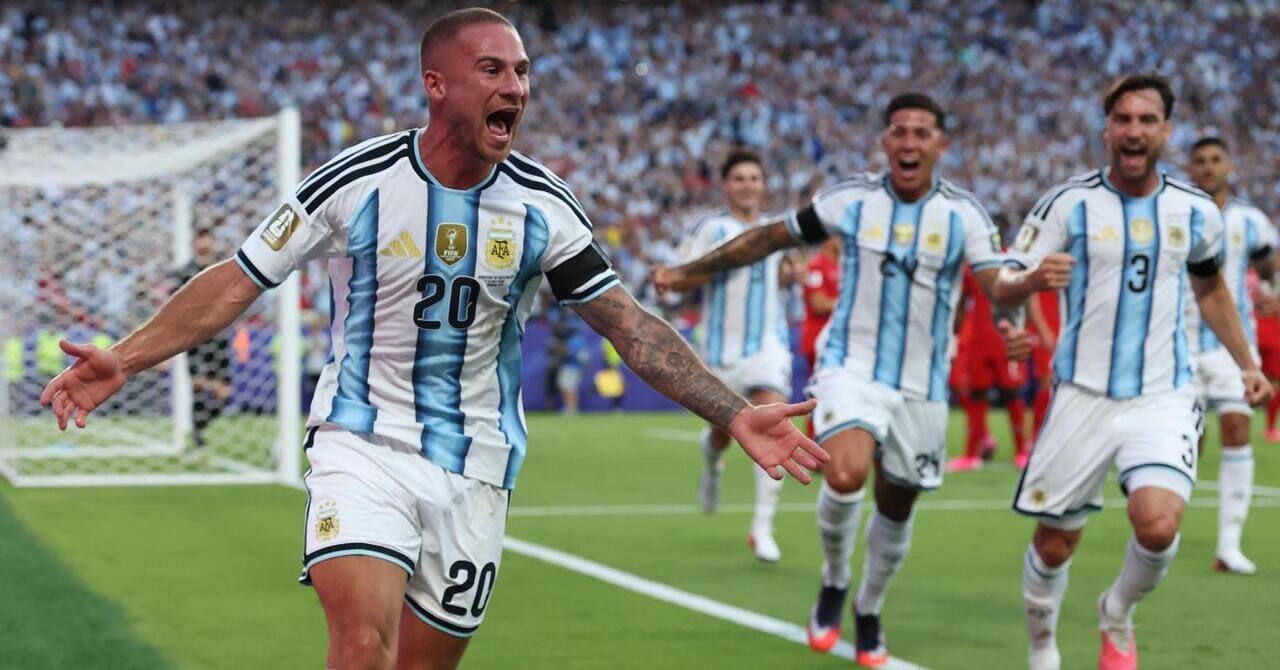
The global football stage is set for an epic, emotionally charged showdown. As England and Argentina prepare to collide in a World Cup semi-final that promises to be nothing short of a sporting war, an unexpected tremor has rippled through the foundations of English football loyalty. Liverpool Football Club, a bastion of the sport, has ignited a social media firestorm with a post that, to many, implied support for Argentina and their midfielder Alexis Mac Allister, rather than their home nation, England. This wasn’t merely a misplaced emoji; it was a digital declaration that has peeled back layers of complex identity, historical animosity, and the ever-present “Scouse not English” sentiment.
In the high-stakes theatre of a World Cup semi-final, where national pride hangs heavy in the air, Liverpool’s official X (formerly Twitter) account dropped a post that sent shockwaves. “Macca and Argentina take on England for a place in the #FIFAWorldCup final,” it read, accompanied by a flexing muscle emoji and the blue and white flag of Argentina. For many, it was an unambiguous show of allegiance to their player and his nation, but for others, particularly English fans outside Merseyside, it was a provocative act, a perceived slight against the Three Lions on the cusp of glory.
The irony is stark: while Liverpool boasts no current players in Gareth Southgate’s England squad for this North American tournament – Jordan Henderson, a revered former Reds captain, now plays for Ajax, and Jarell Quansah, a promising young defender, remains at Anfield but isn’t in the national team setup – they have a pivotal representative in the opposing camp. Alexis Mac Allister, a dynamic force in Argentina’s midfield, has been instrumental in their journey to the last four. From a purely club perspective, supporting their player is logical. Yet, the context of this particular fixture elevates it far beyond simple club loyalty.
A Rivalry Forged in Fire and History
The England-Argentina rivalry isn’t just about football; it’s a deeply etched scar on the canvas of international relations. It’s a rivalry steeped in geopolitical conflict and sporting legend. The specter of the 1982 Falklands War, a brutal 74-day conflict claiming hundreds of lives on both sides, casts a long shadow over every encounter. This isn’t merely a game; it’s a symbolic re-enactment, a chance for national catharsis or renewed grievance.
Four years after the Falklands, the footballing world witnessed Diego Maradona’s infamous ‘Hand of God’ goal in the 1986 World Cup quarter-final, followed by his breathtaking solo effort – a moment of pure genius that twisted the knife deeper into English hearts. Argentina triumphed, and the legend of Maradona, both saint and sinner, was cemented. The rivalry continued to simmer, boiling over in 1998 when England lost to Argentina on penalties in the last 16, a defeat avenged by David Beckham’s penalty in the 2002 group stage. Each match adds another chapter to a narrative of tension, drama, and often, controversy. Wednesday’s semi-final, the first meeting between the two nations since a 3-2 friendly win for England in 2005, arrives with the weight of decades pressing down on every pass and tackle.
“Scouse Not English”: The Anfield Anomaly
The Liverpool post also inadvertently shone a spotlight on a complex and often misunderstood aspect of the club’s identity: the “Scouse not English” sentiment. While many Liverpool players have adorned the Three Lions shirt with distinction over the years – none more so than Reds legend Roger Hunt, who scored three goals en route to England’s 1966 World Cup triumph – a significant portion of the club’s fanbase holds a unique relationship with the national team. This isn’t a simple rejection of Englishness but a manifestation of a distinct regional identity, forged through historical socio-economic struggles, political alienation, and a sense of being overlooked or underserved by Westminster.
For many Liverpudlians, their city and their club represent a distinct cultural entity, separate from and sometimes at odds with the national narrative. This sentiment, often expressed through banners and chants, resurfaces whenever England plays, creating an intriguing dichotomy. Liverpool’s social media team, whether intentionally or not, tapped into this deep-seated feeling, perhaps aiming to resonate with a segment of their own passionate support while simultaneously raising eyebrows across the footballing landscape.
Game Highlights: Key Matchups and Tactical Tensions
Setting aside the off-field drama, the semi-final itself is a tactical masterpiece waiting to unfold. This is where individual brilliance meets collective strategy, where dreams are made or shattered.
- Midfield Mastery: Mac Allister vs. Rice/Bellingham:The battle for control in the engine room will be paramount. Alexis Mac Allister, buoyed by Liverpool’s backing, will be crucial for Argentina’s ball retention and creative surges. His duel with England’s Declan Rice, a defensive anchor, and Jude Bellingham, a box-to-box phenomenon, will dictate tempo and possession. Can Mac Allister find pockets of space to unleash Argentina’s attackers, or will England’s dynamic duo stifle his influence?
- Messi’s Magic vs. England’s Defence:All eyes will be on Lionel Messi, whose quest for World Cup glory is the tournament’s defining narrative. England’s backline, likely marshaled by Harry Maguire and John Stones, faces the unenviable task of containing arguably the greatest player of all time. It won’t be about man-marking Messi, but rather cutting off his supply lines and limiting his space in dangerous areas. Expect tactical fouls and double-teaming whenever he gets near the box.
- Kane’s Clinical Edge vs. Romero/Otamendi:Harry Kane, England’s captain and talisman, will look to exploit any defensive vulnerabilities. Cristian Romero and Nicolás Otamendi form a formidable, if sometimes aggressive, partnership for Argentina. Kane’s ability to drop deep, link play, and then burst into the box will test their discipline and communication. Set-pieces involving Kane and England’s aerial threats could also be decisive.
- Wing Wizardry: Saka/Foden vs. Tagliafico/Molina:The flanks will be crucial for creating width and chances. Bukayo Saka and Phil Foden, with their pace and trickery, could cause serious problems for Argentina’s full-backs, Nicolás Tagliafico and Nahuel Molina. Their ability to deliver crosses or cut inside and shoot will be a key offensive weapon for England. Argentina’s wide players will also need to track back diligently.
Prediction: A Clash of Titans, A Whisker of Difference
This semi-final is not just a game; it’s a narrative. England, with their blend of youthful exuberance and seasoned professionalism, have shown resilience and attacking flair. Argentina, driven by the Messi dream and a gritty determination, possess that intangible South American flair and fight. The historical animosity and the weight of national expectation will add an almost unbearable pressure. While the midfield battle will be fierce, and Messi’s moments of genius undeniable, England’s defensive solidity and the clinical edge of Harry Kane, combined with the explosive potential of their wide players, might just tip the scales.
I predict a cagey affair, potentially heading into extra time, where one moment of brilliance or one defensive lapse will decide the outcome. Ultimately, England’s slightly deeper squad and their tactical discipline under pressure will see them through.
Prediction: England 2 – 1 Argentina (after extra time)