

While Mohamed Salah has consistently delivered outstanding performances for Liverpool, his noticeable dip in form this season cannot be overlooked.
The statistics are unequivocal. Mohamed Salah’s tenure at Liverpool has been nothing short of spectacular, ensuring his rightful place among the most distinguished players to ever don the red kit.
Since his arrival from Roma in 2017, the Egyptian maestro has featured in 435 matches for Liverpool, netting an astonishing 255 goals
However, his deterioration in performance this season has proven concerning. Salah has consistently demonstrated flawless foresight, and it is unquestionable that he has selected the opportune moment to conclude his journey at Anfield.
His performance metrics for the 2025/26 campaign fall significantly short of his earlier productivity, and given his apparently tense rapport with Arne Slot, a separation appears prudent and will help preserve his esteemed standing.
So, what events have transpired this year?
The initial aspect to consider, which warrants considerable attention, is the profound effect of Diogo Jota’s passing last summer. Salah was reportedly quite close to the Portuguese forward, and he displayed palpable emotion following the opening-night victory against Bournemouth last August, shedding tears before the Kop as Jota’s anthem resonated.
Secondly, at 33 years old, Liverpool wisely contemplated a strategy for his replacement in a post-Salah era. This led to the acquisition of Florian Wirtz, Hugo Ekitike, and Alexander Isak, amounting to an expenditure exceeding £300m. One simply does not recruit athletes of such distinction and expense only to bench them. Indeed, Isak has unfortunately spent more time recovering from injuries than actively playing, yet Ekitike and Wirtz have integrated effectively. Suddenly, Liverpool’s attacking trio was no longer automatically Salah alongside two others; he found himself contending for his position.
This situation culminated following the 3-3 stalemate at Leeds, where Salah expressed his dissatisfaction after yet another match spent on the sidelines.
Following his participation in the African Cup of Nations, he hasn’t exhibited the same prowess upon his return. His blazing speed, instinct for scoring, and capacity to spearhead rapid counter-offensives have evidently abandoned him.
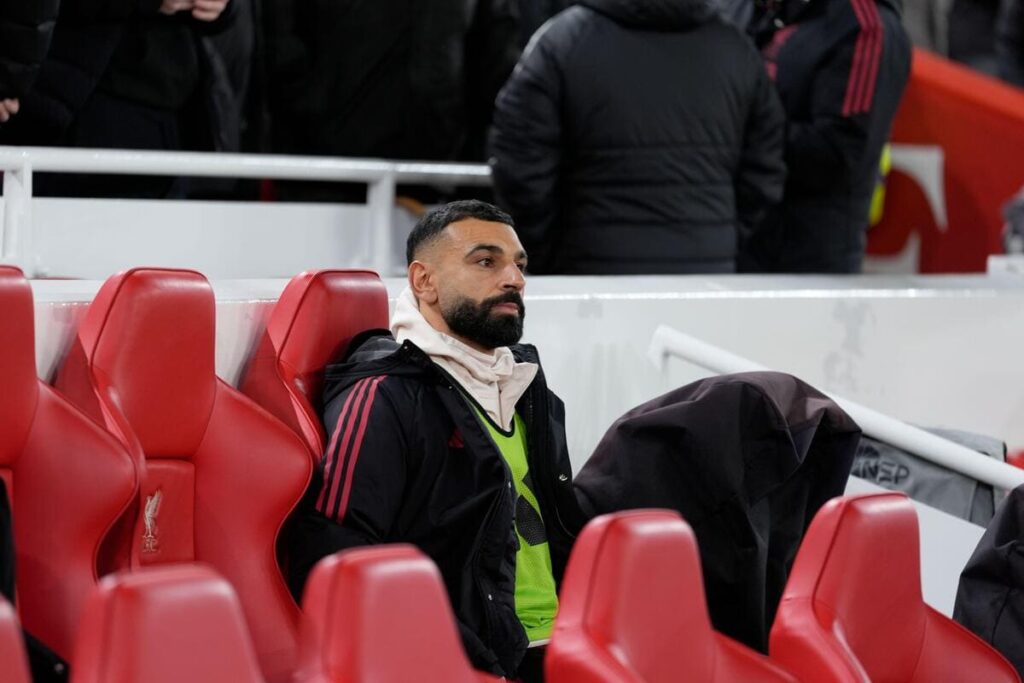
Examining the statistics behind Salah’s decline?
Regarding the Premier League, his performance metrics this season are as follows:
| Appearances | Minutes | Goals Scored | Expected Goals (xG) | Goals vs. Expected Goals | Attempts | Shots on Target | Conversion Rate | xG per Attempt | |
| Mohamed Salah | 22 | 1820 | 5 | 6.82 | -1.82 | 57 | 14 | 8.77% | 0.12 |
The most concerning aspect is not solely the dearth of goals, but rather his notable underperformance relative to his Expected Goals (xG) (which fundamentally implies he has failed to convert as many opportunities as anticipated based on the chances presented to him). During the previous season, he registered 29 goals from an xG of 25.21, resulting in a goals v xG differential of 3.79.
In contrast, Ekitike has exceeded his Expected Goals (xG) (with 11 goals against an xG of 9.9). Even the frequently criticized Viktor Gyokeres of Arsenal boasts a goals v xG score of 1.65 (11 goals from an xG of 9.35).
The complete compilation is accessible here…
Regardless of the measurement standard, Salah, who contributed 18 assists alongside his 29 goals in 2024/25, has experienced a dismal season.
What lies ahead for Mohamed Salah?
It appears unavoidable that the Egyptian star will transfer to the Saudi Pro League.
His remuneration, purportedly £400,000 weekly, probably hinders any transfer to another prominent European team. Only clubs such as Paris Saint-Germain and Real Madrid would realistically be able to meet such a salary, and they currently possess more favorable, youthful alternatives.
However, a move to Saudi Arabia is not as uncomplicated as it might initially seem. The persistent conflict in the Middle East constitutes a significant diversion, and economic instability in the region will likely foster increased reluctance to offer lavish agreements to professional footballers.
Nevertheless, the prospect of attracting the foremost Arab footballer of his era to the Pro League represents a singular, exceptional chance, and it is quite probable to materialize. With Cristiano Ronaldo currently 41 years old and approaching the twilight of his extraordinary career, the league requires a worldwide superstar to maintain its prominence, and Salah perfectly fulfills this requirement.