
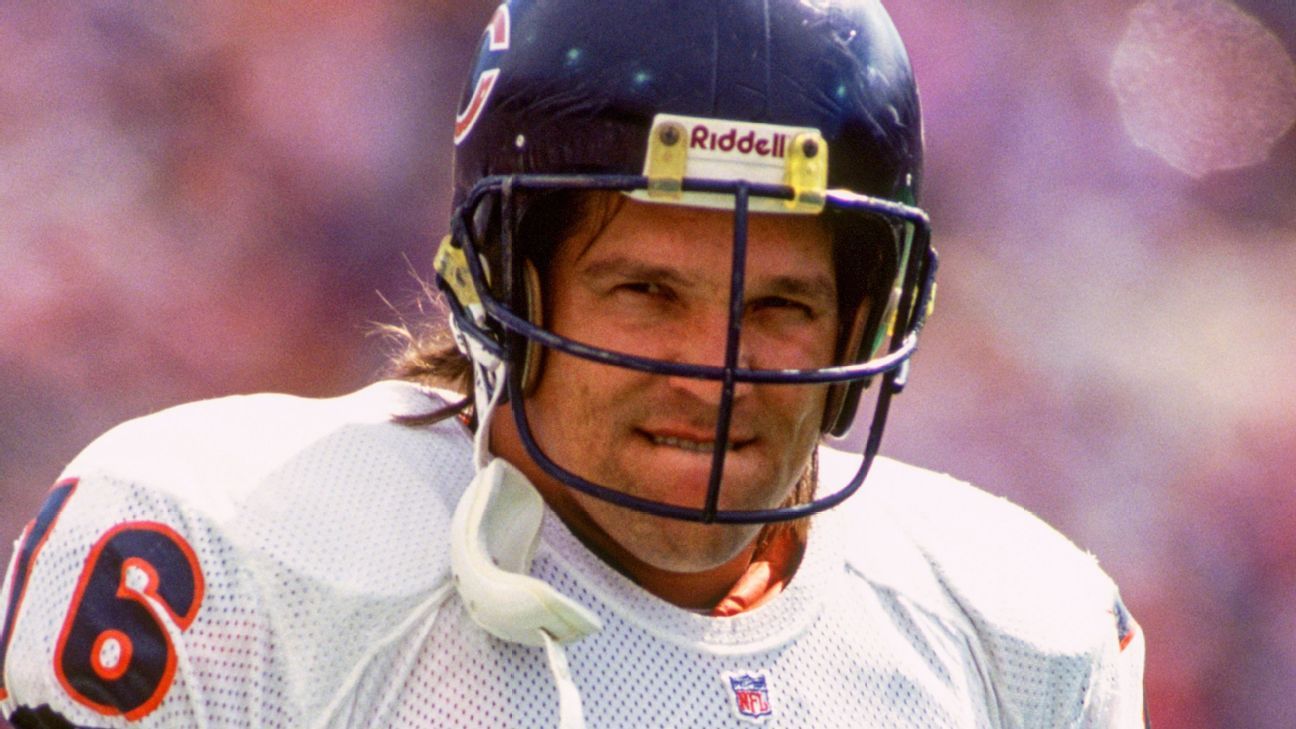
The Unseen Scars of a Legend: Mongo’s Tragic Legacy Demands Answers
BOSTON – The Gridiron’s Silent Battle Continues. The news, though sadly anticipated, still hits with the force of a Mongo sack: Hall of Famer Steve McMichael, the indomitable defensive tackle whose ferocity anchored the legendary 1985 Chicago Bears, has been post-mortem diagnosed with chronic traumatic encephalopathy (CTE). This devastating revelation, confirmed by the Concussion & CTE Foundation, is not merely a footnote in a storied career; it’s a thunderclap reminding us of the profound, often hidden, costs paid by those who graced the unforgiving fields of the NFL.
McMichael, who passed last year at 66 after a grueling five-year fight with amyotrophic lateral sclerosis (ALS), joins a growing, heartbreaking list of gridiron warriors whose brains, after death, reveal the insidious marks of repetitive head trauma. His wife, Misty McMichael, whose unwavering strength has mirrored her husband’s on-field toughness, delivered a poignant statement: “Too many NFL players are developing ALS during life and diagnosed with CTE after death. I donated Steve’s brain to inspire new research into the link between them.” Her words are not just a statement; they are a desperate plea, an urgent call to action echoing across the landscape of American sports.
The Man, The Myth, “Mongo”: A Force of Nature Unleased
For over a decade, Steve McMichael was more than a player; he was a phenomenon. Dubbed “Mongo” for his monstrous strength and “Ming The Merciless” for his relentless pursuit of quarterbacks, McMichael epitomized the brutal beauty of the ’85 Bears defense. He wasn’t just on the field; he *owned* it. From 1981-93, he played in a franchise-record 191 consecutive games, a testament to an iron will and a body seemingly forged for battle. His 92.5 career sacks place him second only to the incomparable Richard Dent in Bears’ history – a statistic that screams dominance from a defensive tackle, a position not typically known for such prolific pass-rushing numbers. He was a two-time All-Pro, a 2024 Pro Football Hall of Fame inductee, and a cornerstone of arguably the greatest defense professional football has ever witnessed.
McMichael’s journey didn’t end with the NFL. After a final season with Green Bay in 1994, he dove headfirst into the world of professional wrestling, a natural fit for his larger-than-life persona and showmanship. He continued to captivate audiences, trading bone-jarring tackles for theatrical body slams, always in the spotlight, always commanding attention.
The Science of Suffering: Unraveling the ALS-CTE Link
The convergence of ALS and CTE in athletes like McMichael is not merely coincidental; it represents a terrifying medical frontier. CTE, a degenerative brain disease linked to repetitive head trauma, manifests in life through violent mood swings, impulsive behavior, and crippling depression. It’s a silent assassin, only conclusively diagnosed after death. But the dark shadow it casts extends further. A chilling 2021 study by Harvard Medical School and the Boston University CTE Center revealed that NFL players are more than four times more likely to develop ALS than other men. Dr. Ann McKee, the visionary director of the Boston University CTE Center, starkly notes that approximately 6% of individuals with CTE in their brain bank also suffered from ALS. “There is strong evidence linking repetitive brain trauma and ALS,” McKee asserts, her words a siren call for urgent research and preventative measures.
McMichael, even as ALS began its cruel theft of his mobility and voice, was keenly aware of this terrifying correlation. He followed the research, understood the stakes, and with characteristic courage, pledged his brain to be studied. It was a final, profound act of generosity, a piece of himself given back to the game that shaped him, hoping to save others from the same fate.
Game Highlights: The Unforgettable Roar of Mongo
While McMichael’s final diagnosis brings somber reflection, his career was a spectacle of raw power and unmatched determination. Let’s revisit some “game highlights” that defined the legend of Mongo:
- The ’85 Bears Dominance:McMichael was the relentless engine in the trenches of the most intimidating defense in NFL history. His ability to disrupt opposing backfields, shed blockers, and collapse pockets was instrumental in the Bears’ Super Bowl XX triumph. Every snap was a highlight reel of sheer force.
- The Iron Man Streak:Playing 191 consecutive games, a franchise record, showcases an almost superhuman resilience. Week in, week out, McMichael was there, battling through pain, embodying the old-school grit that fans adored. It wasn’t just about showing up; it was about dominating every single Sunday.
- The Sack Specialist:With 92.5 career sacks, McMichael wasn’t just a run-stuffer; he was a pass-rushing terror. He consistently pressured quarterbacks, forcing hurried throws and game-changing turnovers. Each sack was a declarative statement of his individual prowess within a unit of monsters.
- The Larger-Than-Life Persona:Whether it was his iconic celebrations, his trash talk, or his unforgettable presence in the “Super Bowl Shuffle,” McMichael brought a theatrical flair to the game. He wasn’t just playing football; he was putting on a show, captivating audiences and inspiring teammates with his boundless energy and confidence.
A Wife’s Plea, A Hero’s Legacy: The Call for a Brighter Future
Chris Nowinski, co-founder and CEO of the Concussion & CTE Foundation, perfectly encapsulated McMichael’s final, heroic act: “Steve McMichael was known for his strength, toughness, and larger-than-life presence, but his final act was to give a piece of himself back to the sports community so that we might have a chance to save ourselves.” This isn’t just about Steve McMichael; it’s about every player who has ever put their body on the line, every family now facing the agonizing uncertainty of their loved one’s future. The rallying cry for research, amplified by McMichael’s ’85 Bears teammates and other former athletes, is more critical than ever. It’s a collective effort to unearth the truths, mitigate the risks, and ultimately, create a safer, more sustainable future for the sport we love.
Prediction: The Inevitable Reckoning and a Shift in the Paradigm
The tragic clarity provided by Steve McMichael’s diagnosis, coupled with the increasingly undeniable link between repetitive head trauma, CTE, and ALS, will serve as a profound catalyst for change. We are at an inflection point. The NFL, driven by both moral imperative and mounting legal and public pressure, will be forced to significantly accelerate its investment in neurodegenerative disease research, moving beyond incremental rule changes to fundamental shifts in player protection and treatment. Expect to see intensified focus on advanced helmet technology, revolutionary diagnostic tools for living players, and potentially, radical alterations to contact protocols at all levels of the game, from youth leagues to the pros. The era of “play through it” is definitively over; the era of “understand and protect” must fully begin. The legacy of “Mongo” will not just be about his tackles and sacks, but about the profound, lasting changes he inspires to safeguard the next generation of gridiron warriors.