
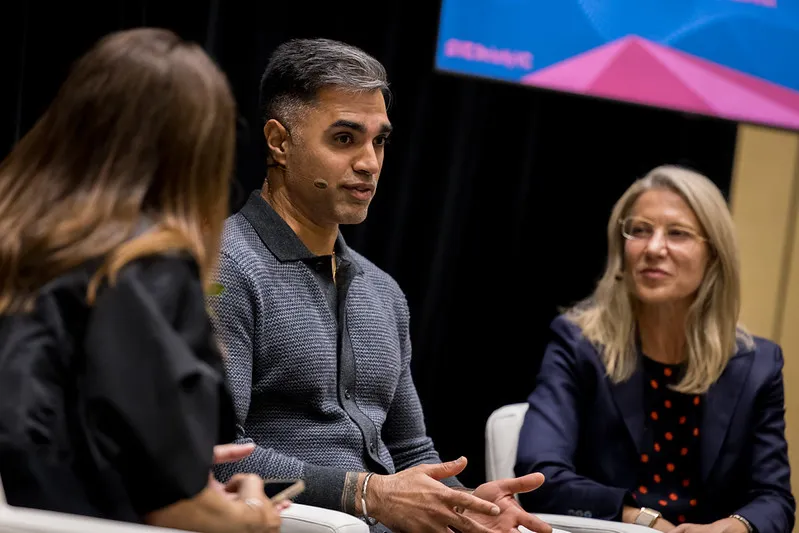
The limited partners (LPs) who fuel the venture capital ecosystem — the “money behind the money” — find themselves in an exhilarating yet precarious moment. Driven by the explosive growth of artificial intelligence, particularly the meteoric rise of companies like OpenAI and Anthropic, these institutional investors are navigating uncharted waters that promise potentially colossal returns, but also hint at underlying systemic pressures.
Key Takeaways:
- **AI Drives Unprecedented Concentration:** LPs are experiencing an unusual, rapid concentration of their portfolios into a few AI giants, primarily OpenAI and Anthropic, across multiple venture funds. While typically a diversification risk, the “power law” nature of venture means this is currently viewed as a feature, not a bug, given the bonanza of potential returns.
- **Accelerated Fundraising Pacing Raises “Yellow Flags”:** Venture funds are raising new capital at an unprecedented clip, often shrinking cycles from 2-3 years to 12-18 months. This rapid deployment, while driven by large AI rounds and increased seed check sizes, signals a “yellow light” for LPs, who worry about the quality and sustainability of such accelerated investing.
- **Strategic Capital Management is Crucial:** LPs face a delicate balancing act: maintaining relationships with top-tier managers while managing their own capital deployment and pacing. The challenge of capital calls outpacing distributions, coupled with the difficulty of declining a fund without losing a coveted “seat at the table,” underscores the strategic complexities of this current market.
The AI Bonanza: LPs Ride the Wave of Venture’s Concentrated Future
For the sophisticated limited partners who supply capital to venture firms, the current landscape is a paradox: intensely busy, potentially immensely profitable, yet tinged with a palpable sense of caution. This isn’t just another cycle; it’s a phase defined by the transformative power of AI, compelling LPs to recalibrate their strategies amidst dizzying valuations and unprecedented market dynamics.
“It’s very busy, but I wouldn’t say it’s scary,” shares Beezer Clarkson of LGT Capital Partners, a diversified asset manager. “There’s a lot of change and a lot of variables at play. I love venture, so I find the chaos fun. You appreciate that these things happen, and that we should enjoy the upside, because sometimes there’s downside, and the up is a lot more fun than the down.” This sentiment is echoed by Amit Bhatti of TrueBridge, a firm focused solely on venture, who sees this as venture’s “moment,” with “really meaningful stuff happening.” The industry, often seen as a niche, is now squarely in the spotlight, thanks to the all-consuming narrative of AI.
The Concentration Conundrum: A Feature, Not a Flaw?
Traditionally, LPs diversify their investments across numerous venture firms – a mix of emerging and established managers, generalists and specialists – to spread risk and optimize returns. The goal is a carefully constructed portfolio designed to minimize exposure to any single company or sector. Yet, the AI explosion has thrown this playbook out the window. Companies like OpenAI and Anthropic have seen their valuations soar with such speed and magnitude that nearly every venture firm, and by extension, every LP, has piled into these same two marquee names. This creates an unusual concentration, often within the same venture firm’s portfolio, challenging the long-standing convention of avoiding conflicting investments.
Surprisingly, this isn’t causing alarm among LPs. “Venture has always been a power law business,” Bhatti explains. “I actually view the concentration as a good thing… In this generation of funds, I would hope there’s a lot of Anthropic and a lot of OpenAI. That’s a feature, not a bug.” He notes that mature funds often consolidate into a few dominant names like Databricks, SpaceX, or Stripe. The key differentiator now is the *speed* at which this concentration has occurred, rather than the concentration itself. Clarkson adds that at the early stage, diversity still exists, with smaller dollar commitments eventually aggregating into these large, late-stage winners.
The expectation is a “bonanza” of returns, a powerful incentive that currently outweighs the traditional concerns about over-concentration. For LPs, the potential upside of being heavily invested in the next generation of tech titans is simply too significant to ignore, even if it means a deviation from conventional diversification strategies.
Accelerated Pacing: A “Yellow Light” Situation
While the AI boom brings excitement, it also introduces significant operational challenges, particularly concerning the pace of fundraising and deployment. Venture funds that once operated on predictable four-year cycles have compressed this to three, then two, and now even 18 months or a single year. “We’re seeing funds come back on one-year pacing, which is fast,” Clarkson observes. “The norm was probably two to two and a half years.” This rapid deployment is fueled by several factors: the massive capital requirements of late-stage AI rounds, the doubling of seed round sizes, and managers opting to bump up existing fund sizes mid-cycle rather than launching entirely new vehicles.
For LPs, this accelerated pacing is a “yellow light” scenario, causing “a little bit of heartburn.” Bhatti notes, “If Anthropic is raising a giant quantum of capital and you put 20% of the fund into it, you’re obviously going to be ahead of pace.” The concern isn’t just the speed, but the potential impact on investment quality. “It’s typically harder to do a one-year vintage and get it right,” Clarkson cautions, hinting at the potential for rushed decisions or overvalued investments.
However, there’s a crucial distinction between this cycle and previous high-speed eras. Bhatti contrasts the current environment with the accelerated pacing seen during the crypto boom, where much of the investment went into “zero-revenue crypto moonshots.” Today, he points out, “we’re seeing a lot of companies go from zero to $100 million in revenue, which was totally unheard of before.” This revenue-driven growth offers some comfort, suggesting that while fast, the investments are often backed by more tangible progress than in previous speculative bubbles.
Navigating LP Commitments and Vintage Volatility
The rapid fundraising pace puts LPs in a strategic bind. If a top-performing manager returns for a new fund annually, but previous investments are still illiquid “paper returns,” LPs face a difficult choice: commit more capital and potentially over-allocate, or risk losing their “seat at the table” with a coveted fund. “It’s very hard to leave a manager and then come back,” Clarkson explains. Instead, LPs often opt to “downsize your check,” reducing their commitment to manage their own portfolio pacing.
Bhatti concurs, emphasizing the importance of being “reliable capital.” LPs build commitment calendars, and significant deviations require careful internal planning, often resulting in downsizing commitments rather than outright withdrawal. Managers, aware of this pressure, are increasingly “bumping up their fund sizes mid-cycle” as a workaround, avoiding the perception of constantly raising new funds while still accommodating larger round sizes.
The challenge is compounded by the nature of venture capital, where capital calls continue even when distributions are slow to materialize. This can strain institutions like endowments, hospitals, or foundations that have ongoing operating commitments. Regarding vintage performance, the “COVID vintage” of 2021, characterized by high valuations and rapid deployment, is still early in its lifecycle. While not expected to be the “best one” overall, Bhatti anticipates “a couple of breakouts will come from it,” citing early-era OpenAI and Cursor as examples. Liquidity, though slower in the past two years, is beginning to flow, with names like SpaceX providing headline exits.
Bottom Line
Limited Partners are currently experiencing a venture capital market unlike any before. Propelled by the AI revolution, they are embracing an unprecedented concentration in a few, high-growth companies, viewing it as a necessary play in a power-law driven ecosystem. While the potential for extraordinary returns is intoxicating, the accelerated pace of fundraising and capital deployment introduces significant operational and strategic complexities. LPs are managing this “yellow light” situation with a mix of excitement and caution, leveraging decades of experience to balance the imperative of securing access to top-tier funds with the disciplined management of their own institutional capital. The current landscape is a testament to both venture’s enduring potential and its inherent volatility, demanding sophisticated navigation from those who fund its innovation.
In the ever-evolving landscape of venture capital, the traditional pathways to success and liquidity are undergoing a profound transformation. From diversified exit strategies to the rise of a new generation of fund managers, the industry is recalibrating in response to economic shifts, technological advancements, and a renewed focus on sustainable growth. We sat down with Beezer Clarkson and Amit Bhatti, Partners at Sapphire Partners, a leading fund-of-funds, to dissect these critical trends, exploring how venture capitalists and limited partners (LPs) are adapting to a more complex, yet ultimately more dynamic, ecosystem.
Key Takeaways
- Liquidity Diversifies Beyond IPOs:Venture capital exits are no longer solely an IPO game. Robust M&A activity, including multi-billion-dollar deals, and a maturing secondary market are providing diverse exit paths, accelerating capital returns and redefining successful liquidity events.
- Strategic Management of Founder & Employee Liquidity:While employee tenders and founder selling are becoming more common, particularly in mature private companies, lead investors are actively managing these opportunities. The goal is to balance immediate liquidity needs with long-term company health, employee motivation, and sustained growth.
- Emerging Managers Find Their Niche:Despite a competitive fundraising environment dominated by established players, a vibrant ecosystem exists for emerging venture managers. Funds with differentiated theses, unique access to talent, or specialized expertise – even those starting with smaller capital bases – are successfully attracting LP backing.
The Evolving Face of Liquidity: Beyond the IPO
For decades, the initial public offering (IPO) stood as the ultimate validation for venture-backed companies, the pinnacle of liquidity for investors and founders alike. While IPOs still command attention, the venture capital market is witnessing a significant diversification of exit strategies. M&A activity, particularly large-scale transactions, has emerged as a dominant force, providing substantial returns and challenging the traditional narrative.
Beezer Clarkson observes that “liquidity is going beyond just IPOs.” This year alone has seen a flurry of activity, including significant IPOs, alongside numerous M&A deals that are eclipsing them in scale. “We’re seeing $10 billion-plus M&A exits, a $60 billion one [with Cursor],” she notes, highlighting the sheer magnitude of these private market transactions.
Complementing M&A is the ascendancy of the secondary market, which has shed its historical stigma to become a crucial component of the venture liquidity toolkit. Amit Bhatti emphasizes that secondaries have solidified their position as the “third leg of liquidity,” alongside IPOs and M&A. Historically, selling stakes in the secondary market was often perceived as a sign of distress, a “dirty word” in venture circles. However, the market has matured significantly over the last five years, becoming a sophisticated and widely accepted mechanism for LPs and GPs alike.
“People were holding the bag in 2021 and thought, ‘I should have sold,’” Bhatti recalls, pointing to a pivotal moment that accelerated the acceptance of secondaries. Now, more managers judiciously use secondaries as a tool, not necessarily to exit entire positions in “power law” companies, but to strategically return capital. “If you can sell 20% of your position and return your fund, you should probably do it,” he advises, underscoring the pragmatic shift in strategy.
Clarkson adds that secondaries are now “much more prevalent than before,” and are happening at multiple levels, from LPs selling stakes in their GPs to strips of their portfolio companies. This growing sophistication is crucial, she argues, because “the ecosystem needs liquidity options. Venture is predicated on that, and if you wait 20 years for an IPO, that is not what structurally we all thought it could be.”
Navigating Founder and Employee Liquidity
The rise of secondaries has also catalyzed a related trend: increased founder selling and employee tenders, often occurring much earlier in a company’s lifecycle than historically observed. While this offers valuable liquidity, it also presents a nuanced challenge for investors regarding employee motivation and long-term commitment.
Bhatti draws an analogy to the crypto market, where immediate liquidity for token-paid employees sometimes led to a lack of motivation when projects faced adversity. For established companies like Stripe and Databricks, with clear financial pictures, offering partial liquidity to long-tenured employees is “totally reasonable.” However, the situation becomes more complex for younger companies.
The enforcement of responsible liquidity practices often falls on lead investors. Bhatti explains that many investors they back actively engage with portfolio companies, sometimes advising against employee tenders if the timing isn’t right. “Those conversations are happening behind the scenes, and people have learned some lessons from last time,” he says. Ultimately, the ability to influence these decisions often comes down to “leverage,” with founders holding significant sway in high-demand scenarios.
The Talent Ecosystem: From Employees to Investors
The success of major tech companies has a ripple effect, often creating a new generation of investors. As employees from companies like OpenAI and Anthropic gain significant liquidity, the question arises whether they will become new LPs or even competitors to existing venture managers by launching their own funds.
Clarkson confirms this historical pattern: “We’ve seen it multiple times: when a company becomes very productive, employees can become LPs or GPs themselves.” She anticipates “a whole new raft of emerging managers backed by people coming out of OpenAI and Anthropic,” echoing the trend seen in the Google days. However, she cautions that becoming an LP or GP is a serious commitment, involving “many millions of dollars and a multi-decade business.”
Bhatti agrees, noting that these successful individuals “stay in the ecosystem, investing in others, building new companies, starting new firms.” This continuous cycle of talent and capital is a core reason why San Francisco, despite its challenges, maintains its preeminence as a tech hub. The soaring housing costs in the Bay Area, though a concern, don’t appear to be immediately displacing this density effect. Clarkson references history, suggesting that while talent might shift geographically within the Bay Area (e.g., back to the suburbs from San Francisco proper), the overall pull of the region’s concentrated ecosystem remains incredibly strong.
The Path for Emerging Managers: A Wedge in a Crowded Market
With a significant portion of committed capital flowing to a handful of large, established venture funds, concerns naturally arise about the accessibility of capital for emerging managers. However, both Clarkson and Bhatti paint a more optimistic picture for new entrants.
Clarkson highlights that “there are still first-time and emerging managers, funds one through three, being raised this year, last year, the year before.” The key, she explains, is having “a differentiated point of view, a reason for being.” While fundraising has undoubtedly become harder, these funds are still getting funded, albeit with smaller average sizes, often in the $25 million to $50 million range for a first fund. “Fifty percent of the money might go to the big funds, but if your average first fund is $25 million to $50 million, there can still be enough of those to add up to $1 billion,” she notes, illustrating the aggregate opportunity.
Bhatti reinforces this, advising emerging managers to start small. “It’s much better for an emerging manager to build the track record, prove out the thesis, your access and your judgment with whatever capital you have, and then fund two will be easier to raise,” he explains. He cites examples of well-known funds that began with $5 million funds, contrasting this with the “giant hill to climb” for those attempting to raise $50 million or $100 million on day one.
Sapphire Partners backs a diverse range of emerging managers. Bhatti describes supporting founders who invest on the side, individuals leaving larger firms for earlier-stage ventures, and even “extremely young GPs, 22 and 23 years old,” who possess “really close access to the next generation of AI-native founders.” He cites a compelling example of young GPs who started an accelerator program at MIT, Harvard, and Stanford, yielding early batches that included future successes like Cursor and Mercor. “They’re young, but they’re around an incredible density of talent. The VC job is sourcing, picking, winning, and they did a pretty decent job of picking when there was no money involved,” Bhatti shares, explaining the rationale behind their investment.
Clarkson adds that LPs are now more flexible in their funding criteria, even considering those who are still operating while investing. This operator-turned-investor model can provide unique insights, though the ultimate test remains “whether they’re doing what they need to do to win the right to be on the best cap tables.” Bhatti concludes that “especially early stage, there’s no one-size-fits-all,” with various models – part-time, diversified, concentrated – finding success.
LP Perspectives: Backing the Future
When it comes to direct investment, LPs like Sapphire Partners have clear parameters. Clarkson states that given their program, it’s challenging to write checks for less than $5 million. She also generally aims for no more than 20% of a fund’s total capital, to ensure the GP has a diversified LP base for future fundraising, although she would consider more in specific scenarios.
Bhatti echoes a similar range, with $3 million to $5 million being typical for them, occasionally smaller in very specific cases. He is more flexible on concentration, sometimes committing half or even all of a fund if the scenario is ideal. However, he also advises GPs to diversify their LP base. “We’ve done a fund where we were half the capital, and the next fund we were closer to 20%, because they did well,” he illustrates, demonstrating the evolving nature of these relationships as managers mature.
Bottom Line
The venture capital landscape is in a constant state of flux, characterized by expanding liquidity options, strategic management of founder and employee exits, and a resilient ecosystem that continues to foster new investment talent. The rise of sophisticated secondary markets and substantial M&A activity means that successful exits are no longer synonymous solely with IPOs. Simultaneously, while established funds command significant capital, the door remains open for emerging managers with unique insights and access, particularly those leveraging the dense talent pools of innovation hubs like San Francisco. This dynamic environment underscores an industry that, despite its inherent challenges, consistently adapts, innovates, and renews itself, ensuring a robust future for venture-backed growth.
Source:{feed_title}