
Key Takeaways
- **Investigation Underway, Root Cause Elusive:** Blue Origin is still working to identify the precise cause of the New Glenn first stage explosion on May 28, with early analysis pointing to the aft section, despite extensive data.
- **Strategic Pivot for Faster Recovery:** To expedite its return to flight and increase launch cadence, Blue Origin is replacing its damaged transporter-erector system with a massive crane for standing New Glenn on the launch pad.
- **High Stakes for NASA’s Lunar Goals:** The rapid recovery of New Glenn is critical for Blue Origin’s pivotal role in NASA’s Artemis program, aiming to return humans to the moon before President Trump leaves office.
Blue Origin’s New Glenn: Doubling Down on Lunar Dreams Amidst Explosion Mystery
In the high-stakes arena of commercial spaceflight, setbacks are an unwelcome, yet often inevitable, part of the journey. For Jeff Bezos’ ambitious space venture, Blue Origin, the recent explosion of its New Glenn mega-rocket during testing has presented a formidable challenge. Despite the significant incident last month, the company is demonstrating unwavering resolve, vowing to return its colossal rocket to flight within the year. The pressing question, however, remains: what precisely caused the May 28 explosion?
CEO Dave Limp offered his most detailed public commentary on the incident this Tuesday, outlining the company’s ongoing efforts to “identify and correct the root cause” on Blue Origin’s official website. Limp’s statement revealed that “early analysis points to the aft section of the first stage” of the rocket as the likely origin point. This preliminary conclusion is supported by an “extensive data from multiple camera angles and sensors,” underscoring the rigorous investigative approach Blue Origin is employing. While the precise mechanism of failure is still under scrutiny, the focus on the aft section suggests a potential issue within the engine cluster, propulsion system plumbing, or structural integrity in that critical region.
The Unsettling Setback: A Closer Look at the May 28 Incident
The explosion on May 28 occurred as New Glenn was preparing for what would have been its fourth flight, a significant milestone for a vehicle that has spent more than a decade in slow, deliberate development. After its inaugural launch in January 2025, Blue Origin had been accelerating its flight schedule, aiming for a rapid ramp-up in operations. The incident, while damaging to equipment and infrastructure, thankfully resulted in no injuries, a testament to the safety protocols in place for such testing. This fortunate outcome allows the company to focus entirely on the technical investigation and recovery without the added burden of personnel harm.
The New Glenn program represents a monumental investment for Blue Origin, designed to be a reusable heavy-lift launch vehicle capable of deploying substantial payloads to various orbits, including those required for lunar missions. The setback, therefore, is not merely an operational hiccup but a significant blow to the company’s tightly scheduled development and deployment plans, particularly those tied to critical government contracts.
The Urgency of Lunar Ambition: NASA’s Artemis Connection
Blue Origin’s determination to return New Glenn to flight as swiftly as possible is fueled by more than just corporate ambition. The company has secured a central role in NASA’s ambitious push to return humans to the moon under the Artemis program, with a stated goal of achieving this before President Trump leaves office. New Glenn is slated to be a crucial component in this endeavor, expected to ferry key components, landers, and potentially even crew modules to lunar orbit. A prolonged delay in New Glenn’s operational readiness could have ripple effects across the entire Artemis timeline, putting immense pressure on Blue Origin to resolve the current issues with unprecedented speed and thoroughness.
To meet these critical deadlines, Blue Origin faces a dual challenge: not only must it definitively determine and rectify the cause of last month’s explosion, but it also needs to undertake a substantial rebuilding effort at its Cape Canaveral, Florida launch complex. This facility is currently the only one equipped to handle the immense scale of the New Glenn rocket, making its swift restoration paramount to the program’s continuity.
Rebuilding from the Rubble: Infrastructure and Innovation
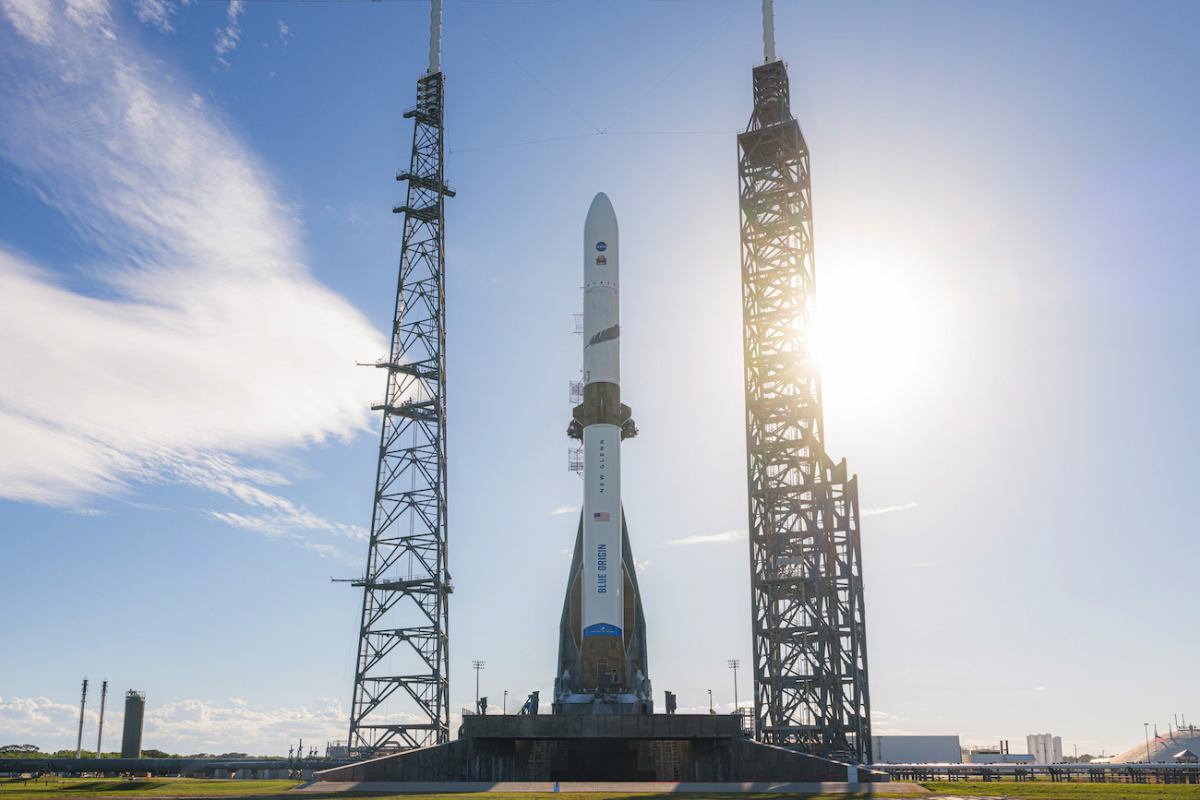
Limp’s recent statement also provided insight into the recovery progress, praising Blue Origin’s employees for their rapid advancements on this front. The explosion inflicted considerable damage, claiming a lightning tower and, critically, the large piece of equipment known as the transporter-erector, which is responsible for moving New Glenn to the launchpad and standing it upright. Several nearby buildings on the site also sustained damage from the blast’s concussive force.
However, Limp highlighted several “breaks” that the company “intend to make the most of.” Crucially, the on-site water tower, gas tanks, and the rocket integration facility emerged from the incident “in good shape,” mitigating what could have been even more catastrophic damage and significantly simplifying the rebuilding process. This selective damage allows Blue Origin to focus its resources on key areas rather than a complete overhaul of the entire complex.
Perhaps the most significant revelation concerning the launch complex’s reconstruction is Blue Origin’s strategic pivot away from the damaged transporter-erector concept. Instead, the company will now utilize a massive crane to stand New Glenn upright on the launch pad before flights. This engineering decision is not merely a reactive measure but a proactive strategic shift. According to Limp, this new approach is expected to achieve two critical objectives: allow Blue Origin to return to flight sooner than if they had to rebuild the complex transporter-erector, and, perhaps more importantly, increase New Glenn’s overall flight cadence in the long term. Prior to the May explosion, Blue Origin had ambitiously planned for as many as 12 launches this year, a target that underscores the company’s intent for rapid, frequent operations.
The Path Forward: Investigation, Redesign, and Ramp-up
The detailed investigation into the explosion’s root cause will involve meticulous analysis of telemetry data, high-speed camera footage, and physical debris. Identifying the precise failure mode—be it a material flaw, a design inadequacy, or an operational anomaly—is paramount to implementing effective corrective actions. Any proposed fixes will then undergo rigorous testing to ensure the safety and reliability of future flights. This iterative process of investigation, redesign, and re-validation is a cornerstone of aerospace safety, though it often demands time and patience, commodities that Blue Origin is currently in short supply of given its NASA commitments.
The shift to a crane system for vehicle erection represents a significant engineering and operational change. While simplifying some aspects of launch pad infrastructure, it also introduces new procedures and considerations that will need to be thoroughly tested and validated. The promise of increased flight cadence through this method is enticing, potentially allowing Blue Origin to make up for lost time and meet its ambitious launch targets more efficiently in the future.
CEO’s Vision: Resilience in the Face of Adversity
Dave Limp’s public statements have been characterized by a blend of candor regarding the challenges and unwavering confidence in his team’s capabilities. His praise for Blue Origin’s employees highlights the collective effort required to navigate such a complex situation. The company’s ability to “catch a lot of breaks” and Limp’s stated intention to “make the most of them” reflects a pragmatic and determined leadership approach. This kind of resilience is critical in the cutthroat world of space exploration, where technical hurdles are as common as launch delays.
The Broader Context: A High-Stakes Space Race
In a landscape dominated by formidable competitors like SpaceX and United Launch Alliance (ULA), Blue Origin’s ability to quickly recover and demonstrate reliability with New Glenn is vital. The space industry is witnessing an unprecedented boom, with demand for heavy-lift capabilities skyrocketing for everything from satellite constellations to deep-space exploration. A protracted delay for New Glenn could cede critical market share and erode confidence among potential customers. The rapid resolution of this incident and a successful return to flight will not only reaffirm Blue Origin’s engineering prowess but also its commitment to becoming a dominant player in the global space economy.
Bottom Line
Blue Origin finds itself at a critical juncture, navigating the aftermath of a significant rocket explosion while simultaneously pushing toward ambitious lunar objectives. The company’s swift pivot to a new launchpad configuration and the determined pursuit of the explosion’s root cause underscore its resolve. While the path to returning New Glenn to flight is fraught with technical and logistical challenges, the urgency driven by NASA’s Artemis program and the competitive pressures of the commercial space market ensure that Blue Origin will exert every effort to overcome this setback, solidifying its position as a key player in humanity’s return to the Moon and beyond.
When you purchase through links in our articles, we may earn a small commission. This doesn’t affect our editorial independence.
{content}
Source:{feed_title}