
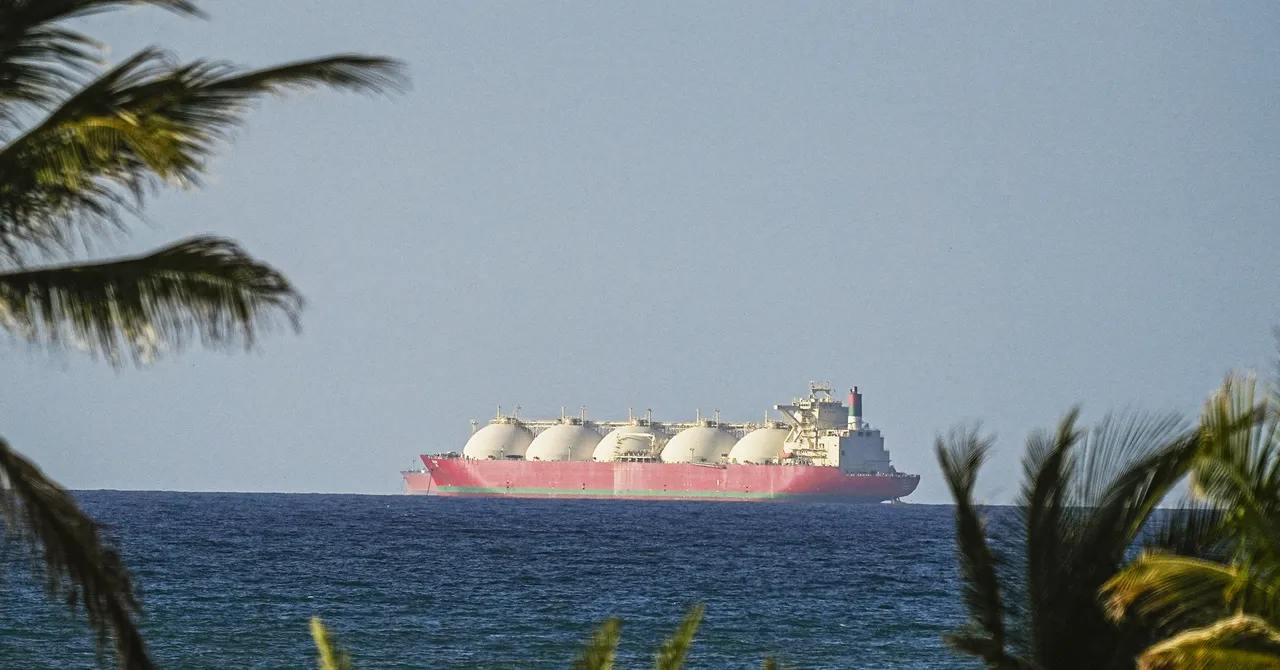
While the globeanxiously awaited Tuesday evening, reports of a truce and the prospective recommencement of operations in the Strait of Hormuz brought widespread alleviation. Nevertheless, with consignments idled in the strait for over a month, the impediment to worldwide maritime transport will not instantly dissipate.
“Passage via Hormuz declined by approximately 95 percent amidst these hostilities. Consequently, costs escalated, not solely for raw petroleum but equally for processed derivatives such as aviation fuel, diesel, and gas oil,” states Carsten Ladekjær, CEO at Glander International Bunkering, a firm specializing in furnishing propellant and emollients to the worldwide maritime transport sector.
The repercussions have varied among different territories. Nations substantially reliant on energy from the Middle East—especially those in Asia—have been primarily impacted. India obtains approximately 55 percent of its imported energy from the area, China about 50 percent, Japan 93 percent, South Korea 67 percent, and Singapore 70 percent, as per Ladekjær.
Although the truce indicates a potential recommencement of traffic, crucial specifics are still ambiguous. “Even with a cessation of hostilities, resuming operations will not be instantaneous,” states Ladekjær. “An accumulation exists, with vessels anticipating departure, and presumably a regulated procedure for determining who proceeds first. Iran still appears to be overseeing that situation.”
Commodity markets for energy responded swiftly. Brent petroleum declined to around $94 from $110 previously during the week—a decrease of approximately 15 percent.
“Processed derivatives such as diesel and aviation fuel have decreased further, given that markets anticipate future conditions—they incorporate forecasts into pricing,” explains Arne Lohmann Rasmussen, chief analyst and head of research at Global Risk Management. “However, we remain significantly higher than conflict-free benchmarks, which hovered around $60 to $70.”
A Congested Framework
Approximately 1,000 vessels persist in the Gulf, comprising hundreds of oil carriers anticipating transit.
At the time of this publication, over 800 freight vessels and oil carriers are stranded inside the Persian Gulf, with more than 1,000 supplementary craft queuing on both sides of the Strait of Hormuz.
During typical circumstances, approximately 150 craft traverse the strait each day. Specialists assert that resolving the accumulation will require time, since vessels need to be ordered for passage, resupplied with fuel, and relocated.
“That presents an immense logistical challenge. The present throughput capability remains uncertain, particularly regarding safety aspects,” states Lohmann Rasmussen. “It is not an issue amenable to instantaneous resolution. There are challenges pertaining to logistics, safety, and even communication.”
Even though the market has already experienced an adjustment, that does not signify that costs at fuel dispensers or in reserves will decrease instantaneously.
{content}
Source:{feed_title}