
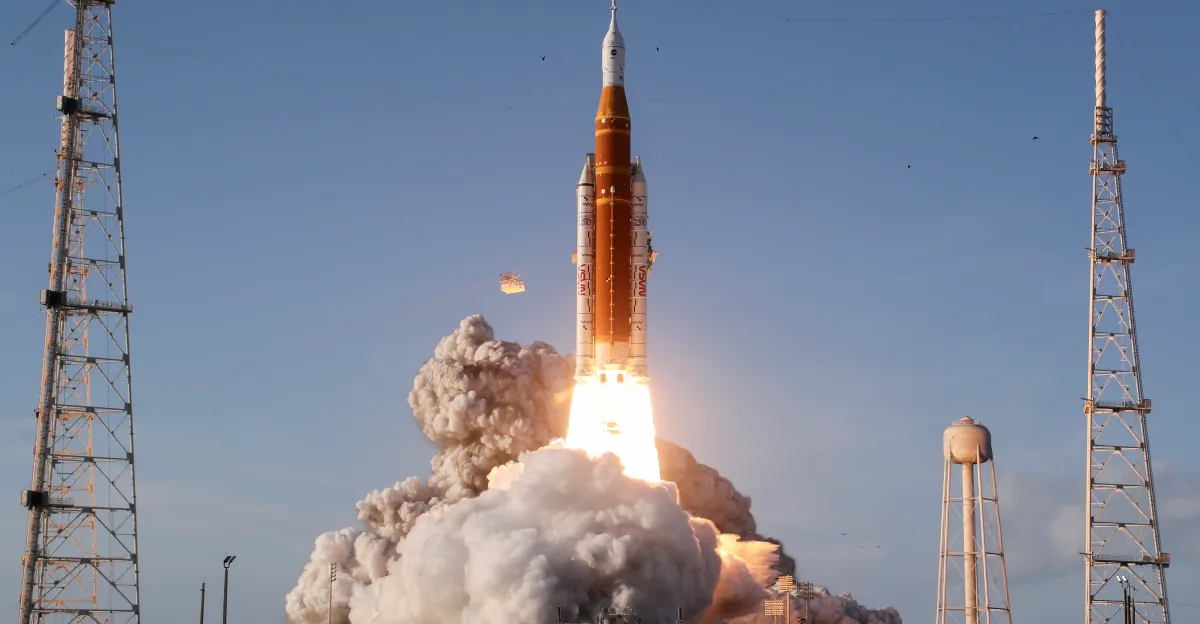
Even in the vast silence of space, some problems transcend the cosmos. While orbiting Earth in preparation for a historic lunar journey, Artemis II commander Reid Wiseman encountered a challenge that millions back on the ground face daily: Microsoft Outlook wasn’t working. This seemingly mundane tech glitch, reported live from space, offers a surprisingly relatable glimpse into the blend of cutting-edge and everyday technology supporting humanity’s return to the Moon.
Key Takeaways:
- Universal Tech Woes:Even highly trained astronauts on advanced missions can encounter everyday software bugs, like a malfunctioning Microsoft Outlook.
- Remote Troubleshooting in Space:NASA’s Mission Control successfully resolved the issue remotely, highlighting the sophisticated ground support required for in-flight tech maintenance on commercial off-the-shelf (COTS) devices like the Microsoft Surface Pro.
- Blend of High-Tech & COTS:Modern space missions utilize a diverse toolkit, from bespoke deep-space communication networks to consumer-grade cameras and personal devices, all serving critical roles in exploration, documentation, and crew well-being.
Outlook Offline: A Space-Age IT Ticket
The incident unfolded during a recent leg of Artemis II’s mission, captured in NASA’s official livestream. Commander Reid Wiseman, poised to become one of the first humans to orbit the Moon in over 50 years, relayed an all-too-familiar distress call to Mission Control: “I also see that I have two Microsoft Outlooks and neither one of those are working.” The report instantly resonated with anyone who has ever stared blankly at an unresponsive email client, a stark reminder that even at the forefront of human exploration, some digital frustrations remain constant.
Wiseman’s “Personal Computing Device” (PCD) – a Microsoft Surface Pro – was the culprit. These robust, yet fundamentally consumer-grade tablets, are increasingly integrated into space missions for various tasks, from reviewing procedures and managing schedules to providing a link to personal communications and entertainment. Their versatility makes them invaluable, but as the incident proved, they are not immune to the quirks of desktop software, especially when operating in an environment far removed from a conventional office network.
Mission Control to the Rescue: A Cosmic IT Department
Solving the problem required a remote intervention from NASA’s experts. During a subsequent press conference, Artemis flight director Judd Frieling downplayed the severity, stating, “This is not uncommon. We have this on-station all the time. You know, sometimes Outlook has issues getting configured, especially when you don’t have a network that’s directly connected. And so essentially we just had to reload his files on Outlook to get it working.”
While “not uncommon” for ground teams, troubleshooting a device millions of miles away presents unique challenges. Mission Control had to remotely access Wiseman’s Surface Pro, navigate the complexities of a non-terrestrial network, and perform the equivalent of an IT reboot and file reload. This seemingly simple fix underscores the immense technical infrastructure and human expertise required to maintain even the most basic digital functions in space. It highlights the critical importance of a responsive, highly skilled support team on Earth, acting as an omnipresent IT department for astronauts far from home.
The Networks Enabling Off-World Connectivity
The ability to remotely diagnose and fix a software glitch on a spacecraft relies on NASA’s sophisticated communication backbone. The agency employs a dual-layered approach: the Near Space Network and the Deep Space Network. The Near Space Network, composed of a global array of ground antennas and orbiting satellites, handles communications within Earth’s vicinity. As Artemis II ventures further, the Deep Space Network takes over, utilizing massive parabolic antennas strategically placed around the world to maintain contact across vast cosmic distances.
Mission Control at the Johnson Space Center in Houston, Texas, constantly orchestrates the hand-off between these networks, ensuring continuous data flow and voice communication. It’s a marvel of engineering that allows for real-time interaction, telemetry monitoring, and, crucially, remote IT support for an astronaut’s email client. The sheer bandwidth and precision required to sustain these links, even for something as routine as reloading Outlook files, speaks volumes about the complexity underlying modern space missions.
Beyond Email: The Astronaut’s Digital Toolkit
While the Outlook hiccup grabbed headlines, it’s just one piece of the extensive technological ecosystem aboard Artemis II. The crew’s gear list goes far beyond email, reflecting a blend of scientific necessity, public outreach, and personal comfort:
- Nikon D5 DSLR Cameras:For high-resolution scientific imaging and breathtaking views of Earth and the Moon. These professional-grade cameras are essential for documenting observations and capturing the beauty of space.
- ZCube Video Encoder:A specialized device likely used for efficient compression and transmission of high-quality video footage back to Earth, vital for both data analysis and media broadcasts.
- Handheld GoPro Cameras:The ubiquitous action cameras, offering a more dynamic, personal perspective for filming content. These are crucial for the planned Disney/National Geographic documentary, bringing the space experience closer to audiences worldwide.
- Personal Phones:Perhaps the most relatable item, crew members were allowed to bring their personal smartphones. Visible stowed in spacesuit pockets during livestreams, these devices serve as a crucial link to family and friends, a source of entertainment, and a touchstone to life back on Earth, boosting morale during long missions.
This diverse array of technology, ranging from highly specialized scientific instruments to commercial off-the-shelf electronics, illustrates NASA’s pragmatic approach to equipping its astronauts. Each device, whether for critical mission operations or personal use, must be rigorously tested and integrated into the spacecraft’s environment, ensuring it functions reliably under the extreme conditions of spaceflight.
The Bottom Line
The tale of Commander Wiseman’s malfunctioning Outlook on Artemis II is more than just a quirky anecdote; it’s a powerful illustration of the interwoven fabric of human experience, advanced engineering, and everyday technology. It reminds us that even as humanity reaches for the stars, the universal frustrations and triumphs of the digital age follow along. From sophisticated deep-space networks to consumer-grade tablets, every piece of tech plays a vital role, supported by a dedicated team on Earth, ensuring that even in the vastness of space, the connection to home—and to our inboxes—remains unbroken.
Source:{feed_title}