
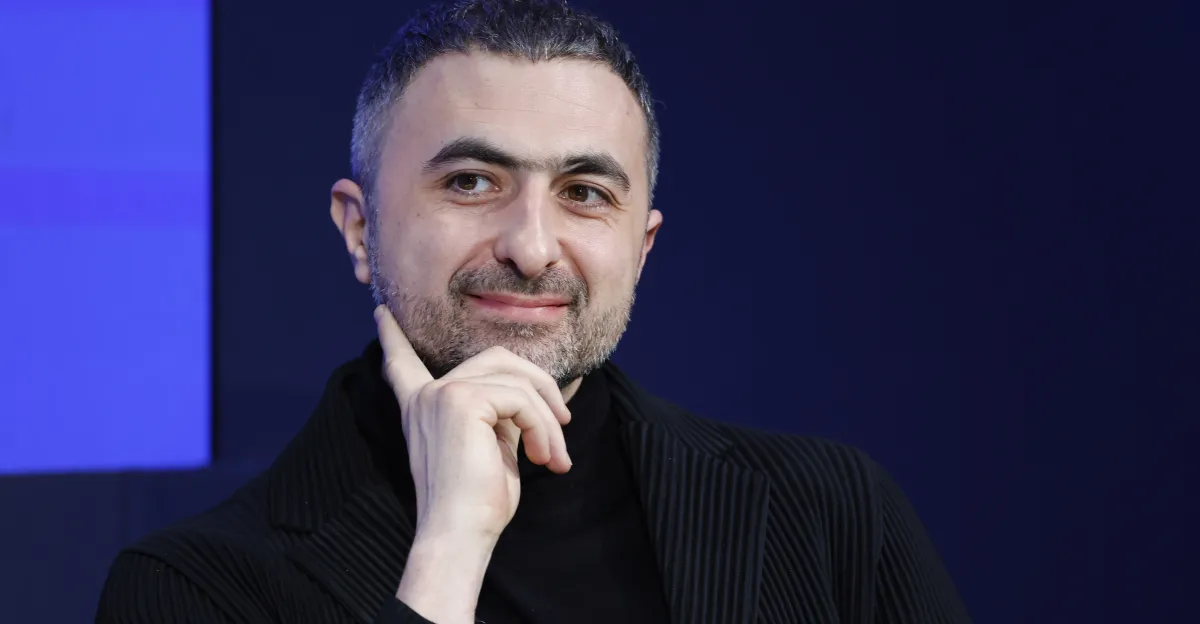
Microsoft’s AI Architect: Mustafa Suleyman’s Singular Pursuit of Superintelligence
Key Takeaways
- Refocused Leadership:Microsoft’s AI CEO, Mustafa Suleyman, has shifted his primary focus entirely to the pursuit of superintelligence, enabled by a recent company-wide restructuring and a renegotiated OpenAI contract.
- Business-Driven Superintelligence:Suleyman defines superintelligence not as a theoretical concept, but as the practical ability of AI models to deliver significant product value and productivity for millions of enterprises, developers, and consumers.
- Cost-Efficient Frontier Models:Microsoft debuted MAI-Transcribe-1, a new, highly efficient speech recognition model that promises significant cost savings. It’s the first of several “MAI” frontier models developed by small, agile teams, now commercially available.
Mustafa Suleyman, Microsoft’s inaugural CEO of AI, has embarked on a mission years in the making. Following a significant company restructuring in mid-March, Suleyman has divested from day-to-day operational duties to dedicate himself wholly to the ambitious goal of achieving superintelligence. This strategic pivot, though publicly announced only last month, was the culmination of nearly a year of meticulous planning, a vision solidified even before the critical renegotiation of Microsoft’s contract with OpenAI “unlocked” the path for this advanced pursuit.
Suleyman’s Singular Focus: The Pursuit of Superintelligence
“This has been a long-held plan,” Suleyman affirmed toThe Verge, emphasizing that superintelligence is now “purely my focus.” In an industry grappling with fluid definitions for terms like superintelligence and Artificial General Intelligence (AGI), Suleyman grounds his ambition firmly in commercial reality and tangible output. For him, superintelligence isn’t an abstract future state but a concrete measure of utility:
“Superintelligence is really about, ‘Are these models capable of delivering product value for the millions of enterprises that depend on us to deliver world-class language models?'” he explained. “That’s really our focus. We want to deliver for developers, for enterprises, and many, many consumers.” This pragmatic perspective highlights the intensifying pressure on AI companies to translate cutting-edge research into revenue-generating products, a sentiment echoed by new strategies emerging from partners like OpenAI.
Strategic Restructuring: Paving the Way for Frontier AI
The recent comprehensive reorganization within Microsoft was instrumental in enabling Suleyman’s sharpened focus. The company streamlined its operations by consolidating its enterprise and consumer AI teams under the ubiquitous Copilot AI banner. This strategic realignment saw Jacob Andreou, formerly a corporate vice president of product and growth for Microsoft AI, ascend to executive vice president, now spearheading the newly combined teams’ engineering, growth, product, and design initiatives. This operational consolidation effectively liberated Suleyman to channel his energies into the singular pursuit of superintelligence and the development of breakthrough frontier AI models. This shift comes at a critical juncture, as competition among leading AI developers intensifies, pushing the boundaries for attracting new paying consumers and enterprise clients.
Introducing MAI-Transcribe-1: A Leap in Speech Recognition
Demonstrating tangible progress towards these goals, Microsoft recently unveiled MAI-Transcribe-1, a new transcription model designed to meet critical market needs. Suleyman proudly notes that this model boasts “half the GPU cost of the other state-of-the-art models,” representing “a huge cost-saving” for Microsoft and, by extension, its customers. The company hails MAI-Transcribe-1 as “pushing the frontier of speech recognition,” capable of accurately transcribing meetings, captioning videos, and analyzing call center interactions across an impressive 25 languages.
Designed to excel even in the most challenging audio environments, Microsoft’s blog posts detailing the model highlight its robustness against background noise, low-quality recordings, and overlapping speech. Its rigorous training regimen involved a sophisticated blend of “human-curated” and machine-transcribed data. Suleyman elaborated on the diverse data sources, including controlled sound booth recordings, contributions from contractors deliberately recording themselves amidst real-world background noise (from bustling streets to children playing), and “vast amounts of data from the open web.”
MAI-Transcribe-1 is now commercially available on Microsoft Foundry and integrated into the new Microsoft AI Playground, marking the first time these frontier models are “broadly available for commercial use.” It joins existing cutting-edge models like MAI-Voice-1 (for voice generation) and MAI-Image-2 (for image generation), supporting popular audio formats such as MP3, WAV, and FLAC.
Innovation Through Agility: The Small Team Advantage
Suleyman attributes the exceptional performance and rapid development of the new transcription model to a highly focused, lean team of just 10 individuals. This team, he explains, was “liberated from any of the bureaucracy,” supported by an adjacent group handling vendor management, data acquisition, and other logistical tasks. This agile, decentralized approach to innovation is not unique to Microsoft; similar strategies have been employed for their voice and image generation models. Across the tech landscape, companies like Meta, Amazon, and Google are experimenting with flattening organizational structures, while Anthropic has also explored empowering small teams with significant compute resources to foster groundbreaking discoveries.
The Vision: Human-Centered AI for Everyone
Ultimately, the debut of MAI-Transcribe-1 and the entire superintelligence initiative align with Suleyman’s overarching goal: to deliver “human-centered” AI. This concept, a variation of Microsoft’s preferred buzzword “humanist superintelligence,” envisions AI that is genuinely useful and beneficial for every individual. “Everyone is going to have an AI assistant in their pocket that is truly world-class, accountable to them, on their side, aligned to their interests, working on their behalf,” Suleyman envisions, painting a picture of a future where advanced AI acts as a trusted, personal champion for users worldwide.
Bottom Line
Mustafa Suleyman’s redefined role at Microsoft signals a profound commitment to pushing the frontiers of AI, translating theoretical superintelligence into practical, revenue-driving solutions for enterprises and consumers alike. By strategically reorganizing and empowering small, focused teams, Microsoft is accelerating its development of next-generation AI models like MAI-Transcribe-1, aiming to not only compete but lead in the fiercely competitive AI landscape. This calculated shift underscores Microsoft’s belief that the future of AI lies in creating powerful, cost-efficient, and “human-centered” assistants that will fundamentally reshape how we interact with technology and each other.
{content}
Source:{feed_title}