
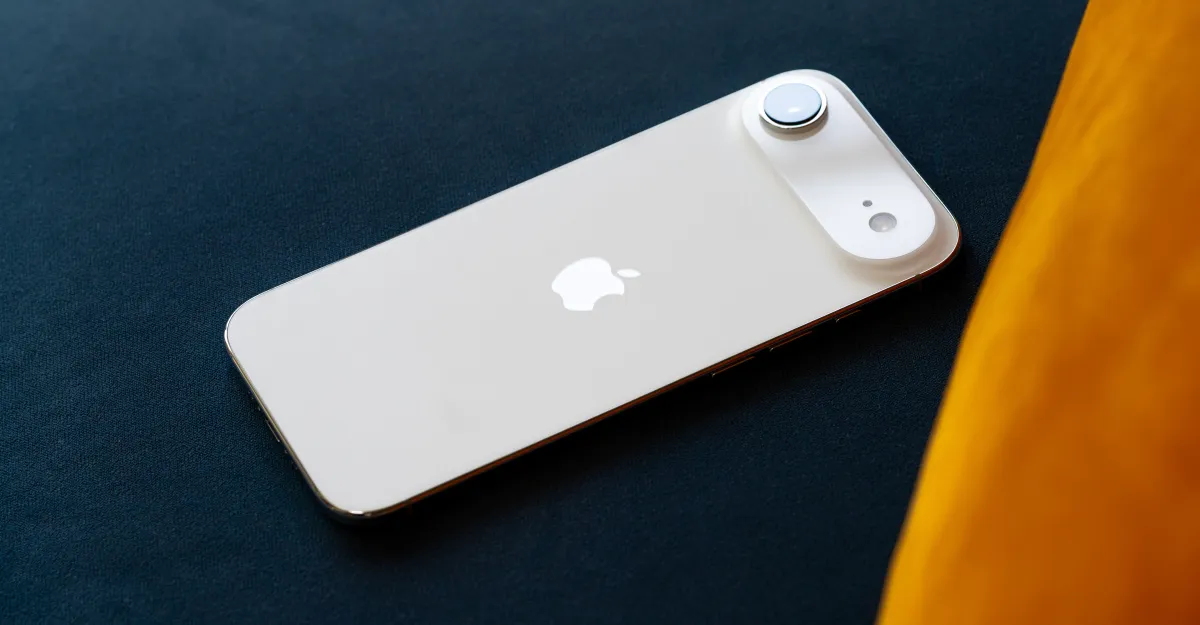
**Key Takeaways:**
* The iPhone Air, initially perceived as an experimental, flawed device, reveals surprising utility when paired with a compatible lifestyle and, crucially, Apple’s MagSafe ecosystem.
* MagSafe accessories transform the Air’s perceived weaknesses – battery life, single camera, speaker – into opportunities for modular customization, allowing users to tailor the phone’s capabilities on demand.
* Far from being a mere stopgap, the iPhone Air, with its minimalist form factor and modular potential, might hint at a future direction for smartphone design, prioritizing adaptability over all-in-one bulk.
Mobile World Congress always delivers a spectacle of the bizarre: robot phones, cameras masquerading as communication devices, even phones designed for our canine companions. Yet, amidst this parade of innovation and oddity last month, it wasn’t a futuristic concept that truly caught me off guard, but a device I thought I knew all too well: the iPhone Air, casually pulled out by my friend andVergealum, Sam Byford, over dinner.
“Ha!” I exclaimed, a smirk playing on my lips. “You actually *use* that thing?” My skepticism was palpable. Sam, unfazed, simply replied, “Yeah, it’s great.” He then produced his companion device – a Xiaomi Leica Leitzphone – clarifying his setup. Ah, I thought, the secret to enjoying the iPhone Air is simply owning another, far more capable phone. I chuckled, recounting the anecdote to anyone who’d listen, confident in my initial assessment.
But, dear readers, I come to you now with a confession. My early judgment was perhaps too swift, too absolute. After weeks of re-engagement, I’m beginning to suspect Sam was right all along: the iPhone Air might actually be good. More than good, in fact. It might be a surprisingly clever glimpse into a modular future for our pocket computers.
The iPhone Air might actually be good
**The Air’s Initial Paradox: A Whisper of Lightness, A Shout of Compromise**
To be fair, I never dismissed it as *bad* bad. My initial review last year awarded it a respectable 7. The allure of its impossibly slim profile and feather-light weight is undeniable, leaving a distinct impression the moment you hold it. Yet, this elegance came with significant trade-offs: notably worse battery life than its siblings, a solitary rear camera that felt like a step back, and a single, rather underwhelming speaker. All this, for the same price as a standard iPhone? I mentally filed it away as an interesting, if commercially questionable, experiment – perhaps a preliminary design study on Apple’s path toward a folding phone, or a test of how much “less” consumers would tolerate for a sleek form factor.
**The Second Look: A Lifestyle-Driven Revelation**
The catalyst for my re-evaluation was purely pragmatic. After MWC, I needed to compare its camera to the newly launched 17E. Once that review was done, instead of archiving the Air, I swapped my eSIM into it, curious to see if a longer stint as a daily driver would reveal anything new. I fully expected to grow tired of its limitations within a week or so. To my surprise, I didn’t. In fact, I became rather hooked.
Part of this unexpected affinity stems from my current soft-pants, remote-work lifestyle. I’m rarely far from a charger, and extensive travel isn’t on the agenda, which makes its weaker battery life far more forgivable. Even so, it held its own during a lengthy outing last week. While I definitely plugged it in upon returning home, with its charge hovering just above 20 percent (I have an almost pathological aversion to low power mode), it proved capable of navigating a full day’s varied tasks.
**MagSafe: Unlocking the Air’s Modular Potential**
It’s no coincidence that when Apple initially loaned me the Air for review, they also included their super-slim MagSafe battery pack. I’ve been putting it to extensive use during this revisit, not just as an insurance policy for outings, but as a convenient way to top off the battery around the house without being tethered to a wall socket. This made me realize: MagSafe isn’t just an accessory system for the Air; it’s its critical enabler.
One of my lingering hang-ups with the Air was its screen size. While slim, it’s not truly a small phone, making comfortable one-handed use a challenge. But what if I simply pop on a magnetic ring grip when I’m settling in for a serious scrolling session? I started leaving one on a side table next to the couch, ready to snap on. When I’m done, it comes right off, leaving the Air just as light and pocketable as ever, its elegant form uncompromised. This transient utility is profoundly liberating.
I also adopted a MagSafe wallet. I’ve always liked the concept of a wallet attached to my phone, but on most devices, even caseless, I find the added bulk cumbersome. With the Air’s inherent slimness, however, the wallet’s additional thickness is barely noticeable. It’s a genuinely handy way to carry a couple of essential cards for quick errands, easily removed and placed on the key tray when I return home.
This modularity even extends to the Air’s other weak point: its underwhelming speaker. AirPods are the obvious and most common solution, and usually sufficient for me. But for those truly embracing the modular vision, one could easily attach a MagSafe Bluetooth speaker to the back for a quick audio boost. Suddenly, this isn’t just the “weird skinny iPhone with the bad battery” anymore. It’s a remarkably versatile,modularphone, adapting its capabilities to the task at hand without permanent compromises to its core design.
This isn’t just the weird skinny iPhone with the bad battery… It’s amodularphone
**Addressing the Elephant in the Room: The Camera**
The toughest inherent limitation to overcome on the iPhone Air remains its camera. Unless Apple has plans for a Vivo-style, clip-on lens system that can transform the Air’s rear into a true telephoto, users are largely stuck with a competent wide-angle lens and a modest 2x crop zoom in a pinch. However, the trend of carrying a dedicated point-and-shoot camera alongside a smartphone is on the rise again. For those who were never fully satisfied with the “iPhone look” anyway, the Air could serve as the perfect excuse to embrace a dedicated camera more often, making photography a separate, intentional act rather than a phone function. Personally, I find the built-in camera options good enough for most casual shots, so I put up with it. But the temptation to explore an ultrawide adapter, if one were readily available and seamlessly integrated via MagSafe, would be very strong indeed.
**Bottom Line**
My journey with the iPhone Air has been one of surprising re-discovery. What I initially dismissed as a niche, compromised device has, with a shift in perspective and the intelligent integration of MagSafe accessories, revealed itself as something far more intriguing. It’s not a phone for everyone, nor an all-in-one powerhouse. Instead, the iPhone Air, with its minimalist design and modular potential, offers a refreshing alternative for a certain lifestyle – a phone that adapts to your needs, rather than demanding you adapt to its every feature. It stands as a testament that sometimes, less can indeed be more, especially when accompanied by the right ecosystem of intelligent, attachable enhancements.
The iPhone Air Experiment: A Month of Modular Minimalism
By Allison Johnson
Key Takeaways
- The iPhone Air champions extreme thinness and lightness, offering a truly minimalist form factor that feels revolutionary in hand.
- Modularity, while innovative, introduces practical compromises, particularly in battery life and camera versatility, requiring constant accessory management.
- Despite its impracticalities for the average user, the Air provides a compelling glimpse into potential future iPhone designs, blurring the lines between concept and daily driver.
Introduction: Diving into the Deep End of Device Design
For the past month, I’ve traded the familiar comfort and robust capabilities of my daily driver for something decidedly different: the iPhone Air. This isn’t just another incremental update; it’s an ambitious experiment in minimalist design and modular functionality, a device that feels as much a concept car as a consumer product. My mission? To push its limits, understand its compromises, and discover whether Apple’s most radical smartphone concept could ever truly fit into a mainstream world. It’s been a journey of unexpected delights and frustrating limitations, a testament to the adage that sometimes, less isn’t just less – it’s a whole new paradigm of user experience.
The Vision of “Air”: Redefining Form Factor
From the moment you pick it up, the iPhone Air makes a statement. It’s impossibly thin, almost to the point of feeling fragile, and unbelievably light. This isn’t just a design choice; it’s the core philosophy. The Air aims to disappear in your pocket, to be an extension of your hand rather than a cumbersome slab of technology. Its minimalist aesthetic extends beyond its dimensions; the physical controls are sparse, and the overall design language suggests an almost ascetic approach to smartphone interaction. In an era where phones are becoming thicker and heavier to accommodate more cameras and larger batteries, the Air boldly charts a different course, prioritizing an ethereal presence that redefines what a smartphone *feels* like to hold and carry. This extreme focus on form, however, necessitates a radical rethink of function.
Living with Modularity: The Daily Dance of Attachments
The Air’s defining characteristic, beyond its svelte physique, is its modularity. Crucial functions like enhanced photography, extended battery life, and even additional storage aren’t built-in; they’re snap-on accessories. This system, while conceptually elegant, translates into a daily “module dance” that requires constant foresight.
The Battery Conundrum
The most immediate and impactful trade-off is battery life. Without the external battery module, the Air struggles to make it through a typical workday. I quickly learned to instinctively attach the battery module every morning, turning the ultra-thin phone into something closer to a standard iPhone in terms of thickness, albeit one with a removable power source. This constant attachment and detachment, while quick and satisfying initially, can grow tiresome. It’s a stark reminder that true wireless freedom often comes at the cost of endurance, and for many, the convenience of an all-day internal battery far outweighs the fleeting allure of an ultra-slim chassis.
The Single Lens & The Camera Module
Then there’s the camera. The base iPhone Air features a single, albeit capable, rear camera. For casual snaps, it performs admirably. But for anyone accustomed to the versatility of modern multi-lens systems—the ultrawide, the telephoto, the macro modes—it feels like a significant regression. To unlock those capabilities, you need the camera module, which adds not only bulk but also another item to remember, carry, and attach. While the modular camera system offers impressive flexibility for specific shooting scenarios, the friction of needing to *prepare* your phone for photography often meant missing spontaneous moments. It forces a more deliberate approach, which can be both a blessing and a curse.
The Promise and Peril of Personalization
This modular approach, reminiscent of older experiments like Moto Mods, allows for unprecedented personalization. Need extra storage for a trip? Snap on the storage module. Want a high-fidelity speaker? There’s a module for that. The idea is compelling: tailor your phone to your exact needs, shedding unnecessary bulk when you don’t need it. But the reality is that managing a “small stable of accessories” can quickly become tedious. The novelty, as I suspected, does begin to wear off, replaced by the mundane logistics of carrying and remembering which module you need for what activity.
Who is the iPhone Air For?
I still think that the iPhone Air is impractical for most people. You know, people who don’t carry two phones, or get excited when they hear the words “Moto Mods.” Its appeal is niche, catering to a specific kind of early adopter or minimalist enthusiast. Perhaps a professional photographer who only needs the advanced camera module on shoots, or a digital nomad who appreciates the base phone’s lightness for travel and only adds the battery module on long journeys. For everyone else, the average consumer who simply wants their phone to *work* reliably all day without managing an ecosystem of clip-ons, the Air presents more friction than freedom. The battery is only going to get worse over time, and maybe the modularity theory would start to get old after a year of managing a small stable of accessories. I can see the novelty wearing off.
Returning to Reality: The iPhone 17 Pro
As for me, my time with the Air is over for now and I’m back on the 17 Pro. Is it nice having three actual rear cameras to choose from? And not worrying about the battery lasting a full day? It is. The immediate relief of not having to think about battery percentages or which module I might need for a specific photo op is undeniable. The 17 Pro is robust, reliable, and frankly, just works without fuss. It embodies the modern expectation of a premium smartphone – powerful, versatile, and enduring. Yet, in returning to it, I found myself experiencing an unexpected sentiment.
An Unexpected Farewell and a Glimpse of the Future
But I miss the iPhone Air more than I thought I would. There’s something profoundly appealing about its audacity, its willingness to challenge conventions. It forced me to think differently about my device, to appreciate the simple act of holding something so incredibly light. It’s a phone that doesn’t just fulfill needs; it sparks conversation and curiosity. And if it does end up being a weird side quest on the way to a folding iPhone, then at least it was an entertaining one. The Air, for all its quirks, feels like a precursor, a laboratory experiment for Apple to explore extreme form factors and user interaction models that might one day coalesce into the next generation of mobile computing.
Bottom Line
The iPhone Air is an exhilarating, if ultimately impractical, vision of a modular future. It’s a testament to innovation and a bold step in design, but its reliance on accessories and compromised core experience limits its mainstream appeal. While not for everyone, it serves as a fascinating, essential stepping stone in Apple’s ongoing quest for the next revolutionary mobile experience, leaving a lasting impression long after it’s been put away.
Source:{feed_title}