
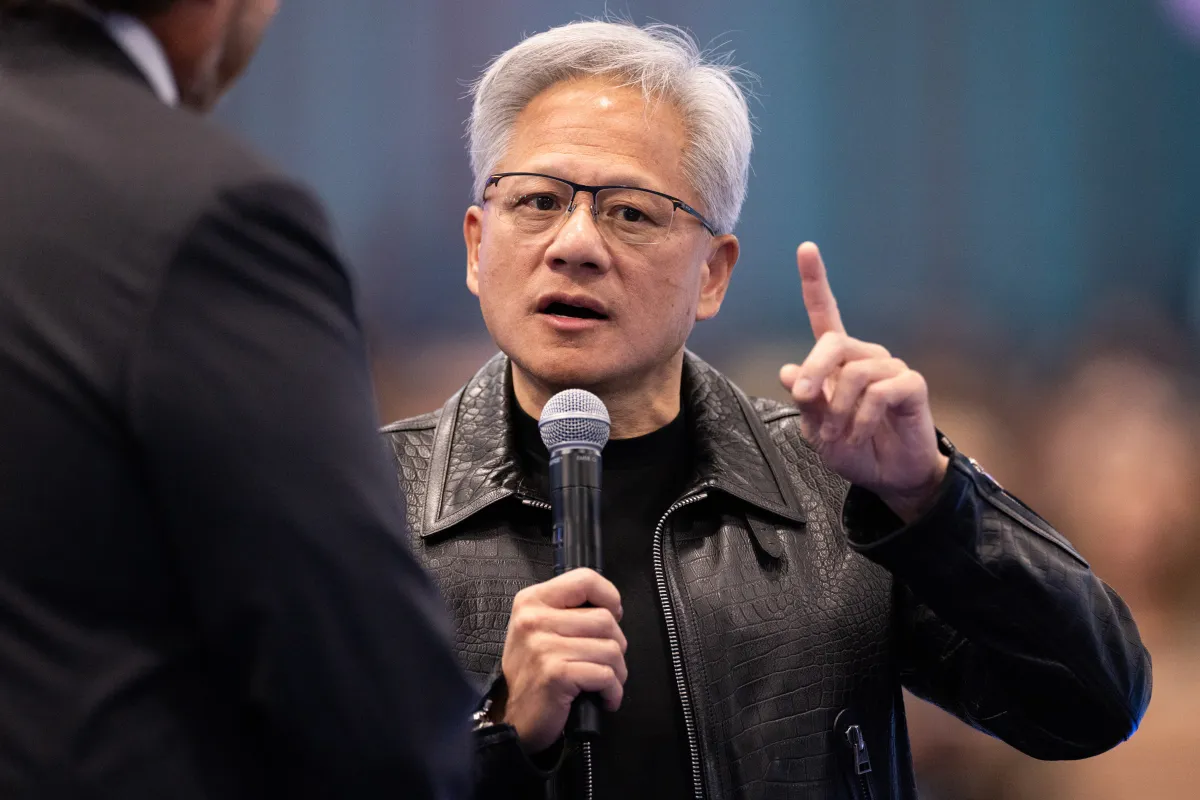
After a whirlwind period during which Jensen Huang’s life fell apart and then came back together again, the Nvidia founder now wants his staff to know that he’s a changed man.
Key Takeaways
- Jensen Huang, Nvidia’s reinstated CEO, adopted a “remorseful tone” in his first all-hands meeting, admitting personal failings and a commitment to change.
- Huang faces a delicate balancing act: reasserting leadership while publicly acknowledging violations of the company’s own code of conduct and seeking therapy.
- His return is shadowed by political influence and impending Congressional scrutiny, raising questions about corporate governance, national security implications, and the future trajectory of Nvidia.
The tech world watched with bated breath as Jensen Huang, the visionary founder and CEO of Nvidia, stepped back into the helm of the semiconductor giant. His reinstatement, following a period of intense personal and professional turmoil, marked not just a leadership transition but a profound moment of introspection for one of Silicon Valley’s most influential figures. On Tuesday, in his first all-hands meeting since his dramatic return on Monday, Huang delivered a powerful, deeply personal address, signaling a new chapter for himself and, by extension, for Nvidia.
A Public Confession: “I Hurt All of You”
The atmosphere at Nvidia’s all-hands meeting was undoubtedly charged. CNBC reported that Huang struck a “remorseful tone,” a stark contrast to the often-stoic public persona of a tech titan. His candid admission, “I hurt all of you,” resonated throughout the room, acknowledging the ripples his personal conduct had sent through the organization. This wasn’t merely a corporate apology; it was a deeply human confession from a leader who had, by his own admission, faltered.
Huang went on to describe the immense personal difficulty of the moment, reportedly telling the crowd, “This is going to be the hardest company meeting I’ve ever done, and the second hardest meeting I have ever done.” The gravity of his situation was underscored by his subsequent revelation: “The hardest meeting I’ve ever done was with my wife.” Such raw vulnerability from a CEO is rare, offering a glimpse into the profound personal reckoning that preceded his public address and setting an unusual precedent for corporate communication.
Navigating the Code of Conduct: Nuance in Governance
Central to the controversy surrounding Huang’s brief absence were accusations that his extramarital affairs had not only jeopardized his personal life but also raised concerns about their potential impact on Nvidia’s market stability and even U.S. national security. In his address, Huang directly confronted the elephant in the room: his admitted flouting of Nvidia’s code of conduct. This code, a framework for ethical behavior within the company, was largely devised by Huang himself, adding a layer of ironic complexity to his situation.
However, Huang’s message wasn’t one of rigid enforcement or immediate dismissal for transgressions. As Wired reported his statement, he emphasized a nuanced approach: it “does not mean, the moment you violate a code of conduct, we walk you out the door.” This statement suggests a corporate culture willing to consider “mitigating circumstances,” potentially aiming to foster an environment of rehabilitation rather than outright ostracization for certain types of infractions. It raises questions, however, about the consistency of application and how such leniency might be perceived by other employees who might face stricter consequences for similar breaches.
A Path to Redemption: Therapy and Transparency
Further underscoring his commitment to personal transformation, Huang publicly disclosed that he is in therapy. In the often-guarded world of corporate leadership, such a revelation is significant. It signals a shift towards greater transparency regarding mental health and personal accountability, potentially destigmatizing the pursuit of professional help for leaders and employees alike. He also expressed profound gratitude for a second chance at the company he founded, acknowledging the trust placed in him by the board and his colleagues.
This public vulnerability is a calculated risk. While it can foster empathy and perceived authenticity, it also opens the door to continued scrutiny, not just of Nvidia’s business performance but of Huang’s ongoing personal journey. His ability to walk this “difficult tightrope” — reasserting his authority over one of the world’s most powerful companies while openly conceding past mistakes — will be crucial in rebuilding trust with employees, investors, and the broader public.
The Political Shadow: Trump’s Role and Congressional Scrutiny
Beyond internal corporate governance, Huang’s return is inextricably linked to external political forces. Reports indicated that former President Trump personally intervened, reportedly calling Nvidia’s board directly to lobby for Huang’s return. While Huang, in his all-hands meeting, downplayed the extent of Trump’s direct influence on his reinstatement, he did acknowledge the administration’s support in a critical way.
According to the Wall Street Journal, Huang thanked the administration on Tuesday for “providing Nvidia with quick access to intelligence that he said helped the board determine that the national security risks the company faced in reinstating him were low.” This revelation is significant, suggesting that the decision to bring Huang back involved high-level intelligence assessments and political considerations, rather than being solely an internal corporate governance matter. It highlights Nvidia’s critical role in national infrastructure and security, particularly given its dominance in AI and semiconductor technology.
However, the political drama is far from over. Huang is slated to face an upcoming wave of Congressional scrutiny, particularly from a newly Democrat-led government eager to examine the circumstances of his return and the potential national security implications. He is scheduled to appear for a public Senate Banking Committee hearing next week. In the coming weeks, he will also be called to appear for a number of different closed House hearings, including for the Intelligence Committee, the Foreign Affairs Committee, and the China Select Committee.
These hearings will likely delve into a range of sensitive issues: the precise nature of the “national security risks” identified, the extent of presidential interference in corporate affairs, and the broader implications of a CEO’s personal conduct on a company deemed vital to national interest. For Nvidia, these sessions represent a significant challenge, potentially forcing the company to disclose sensitive information and navigate a complex political landscape at a time when its leadership is still finding its footing.
Bottom Line
Jensen Huang’s return to Nvidia is a story of personal redemption intertwined with corporate leadership and geopolitical intrigue. His public contrition, commitment to therapy, and nuanced stance on corporate ethics signal a potential shift in leadership transparency. However, the lingering questions about political influence and the looming Congressional investigations mean his path forward will be fraught with challenges, as he seeks to rebuild trust, reassert authority, and steer Nvidia through an increasingly complex global tech landscape. The coming months will determine whether this “changed man” can successfully navigate the storm and lead Nvidia to new heights, or if the scrutiny will prove too great a burden.
When you purchase through links in our articles, we may earn a small commission. This doesn’t affect our editorial independence.
{content}
Source:{feed_title}