
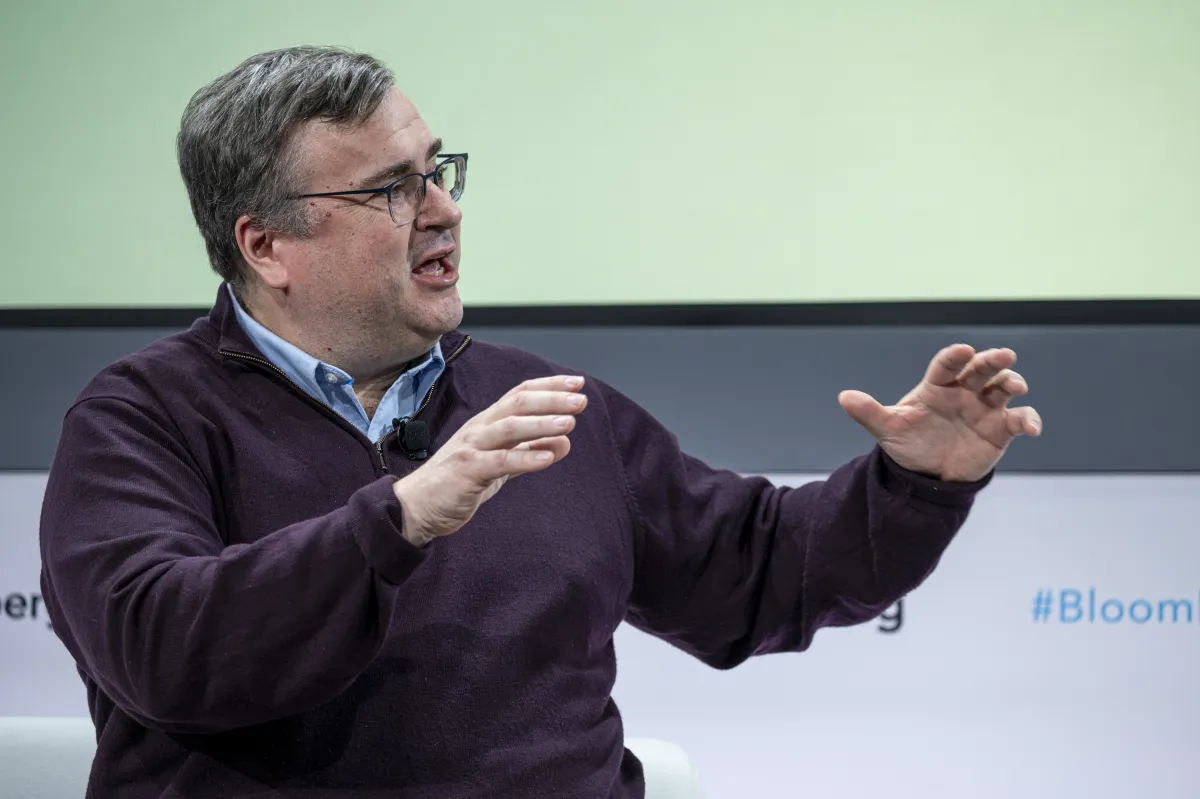
After a very profitable decade on Microsoft’s board, Reid Hoffman is stepping down, the company announced Thursday. Hoffman joined the board after Microsoft bought his company LinkedIn for $26.2 billion in 2016.
Hoffman was on Microsoft’s board when it invested its first $1 billion into OpenAI in 2019. Hoffman was one of OpenAI’s original investors and served on the model maker’s board until he stepped down in 2023, citing too many potential conflicts of interest to continue. He was also on Microsoft’s board when the tech giant entered into one of those non-acquisition, acqui-hire deals for $650 million with his AI startup Inflection AI. Microsoft hired Inflection co-founder Mustafa Suleyman through that deal.
Hoffman said on a recent episode of his “Possible” podcast, while talking with Microsoft CEO Satya Nadella, that he’s ready to go “founder mode” with his latest AI startup, Manus. Manus is a drug discovery company that raised over $50 million through a couple of seed rounds last year. Hoffman is an investor, as is General Catalyst.
Hoffman is cited as a co-founder of Manus and chairman of the board, not the CEO, though. That job belongs to Dr. Siddhartha Mukherjee, a physician, biologist, and Pulitzer Prize-winning author of the 2011 book “The Emperor of All Maladies: A Biography of Cancer.”
Still, Hoffman said he’s excited to give Manus more attention.
“One of the things I realized over the last month was that, we’re seeing such progress with Manus. I need to get back to founder mode,” he said. He believes the startup is making progress on “Move 37” AI, meaning AI that supersedes human creativity in chemistry, especially to combat various cancers, he added.
Key Takeaways:
- **Strategic Pivot:** Reid Hoffman, a tech titan and influential venture capitalist, is stepping down from Microsoft’s board after nearly a decade to fully embrace a “founder mode” role with his new AI drug discovery startup, Manus.
- **Deep AI Entanglement:** Hoffman’s tenure at Microsoft coincided with crucial early investments in OpenAI and the “acqui-hire” of his own Inflection AI, highlighting his pervasive influence across the burgeoning AI landscape even as he navigates potential conflicts of interest.
- **AI’s New Frontier:** His focus on Manus, a drug discovery company co-founded with a Pulitzer-winning biologist, signals a high-stakes pivot towards applying “Move 37” AI capabilities to transform healthcare, particularly in the fight against cancer.
Reid Hoffman Exits Microsoft Board, Embraces “Founder Mode” for AI Drug Discovery
Redmond, WA – One of Silicon Valley’s most recognizable figures, Reid Hoffman, is departing Microsoft’s board of directors, signaling a strategic shift for the influential investor and entrepreneur. His exit, announced Thursday, concludes a nearly decadelong tenure that began following Microsoft’s landmark $26.2 billion acquisition of LinkedIn in 2016 – a deal that underscored Microsoft’s ambitions in professional networking and cloud services.
Hoffman’s time on Microsoft’s board was not merely a ceremonial role; it coincided with some of the tech giant’s most pivotal moves, particularly in the burgeoning field of artificial intelligence. His departure now paves the way for a more direct, hands-on role in his latest venture, Manus, an AI-driven drug discovery startup that aims to revolutionize healthcare.
A Decade of Influence: From LinkedIn to AI’s Forefront
Reid Hoffman first joined Microsoft’s board as part of the integration of LinkedIn, the professional social network he co-founded. The acquisition itself was a bold statement by Microsoft CEO Satya Nadella, expanding the company’s reach beyond its traditional enterprise software into a social sphere. Hoffman, already a seasoned entrepreneur from his days at PayPal and a prolific venture capitalist with Greylock Partners, brought invaluable insight into network effects, startup culture, and strategic growth to Microsoft’s highest echelons.
During his tenure, Microsoft not only successfully integrated LinkedIn, leveraging its vast professional data for products like Dynamics 365, but also embarked on an aggressive strategy to become a dominant player in artificial intelligence. Hoffman, with his keen eye for disruptive technologies and early investments in the space, was uniquely positioned to advise the company as it navigated this new frontier.
The AI Nexus: OpenAI and Inflection AI Connections
Hoffman’s influence extended deeply into Microsoft’s AI strategy, often through parallel personal and professional engagements. He was a board member at Microsoft when the company made its initial $1 billion investment in OpenAI in 2019, a move that would fundamentally reshape the AI landscape. Crucially, Hoffman was also an original investor in OpenAI and served on its board until 2023. He stepped down from OpenAI’s board citing potential conflicts of interest, a prescient move given the escalating strategic importance of AI and Microsoft’s deepening partnership with the model maker.
The intricate web of connections didn’t stop there. Hoffman was still on Microsoft’s board when the tech giant executed a significant “non-acquisition, acqui-hire” deal for $650 million involving his own AI startup, Inflection AI. This unconventional transaction saw Microsoft effectively absorb much of Inflection’s talent, including co-founder Mustafa Suleyman, into its newly formed Microsoft AI division, further consolidating its position in the competitive AI race. These overlapping roles highlight Hoffman’s singular position at the epicenter of many of the most significant AI developments of the last half-decade, even as he managed the delicate balance of advising a corporate behemoth while nurturing his own entrepreneurial interests.
The Lure of “Founder Mode”: Manus and “Move 37” AI
Now, Hoffman is embracing what he calls “founder mode” with Manus, his latest venture. Speaking on his “Possible” podcast with Microsoft CEO Satya Nadella, Hoffman expressed a palpable excitement about the progress Manus is making. Manus is a drug discovery company, a field ripe for disruption by advanced AI, and one that promises profound societal impact.
Manus has already secured over $50 million through seed rounds last year, attracting investors like General Catalyst, alongside Hoffman himself. While Hoffman is a co-founder and chairman of the board, the role of CEO is filled by Dr. Siddhartha Mukherjee, a physician, biologist, and Pulitzer Prize-winning author renowned for “The Emperor of All Maladies: A Biography of Cancer.” This pairing of a tech visionary with a deep scientific and medical expert underscores the ambitious interdisciplinary approach Manus is taking.
Hoffman articulated his passion, stating, “One of the things I realized over the last month was that, we’re seeing such progress with Manus. I need to get back to founder mode.” He believes Manus is on the cusp of achieving “Move 37” AI in chemistry. This intriguing concept references a pivotal move made by Google’s AlphaGo program against human champion Lee Sedol, which demonstrated AI’s ability to transcend human intuition and creativity in complex strategic domains. For Manus, this means developing AI that can generate novel chemical insights and drug candidates, particularly to combat various cancers, at a level far beyond human capability.
His pivot back to a direct operational role, even as chairman, emphasizes a desire to be at the forefront of innovation rather than solely in an advisory capacity. It’s a move that reflects the magnetic pull of truly disruptive technology, especially in a sector as critical and complex as biotechnology.
Bottom Line:
Reid Hoffman’s departure from Microsoft’s board signifies more than just an end to a high-profile corporate advisory role; it marks a concentrated shift of his formidable intellect and resources towards the high-stakes, high-impact world of AI-driven drug discovery. His deep entanglement with the AI ecosystem positions him uniquely to drive Manus’s mission, potentially ushering in a new era for medical breakthroughs powered by “Move 37” AI. As a serial entrepreneur and investor, Hoffman’s latest chapter promises to be one of his most ambitious and potentially transformative, signaling a future where AI’s creative capacity is unleashed on humanity’s greatest health challenges.
Source:{feed_title}