
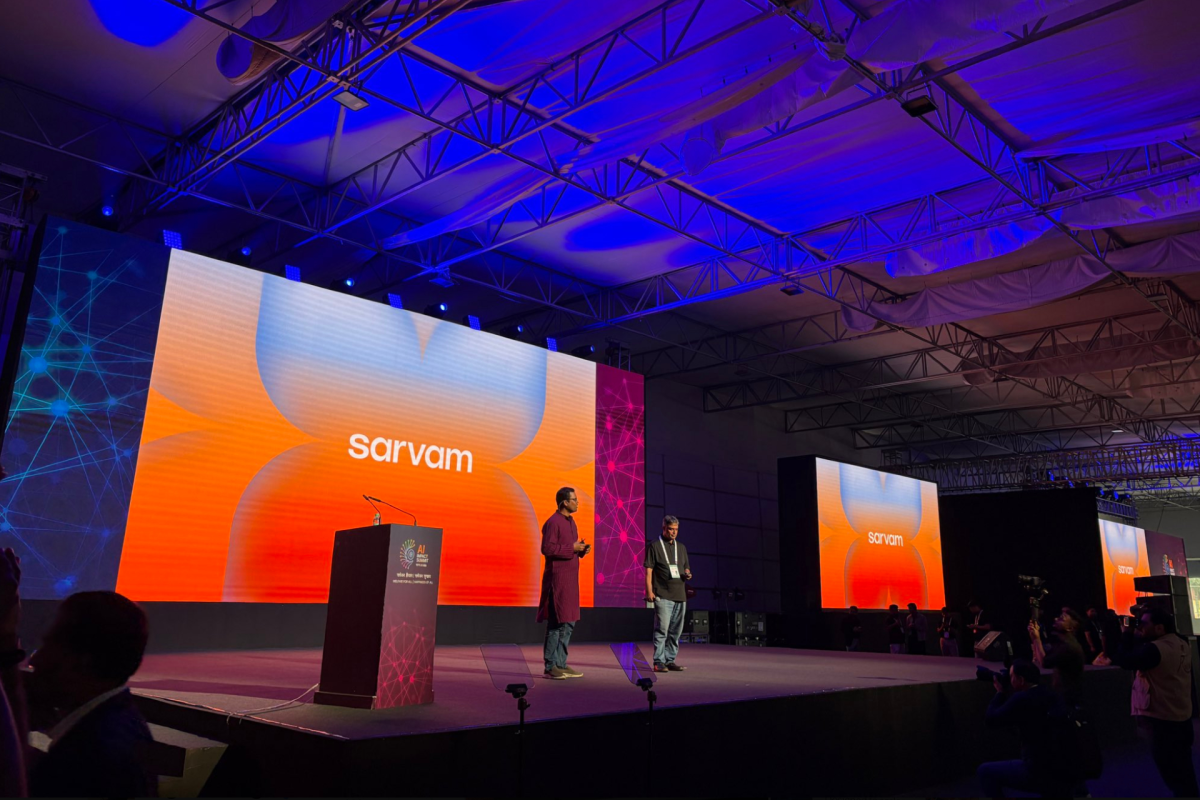
Sarvam, an Indian artificial intelligence firm, intends to introduce its recently launched AI models to consumers by implementing them across Nokia basic phones, automobiles, and its proprietary smart eyewear.
Supported by prominent investors such as Lightspeed, PeakXV, and Khosla Ventures, the firm announced during the current India AI Impact Summit held in New Delhi its utilization of edge computing models, which occupy merely megabytes of storage, are capable of operating on the majority of phones equipped with current processors, and possess offline functionality.
A collaboration is underway between the company and HMD to integrate a conversational AI helper into Nokia and HMD handsets. A demonstration video illustrated a user pressing a specific AI button on a basic phone to engage in dialogue with an AI assistant using a regional dialect for advice on governmental initiatives or nearby marketplaces. Whether all the AI functionalities presented at the gathering will function without an internet connection remains uncertain.
“Our aim is to infuse intelligence into every smartphone, portable computer, vehicle, and even upcoming generations of gadgets, leveraging edge AI,” stated Tushar Goswamy, who leads Edge AI at Sarvam, during his address.
He also mentioned the firm’s collaboration with Qualcomm to optimize its models for Qualcomm’s processors. Specifics regarding the devices where these models will be implemented were not disclosed by Sarvam.
Furthermore, Sarvam indicated its partnership with the enormous German engineering corporation, Bosch, to integrate AI helpers into vehicles, yet refrained from revealing numerous additional particulars.
The nascent company moreover unveiled a set of AI-powered smart eyewear, christened Sarvam Kaze, crafted and produced within India. According to Pratyush Kumar, the company’s co-founder, these spectacles serve as a “tool for creators” and are slated for release in May.
A Techcrunch gathering
Boston, Massachusetts
|
June 23, 2026
Up until now, Sarvam has primarily concentrated its operations within the business-to-business sector, providing its speech-centric models for applications such as client assistance. These recent models and collaborations suggest a pivot in the company’s strategic direction towards consumer-oriented applications.
{content}
Source:{feed_title}