
Key Takeaways:
- Cosmic Fan Service:The Super Mario Galaxy Moviedelivers visually stunning set pieces and a wealth of nostalgic references for long-time fans, acting more as a remixed reimagining than a direct adaptation of the beloved Wii game.
- Princess Peach Ascends:The sequel significantly elevates Princess Peach’s role, delving into her backstory and giving her substantial action sequences, positioning her as a central figure in the intergalactic adventure.
- Franchise Juggling Act:While enjoyable, the film often feels overly busy with numerous character introductions and cameos, hinting at a potential interconnected cinematic universe that sometimes overshadows core character development and narrative depth.
The Super Mario Galaxy Movie: A Cosmic Nostalgia Trip with Familiar Footsteps
Nintendo’s latest cinematic venture,The Super Mario Galaxy Movie, embarks on a star-studded journey that feels less like a direct adaptation of its namesake Wii game and more like a carefully curated greatest hits compilation. This sequel toThe Super Mario Bros. Movieis designed to ignite the pleasure centers of any long-time Nintendo fan, weaving together elements from various Mario titles into a vibrant, reference-heavy tapestry. The result is undeniably a visual spectacle, boasting breathtaking set pieces and an array of charming cameos that will elicit knowing smiles. Yet, beneath the dazzling surface, a certain predictability in its narrative approach is hard to overlook. While this doesn’t diminish the film’s overall enjoyment, it does raise questions about Nintendo’s comfort zone, suggesting a reliance on established moviemaking formulas that, while safe, might limit future creative potential.
Plotting a New Galaxy: Bowser Jr.’s Grand Plan
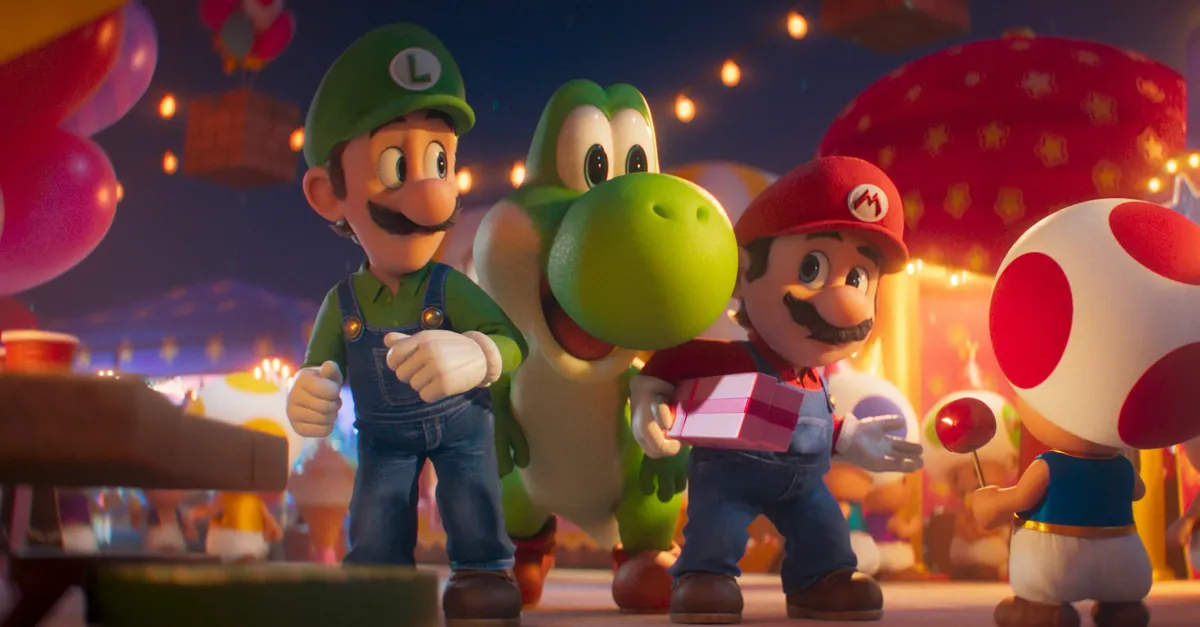
Picking up an unspecified time after the events of its predecessor,The Super Mario Galaxy Moviefinds plumber brothers Mario (Chris Pratt) and Luigi (Charlie Day) comfortably settled into their new roles as interdimensional heroes. With Bowser miniaturized and seemingly neutralized, the immediate threat to the Mushroom Kingdom has receded, allowing Princess Peach (Anya Taylor-Joy) and her trusted confidant Toad (Keegan-Michael Key) to focus on their sovereign duties. However, peace is a fragile commodity in the wider cosmos. Numerous emergencies continue to erupt across locales bordering the Mushroom Kingdom, necessitating the continued assistance of the Mario brothers and their newly introduced, perpetually hungry friend, Yoshi (Donald Glover), allowing Peach to dedicate herself to the complex affairs of her realm. This period of relative calm is, of course, short-lived. The catalyst for galactic chaos arrives in the form of Bowser’s mischievous son, Bowser Jr. (Benny Safdie). Escaping his boarding school with a singular, albeit audacious, goal—to liberate his father and together conquer the entire galaxy—Bowser Jr. sets his sights on a “boomsday” weapon. Central to his scheme is Rosalina (Brie Larson), an enigmatic, otherworldly princess whose magical powers are intrinsically linked to the stars themselves. When Bowser Jr. successfully captures Rosalina, it falls upon Peach and Toad to embark on a perilous rescue mission, while the Mario brothers are strategically tasked with safeguarding the Mushroom Kingdom.
Princess Peach Takes Flight: A Royal Reckoning
While returning co-directors Aaron Horvath and Michael Jelenic, alongside writer Matthew Fogel, ensure that Mario and Luigi still receive ample screen time through a series of visually stunning action set pieces,The Super Mario Galaxy Moviemakes a significant departure by placing a stronger emphasis on Princess Peach. This increased focus on the Mushroom Kingdom’s ruler is one of the film’s standout elements. The narrative dedicates more time to fleshing out the intricacies of her previously enigmatic backstory, weaving in familiar aspects of her character known from the games, including the subtle blossoming of her romantic relationship with Mario. Crucially, Peach is afforded numerous opportunities to shine as the central figure in several truly dazzling action sequences. This elevated portrayal is a refreshing change, often a missing component in her video game exploits where she frequently plays the damsel in distress. Anya Taylor-Joy imbues Peach with a blend of regal authority, determined bravery, and a surprising depth of vulnerability, making her journey across the cosmos feel earned and impactful. Her agency is palpable, transforming her from a mere plot device into a proactive hero, a dynamic shift that greatly benefits the film’s emotional core and provides a compelling counterpoint to the more established heroics of the Mario brothers.
A Universe of References: Fan Service or Franchise Overload?
Peach and Toad’s interplanetary odyssey transports them to a breathtaking array of new worlds, each rendered with meticulous detail. Hardcore Mario fans will instantly recognize these locales, not just visually, but also aurally, as composer Brian Tyler’s masterful score seamlessly morphs and evolves, artfully alluding to a plethora of iconic Mario game themes. The film’s visual language is rich with echoes ofSuper Mario Galaxy‘s gameplay, particularly in the sequences depicting Peach and Toad soaring through space. However, despite these affectionate nods, labeling this a faithful narrative adaptation of the game would be a stretch. While the previous movie understandably prioritized introducing these beloved characters to a new audience in a cinematic context, this sequel feels somewhat overwhelmed by its own ambition. Nintendo appears to be piling on an almost excessive number of references to disparate parts of the Mario franchise, none of which are given sufficient time to properly breathe or integrate cohesively into the overarching plot. The film feels particularly busy as it introduces new characters like the charming Honey Queen (Issa Rae) and the enigmatic kingpin Wart (Luis Guzmán), all while attempting to bring newcomers up to speed on Yoshi’s background and motivations. There is simply a considerable amount going on, leading to a sense that Nintendo might be leveraging this project not just as a standalone story, but as a strategic platform to hint at an even grander, interconnected cinematic universe on the horizon. The excitement of seeing characters from other Nintendo franchises, such as a surprisingly excellent Fox McCloud (Glen Powell), make cameo appearances (and there are indeed several others the studio has kept under wraps), along with the elaborate brawls, inadvertently suggests that the studio’s focus might be shifting. This potential pivot towards a broader, cross-franchise endeavor, while tantalizing for some, is unfortunate.The Super Mario Galaxy Movietruly shines when it slows down, allowing its core characters to develop new depth and emotional resonance. The precious screen time dedicated to introducing a multitude of new faces and teasing future projects could have been far better utilized in ensuring that the existing ensemble felt more fully realized and three-dimensional, ultimately enriching the current narrative rather than merely expanding its scope.
Behind the Screens: Directorial Vision and Pacing
The directorial vision of Aaron Horvath and Michael Jelenic, coupled with Matthew Fogel’s script, crafts a briskly paced narrative that consciously caters to audiences with shorter attention spans — primarily, children. This energetic momentum ensures the film never truly drags, maintaining a vibrant, almost breathless quality that is a clear hallmark of its target demographic. This unyielding enthusiasm is a double-edged sword: it undeniably contributes to the movie’s immediate appeal and could very well propelThe Super Mario Galaxy Movieto another billion-dollar box office success. However, it also underscores a reluctance to fully explore the emotional nuances or thematic complexities that might elevate the film beyond pure spectacle. Nintendo’s strategy in Hollywood, particularly with a potentially more challenging adaptation looming on the horizon, may need to evolve beyond this fast-paced, reference-heavy approach. While entertainment for young audiences is a valid goal, a deeper commitment to narrative innovation and character development could solidify Nintendo’s reputation as a formidable cinematic player, capable of delivering not just fun, but also enduring storytelling.
Voice Cast & Credits
In addition to the main cast,The Super Mario Galaxy Moviealso features the vocal talents of Kevin Michael Richardson, Juliet Jelenic, and Ed Skudder. The movie is scheduled to hit theaters on April 1st.
Bottom Line
The Super Mario Galaxy Movieis an undeniably enjoyable, visually effervescent ride brimming with fan service and nostalgic charm, particularly excelling in its vibrant world-building and the empowering portrayal of Princess Peach. It’s a film clearly crafted to delight its core audience with constant action and familiar Easter eggs. However, its relentless pace and a tendency to prioritize an expansive, cameo-laden universe over deeper narrative substance leave it feeling a touch thin on original storytelling and character depth. While destined for box office success, Nintendo’s continued reliance on established formulas suggests a cautious step into Hollywood, one that might need bolder, more focused creative leaps if it truly wishes to make a lasting, impactful name for itself in the cinematic landscape beyond immediate fan gratification.
{content}
Source:{feed_title}