
Key Takeaways
- Jack Dorsey’s decentralized messaging app, Bitchat, has been removed from Apple and Google app stores in India, following a government order citing Section 69A of the IT Act.
- The ban targets Bitchat’s core functionality – its ability to facilitate encrypted, offline communication via Bluetooth mesh – which authorities deem a challenge to law enforcement’s ability to intercept and trace users, especially during internet shutdowns.
- Digital rights advocates, like the Internet Freedom Foundation, are challenging the order’s constitutionality, arguing that Section 69A is intended for unlawful *information*, not entire applications based on their architectural design, and highlights a growing tension between state control and decentralized technologies amidst rising protests in India.
India Escalates Clampdown on Decentralized Messaging: Bitchat Vanishes from App Stores
Bitchat, the pioneering decentralized messaging app championed by Jack Dorsey and designed to operate entirely without internet access, has officially vanished from Apple and Google’s app stores in India. This latest development marks a significant escalation in New Delhi’s efforts to restrict access to the open-source software, months after initial attempts to curb its availability.
The removal comes directly from a directive issued by the Indian government. Jack Dorsey, the co-founder of Twitter (now X) and a vocal proponent of decentralized technologies, confirmed the development on Saturday. Posting a notice from Apple on X, Dorsey revealed that India’s Ministry of Electronics and Information Technology had demanded Bitchat’s removal from the App Store under Section 69A of the Information Technology Act. This specific provision is India’s primary legal tool for government-mandated online blocking, granting authorities broad powers to restrict access to content deemed a threat to national security, public order, or India’s sovereignty.
Sweeping Removal Across Platforms and Beyond
Apple’s notice explicitly stated that while Bitchat would remain accessible on its App Store outside of India, its availability within the country would be terminated. Crucially, the ban also extends to the app’s TestFlight beta-testing service, ensuring that even early adopters or developers within India cannot access or test the application. The move effectively creates a digital cordon sanitaire around Bitchat for Indian users on Apple’s ecosystem.
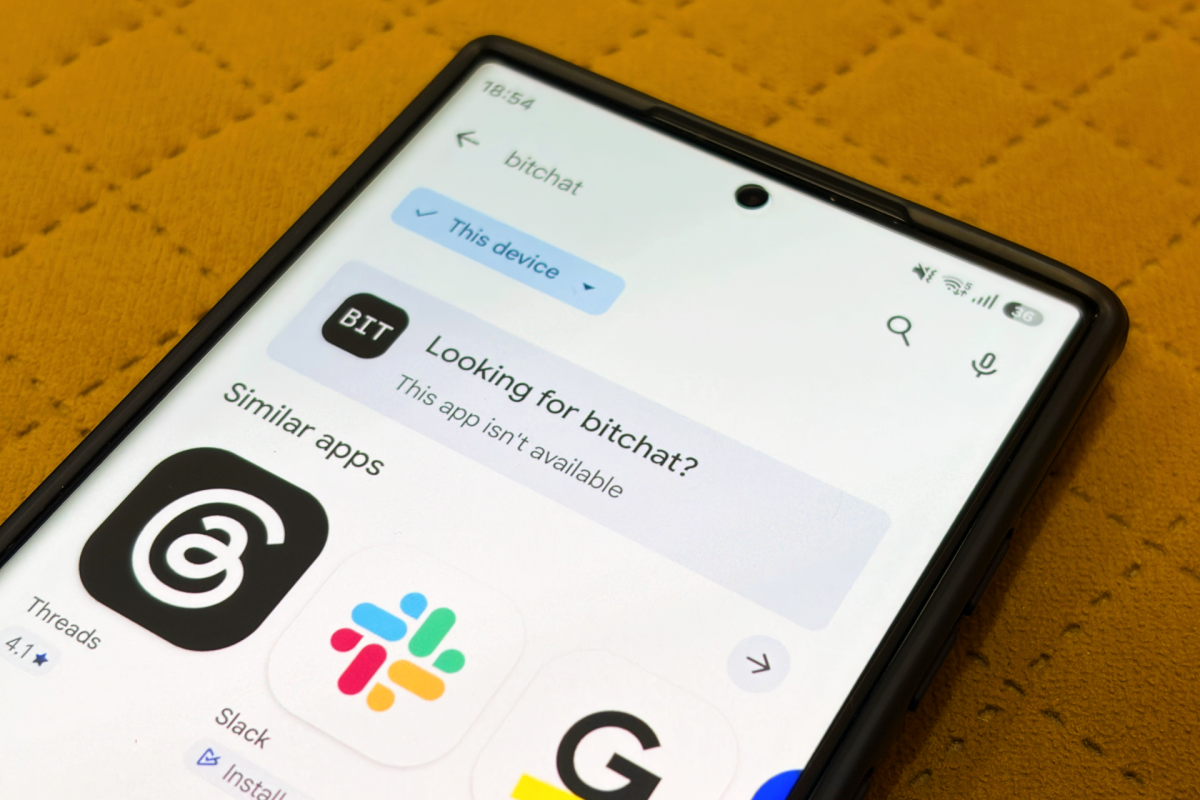
The impact isn’t limited to Apple devices. TechCrunch’s own investigation on Saturday confirmed that Bitchat was no longer available for download via Google Play in India. Furthermore, Bitchat’s official website had become inaccessible across a spectrum of different internet service providers (ISPs) throughout the country. While it remains unclear whether Google and the various internet service providers also received direct, formal directives from the federal government, the synchronized nature of the app’s disappearance and website blackout suggests a coordinated effort.
Despite multiple inquiries regarding this widespread shutdown, Apple, Google, and India’s Ministry of Electronics and Information Technology have all remained unresponsive to requests for comment. This silence from the involved parties further underscores the opaqueness surrounding the government’s exact motivations and the specific legal interpretations underpinning these sweeping restrictions.
Bitchat’s Technology and the State’s Challenge
Launched in July last year, Bitchat represents a paradigm shift in secure communication. The app leverages Bluetooth mesh networking, an innovative technology that allows nearby devices to form a self-sustaining network. Within this mesh, users can exchange encrypted messages without any reliance on traditional cellular networks, internet access, or centralized servers. This fundamental architectural choice is precisely what makes Bitchat both revolutionary for privacy advocates and problematic for state actors seeking to maintain control over information flows.
This isn’t the first time Indian authorities have taken aim at Bitchat. In July 2026, Dorsey disclosed that the Indian government had previously ordered GitHub to remove repositories associated with the open-source messaging app. That earlier directive, which targeted the very codebase of the application, sparked considerable debate among digital rights advocates and legal experts. They raised pertinent questions about the legal precedent for restricting software based purely on its functionality and design principles, rather than specific illegal content transmitted through it.
The Indian government, in its order to GitHub at the time, explicitly articulated its concerns: Bitchat’s decentralized architecture made it exceedingly difficult for law enforcement agencies to intercept communications or trace the identity of its users. Furthermore, its crucial ability to continue operating seamlessly during government-mandated internet shutdowns was highlighted as a major point of contention. Interestingly, that July order relied on a different legal framework—a provision of India’s information technology law that addresses intermediaries and their liability for third-party content. This contrasts sharply with the broader powers invoked under Section 69A, cited in Apple’s latest notice, which is typically used for blocking specific ‘unlawful’ information.
Constitutional Challenges and the Digital Rights Battleground
The Internet Freedom Foundation (IFF), a prominent New Delhi-based digital rights advocacy group, has swiftly condemned the latest blocking order as unconstitutional. The IFF argues that Section 69A allows the government to block specific instances of *unlawful information*, but it does not grant the authority to ban an entire messaging application solely because of its technical capability to function during internet shutdowns or its inherent privacy features. Such an interpretation, they contend, stretches the law far beyond its original intent and encroaches upon fundamental rights.
A critical point raised by the IFF is the lack of transparency surrounding the ban. Neither the blocking order itself nor any allegedly illegal content cited as the basis for the action has been made public. This absence of transparency is a recurring criticism leveled against government blocking actions in India, making it nearly impossible for affected parties to challenge the orders legally or for the public to understand the justifications behind such severe restrictions on communication tools.
Protests, Internet Shutdowns, and the Appeal of Offline Messaging
The latest restrictions on Bitchat are unfolding against a backdrop of heightened political tension in India. The country is currently experiencing a fresh wave of youth-led protests, primarily centered around contentious changes to the country’s voter rolls. On Saturday, police detained several individuals during demonstrations in New Delhi, where protesters vociferously demanded the resignation of India’s chief election commissioner over allegations of electoral roll manipulation. In a move that has become increasingly common during periods of dissent, authorities suspended internet services around New Delhi’s Jantar Mantar for 12 hours on Friday as protests intensified in the area.
It is precisely in such volatile environments, characterized by preemptive internet shutdowns, that decentralized, offline messaging applications like Bitchat become invaluable. During the July protests, for instance, demonstrators reportedly turned en masse to Bitchat and its rival, Briar, after authorities deliberately suspended internet services to quell communication and organization among activists. This direct correlation between state-imposed communication blackouts and the surge in demand for resilient messaging tools highlights the strategic importance of apps like Bitchat for civil society.
Market intelligence firm Sensor Tower data confirms this trend. Interest in Bitchat surged dramatically in India around the time of the previous protests. Between July 17 and July 23, India accounted for an astonishing 85% of the app’s global downloads, a staggering increase from roughly 1% in the preceding 30 days. This data unequivocally demonstrates Bitchat’s rapid adoption as a critical communication lifeline when traditional channels are compromised or shut down by authorities, making it a clear target for government control.
Bottom Line
The removal of Bitchat from Indian app stores under Section 69A represents a significant escalation in the Indian government’s efforts to control digital communication, particularly decentralized platforms that defy traditional surveillance. By targeting an application based on its inherent functionality—its ability to operate offline and provide encrypted, untraceable communication—New Delhi sets a worrying precedent for digital freedom and open-source software development. This move not only underscores the ongoing tension between state control and technological autonomy, especially amidst civil unrest, but also highlights the critical need for transparency and judicial oversight in government-mandated online blocking. As protests continue and internet shutdowns become more frequent, the battle over communication tools like Bitchat is poised to become a defining front in India’s broader digital rights landscape.
When you purchase through links in our articles, we may earn a small commission. This doesn’t affect our editorial independence.
{content}
Source:{feed_title}