
The tech world is buzzing, and not just with the hum of new servers. Former President Donald Trump has officially unveiled his “Super Intelligence Force,” a new initiative aimed at steering America’s course in the rapidly evolving landscape of artificial intelligence. But beyond the bold new branding and high-profile appointments, what does this truly signify for the future of AI policy and innovation?
Key Takeaways:
- AI Rebranded as “Super Intelligence”:Trump’s administration has officially adopted “Super Intelligence” (SI) as its preferred term, a move that aims to reframe the public and policy discourse around advanced AI capabilities, potentially distancing it from existing AI safety debates.
- Leadership Focused on “Being First”:The Super Intelligence Force, chaired by national intelligence director Jay Clayton, explicitly prioritizes global leadership and preventing overregulation, with a stated risk being “not being first” in the SI race, rather than focusing primarily on intrinsic safety concerns.
- Skepticism Lingers Amidst Bold Claims:Despite the ambitious mandate and a 120-day deadline for a comprehensive report, the initiative emerges from a history of presidential dismissal of AI safety concerns as a “hoax” and a recent non-binding safety pledge marred by a notable typo, raising questions about the depth and sincerity of its engagement with the technology’s complexities.
In a move that’s equal parts predictable and provocative, former President Donald Trump has made good on his promise to establish a dedicated task force for what he now exclusively refers to as “Super Intelligence.” Announced via his preferred social platform, Truth Social, the formation of the Super Intelligence Force signals a distinct, if somewhat unconventional, approach to navigating the profound implications of advanced AI.
“The Super Intelligence Force is tasked with coordinating the effort of the Federal Government to ensure that America continues to lead the World in Super Intelligence, which many say is bigger than the Industrial Revolution, and the Internet, and will protect the interests, and improve the lives, of all Americans,” Trump declared in his Sunday morning post. The statement underscores a grand vision, positioning SI as a transformative force exceeding historical technological revolutions, and framing its advancement as a matter of national security and citizen welfare.
The “Super Intelligence” Rebrand: A Strategic Shift?
The nomenclature itself is a significant talking point. Trump’s administration, since September, has actively sought to rebrand “AI” as “super intelligence.” This linguistic shift isn’t merely semantic; it appears to be a deliberate strategy to define the narrative. Historically, Trump has largely dismissed AI safety debates as a “hoax created by ‘Radical Left Dumocrats.'” By pivoting to “Super Intelligence,” the administration might be attempting to bypass existing discussions around ethical AI, bias, and existential risks, instead focusing on the technology’s perceived power and competitive advantage on a global scale. The term “Super Intelligence” itself evokes a sense of immense capability and future potential, potentially aligning with a narrative of American exceptionalism and technological dominance.
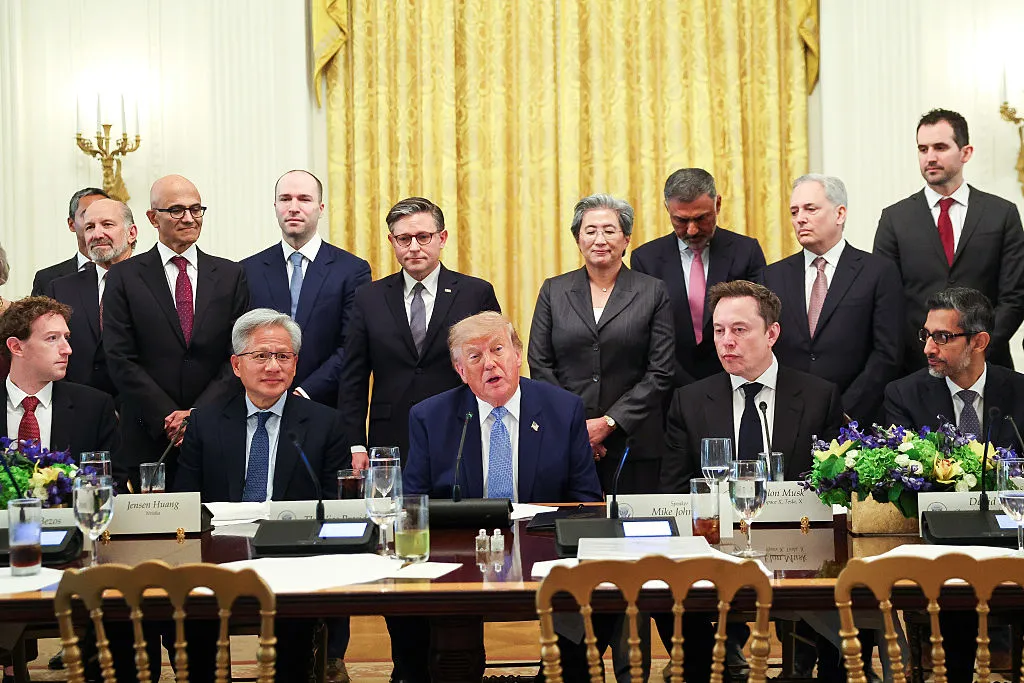
This rebranding has, with some reported stumbles, seemingly been embraced by tech executives who recently gathered at the White House to sign a non-binding safety pledge. The pledge itself, which notably contained an “impressive typo,” already raised eyebrows among those advocating for more rigorous regulatory frameworks. The adoption of “Super Intelligence” by the task force solidifies this new, preferred terminology at the highest levels of government.
The Force Takes Shape: Leadership and Mandate
The Wall Street Journal reports that national intelligence director Jay Clayton will chair the Super Intelligence Force, effectively making him the new AI/SI czar. This appointment is crucial. Clayton, who has previously voiced concerns about the United States “back[ing] away” from AI while competitors like China advance, reiterated this stance, telling the WSJ that one of the biggest risks is “not being first.” This perspective offers a clear lens into the task force’s likely priorities: acceleration and competition over caution and comprehensive safety protocols.
Serving as vice chairs are Federal Trade Commission Chair Andrew Ferguson, Undersecretary of War for Research and Engineering Emil Michael, and Office of Personnel Management Director Scott Kupor. This diverse composition—spanning intelligence, commerce, defense, and human resources—suggests a broad scope for the task force, aiming to touch various facets of government and society where SI might exert influence. However, the absence of prominent AI ethicists, civil liberties advocates, or dedicated safety researchers in the initial leadership structure is noteworthy and has already drawn criticism from parts of the tech and policy communities.
The task force has been given a brisk 120 days to produce a comprehensive report outlining the risks and opportunities presented by SI. Its charter reportedly states a dual objective: to “develop plans for responding to SI-enabled threats to our society, while preventing overregulation and regulatory capture that would stifle innovation and competition.” This directive encapsulates the administration’s perceived tension between fostering technological advancement and mitigating potential harms. The emphasis on “preventing overregulation” signals a proactive stance against what it views as unnecessary impediments to progress, potentially setting it on a collision course with those advocating for more stringent safeguards.
Skepticism and Broader Context
While the formation of a dedicated SI task force might appear a step towards structured engagement with advanced technology, its origins and stated priorities invite a healthy dose of skepticism. The president’s past dismissals of AI safety concerns as a partisan “hoax” have set a challenging precedent. Furthermore, the selection of leaders whose primary public statements emphasize competitive advantage over existential risk mitigation raises questions about the depth of the task force’s commitment to a balanced approach to SI development.
In a global landscape where nations like China are aggressively investing in AI, and where the European Union is pushing for comprehensive regulatory frameworks like the AI Act, the U.S. approach under this administration appears to lean heavily into a “race to the top” mentality. While innovation and leadership are undeniably important, critics argue that an unbridled pursuit of “firstness” without robust ethical guidelines and safety mechanisms could lead to unforeseen and potentially catastrophic consequences. The 120-day timeframe also suggests a rapid, perhaps even superficial, assessment, given the profound and multifaceted challenges posed by super intelligence.
Bottom Line:
The Super Intelligence Force, helmed by Jay Clayton, represents a definitive, albeit contentious, articulation of the administration’s strategy for advanced AI. Its emphasis on global leadership, rapid development, and a skeptical view of “overregulation” charts a course that prioritizes competitive advantage above all else. While the promise of leveraging “Super Intelligence” to protect national interests and improve lives is compelling, the initiative’s origins in a dismissive view of safety, its specific leadership appointments, and its tight timeline suggest a potentially unbalanced approach. The tech community and the public will be watching closely to see whether this “Force” can truly navigate the complexities of super intelligence responsibly, or if it will simply accelerate a race with poorly understood finish lines.
When you purchase through links in our articles, we may earn a small commission. This doesn’t affect our editorial independence.
{content}
Source:{feed_title}