
Federal Reserve Bank of New York President John Williams discusses market impacts of the Iran War, inflation outlook and more on ‘The Claman Countdown.’
Persistent Pockets of Inflation Challenge Fed, Pinch Consumers at the Grocery Store
Key Takeaways:
- Sticky Grocery Inflation:While headline inflation shows signs of cooling, specific consumer staples like coffee and meat continue to see significant price increases, driven by commodity market dynamics, supply chain pressures, and geopolitical tensions, effectively offsetting declines in other categories.
- Geopolitical Headwinds & Commodity Markets:The ongoing conflict in the Middle East is exerting upward pressure on global oil prices, translating into higher transportation costs for food producers and retailers. This, coupled with specific agricultural supply challenges (e.g., climate impact on coffee, livestock cycles for meat), fuels persistent food inflation.
- Implications for Monetary Policy:The stickiness of certain inflation components, particularly in essential goods, complicates the Federal Reserve’s path forward. Continued elevated prices for consumer staples could delay interest rate cuts, as policymakers aim to ensure inflation is sustainably returning to its 2% target without choking economic growth.
Americans are navigating a complex economic landscape, where the promise of cooling inflation is met with a stark reality at the checkout aisle. While some consumer prices show signs of moderation, the items families rely on most for daily sustenance—from their morning brew to evening dinner—are experiencing sharp, market-driven increases that effectively erode any perceived savings elsewhere. This bifurcated inflation picture presents a significant challenge for policymakers and a strain on household budgets.
A recent deep dive into Consumer Price Index (CPI) data, analyzed by CouponFollow, reveals this uneven inflationary terrain over the past two years, with data extending to February 2024. Fourteen of the 25 most common grocery store staples saw price surges, with the top five largest increases stemming from critical categories: coffee (+55%), lettuce (+39%), ground beef (+31%), sirloin steak (+21%), and orange juice (+15%). This trend underscores how certain commodity-driven sectors are proving particularly resistant to broader disinflationary forces, reflecting underlying supply-side shocks and shifting demand dynamics.
Commodity Dynamics Driving Price Jumps
Coffee, a globally traded agricultural commodity, exemplifies the significant market pressures at play. The report highlights it as the fastest-rising staple, with a pound of ground roast soaring from $6.09 two years ago to $9.46 in the latest data. Looking back further to 2020, coffee prices have reportedly skyrocketed by an astonishing 123%. This surge is largely attributable to adverse weather conditions, including droughts and excessive rainfall, in key producing regions, such as Brazil and Vietnam, which have severely impacted harvest yields for both Arabica and Robusta beans. Furthermore, global supply chain disruptions, increased labor costs, and elevated freight expenses have added to the upward price trajectory, squeezing margins for roasters and ultimately passed on to consumers.
Similarly, the meat market is grappling with its own set of challenges, reflecting intricate livestock cycles and input costs. Ground beef has climbed to $6.74 per pound, a 31% increase over two years and a staggering 74% above pre-pandemic levels. Sirloin steak followed suit with a 21% rise. These increases are rooted in multi-year livestock cycles, particularly for cattle, which were impacted by herd liquidation during previous drought conditions. Higher feed costs, influenced by volatile grain prices and energy inputs, coupled with ongoing labor shortages within the processing sector, have constrained supply. Despite robust consumer demand, especially for more affordable cuts like ground beef, the supply-demand imbalance continues to push prices higher.
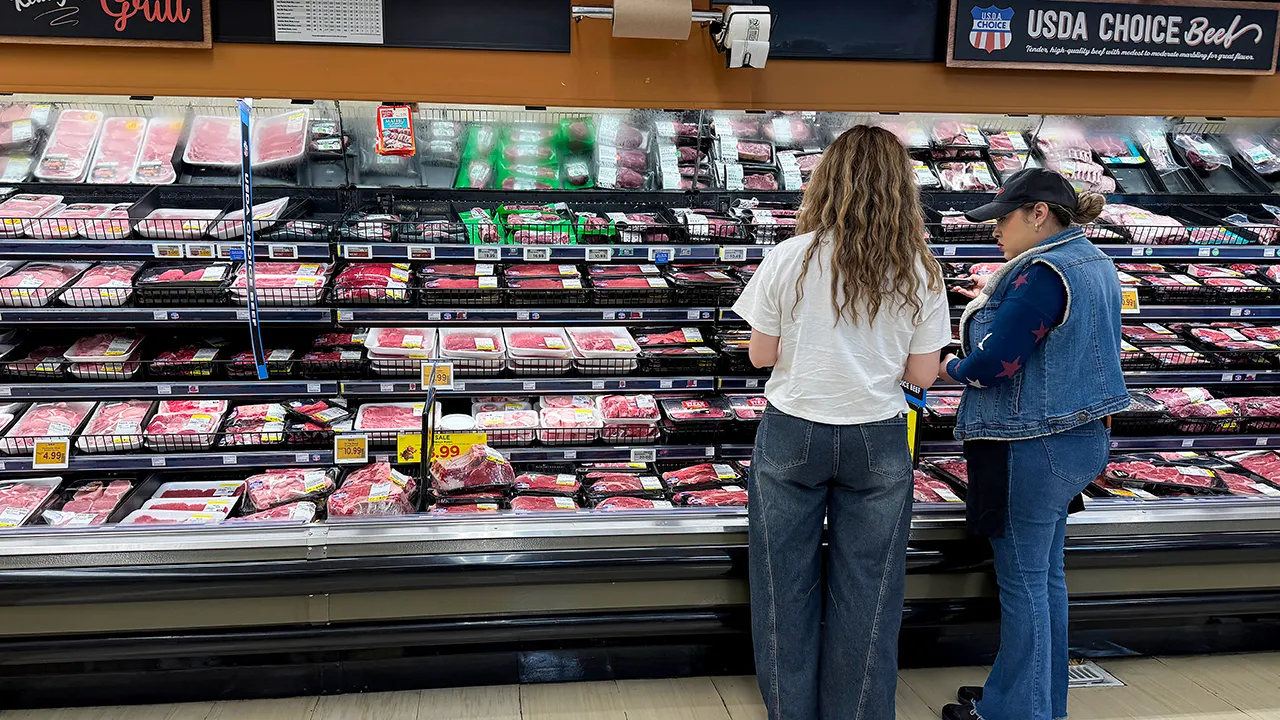
Customers shop for beef at a grocery store on April 6, 2026, in Los Angeles, California.(Getty Images)
The impact on household budgets is palpable. CouponFollow’s “taco night test” illustrated this starkly: a family of four now pays nearly $25 for basic taco ingredients, a substantial jump from $17.50 just six years ago. This micro-level data point reflects the macro-level challenge consumers face in managing household finances amidst persistent inflation in essential goods, forcing trade-offs in discretionary spending.
Deflationary Pockets and Their Limits
It’s not all upward trajectory, providing some nuanced relief in the broader inflationary narrative. Some categories have indeed provided relief, demonstrating the uneven nature of current inflation. Egg prices, for instance, have decreased the most (-17%), primarily due to a significant recovery from avian flu outbreaks that decimated flocks in previous years, leading to increased supply and subsequent oversupply in certain markets. White bread (-8%), spaghetti (-8%), and butter (-7%) also saw declines, reflecting improved supply chains for grains, lower energy costs for processing, or shifting commodity input costs for dairy. However, the report astutely cautions that “the items still climbing are rising fast enough to offset those declines,” creating a net inflationary effect for the average grocery bill and sustaining the overall feeling of price pressure for consumers.
‘The Big Money Show’ discusses the growing trend of young adults getting financial help from their parents.
Geopolitical Risks and the Broader Economic Picture
Beyond agricultural commodities, geopolitical tensions are adding another layer of complexity to the inflation outlook, particularly through the energy markets. Federal Reserve Bank of New York President John Williams and JPMorgan Chase CEO Jamie Dimon have both sounded alarms regarding the potential for the ongoing conflict in the Middle East to drive inflation and interest rates higher. Dimon specifically warned that “oil prices are up, gas prices are up, and that could reverberate throughout the global economy,” highlighting the interconnectedness of energy, supply chains, and consumer prices.
This concern is well-founded. High oil prices, driven by supply fears and increased demand, directly translate into elevated gasoline and diesel costs. For businesses, this means higher transportation expenses across the entire supply chain, from farming and manufacturing to distribution and retail. “Every time something moves in the economy, it will cost more,” noted Derek Reisfield, co-founder of MarketWatch and a former McKinsey consultant, emphasizing that these increased costs are typically borne by the end consumer. This ‘cost-push’ inflation mechanism is particularly potent for the grocery sector, where every product requires significant logistical movement, from farm to fork.
Gregory Daco, chief economist at EY-Parthenon, highlighted the immediate impact on consumers, stating, “For U.S. consumers, what this means is that while there is currently a price shock at the pump being felt directly by consumers, there’s still uncertainty as to how long this shock will last.” The duration and intensity of these elevated energy costs are crucial, as prolonged high prices could embed inflationary expectations more deeply into the economy, making the Fed’s job of restoring price stability even harder and potentially impacting consumer confidence and spending patterns.
Federal Reserve Board Gov. Michelle Bowman discusses where interest rates are going and the job market performance on ‘Maria Bartiromo’s Wall Street.’
Implications for Federal Reserve Policy
The persistence of specific inflationary pressures, particularly in essential goods like food and energy, poses a significant dilemma for the Federal Reserve. While overall CPI growth has moderated from its peaks, the “last mile” of disinflation is proving challenging. Fed officials, including Governor Michelle Bowman, have repeatedly stressed their commitment to bringing inflation down to the 2% target. Continued strength in specific categories like food and energy—which are highly visible and impactful to consumers—could temper the Fed’s inclination to cut interest rates, even if other economic indicators like the labor market show signs of cooling. The risk of prematurely easing monetary policy and reigniting inflation remains a primary concern, suggesting that the “higher for longer” interest rate environment might persist longer than some market participants anticipate. The Fed’s dual mandate of price stability and maximum employment means balancing these complex inflationary signals with broader economic health.
Consumers, meanwhile, are adapting. CouponFollow suggests practical strategies like tracking rising and cooling categories, stocking up on pantry staples during dips, and being flexible with protein choices. These micro-level adjustments reflect a broader macroeconomic struggle, where households are actively managing budgets in response to market volatility and inflationary pressures, potentially shifting spending away from discretionary items.
Market Impact:
The nuanced picture of grocery inflation, marked by persistent increases in key staples and the looming threat of geopolitical energy shocks, carries significant implications for financial markets. Investors should brace for continued volatility in consumer staples and agricultural commodity futures. Companies in the food processing, retail, and logistics sectors will face ongoing margin pressures, making their ability to pass on costs, implement cost-cutting efficiencies, or innovate supply chains critical for profitability. The bond market will closely watch energy and food price trends, as sustained increases could push back expectations for Federal Reserve interest rate cuts, leading to higher Treasury yields and potentially a stronger dollar. Conversely, any significant de-escalation of geopolitical tensions or a surge in agricultural supply could provide a deflationary tailwind, easing pressure on bond yields. Equity investors might favor companies with strong pricing power, those in defensive consumer staples sectors, or those less exposed to volatile commodity inputs. Ultimately, the trajectory of these essential goods prices will continue to be a key determinant of broader economic stability and market sentiment, influencing everything from corporate earnings guidance to central bank policy decisions and global trade flows.
FOX Business’ Eric Revell contributed to this report.