
Key Takeaways
- The AI industry faces a looming “monetization cliff,” with leading firms like OpenAI and Anthropic under immense pressure to convert massive, unprecedented investments into sustainable, profitable business models.
- The rapid adoption and high computational demands of advanced AI agents are accelerating this crisis, burning through resources at unforeseen rates and forcing companies to make critical, often restrictive, strategic decisions.
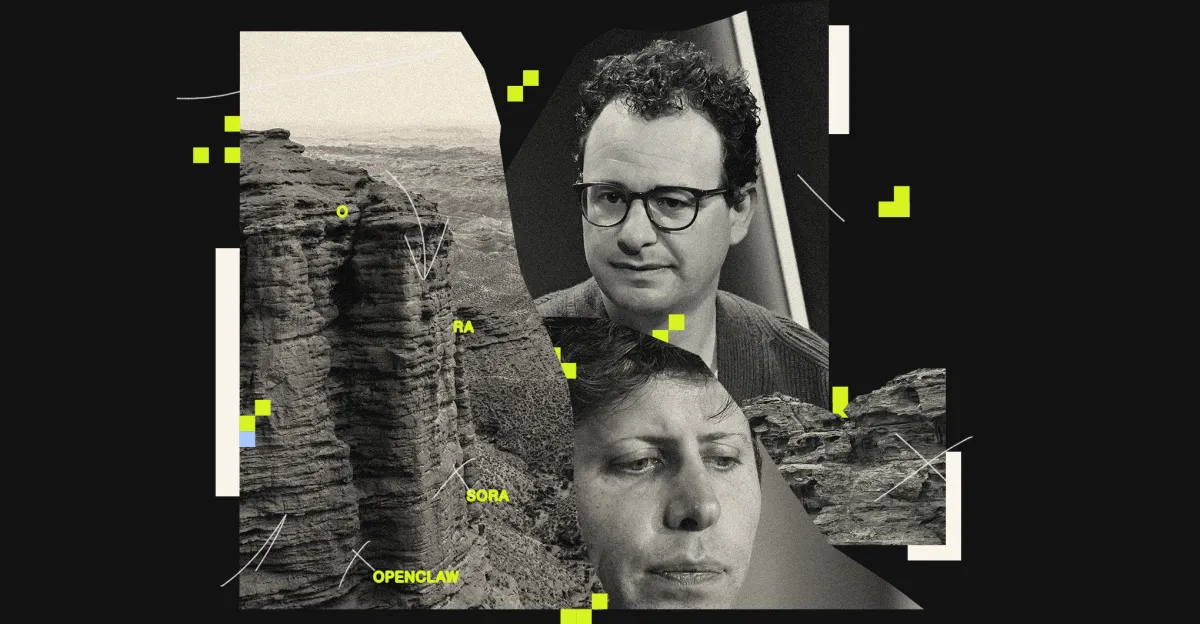
- Recent actions, such as OpenAI’s cancellation of its Sora video-generation app and Anthropic’s restrictions on OpenClaw agent usage, underscore a pivotal shift where profitability and market realities are dictating product development and pricing, signaling a volatile path toward projected multi-billion dollar IPOs.
Navigating the AI Monetization Cliff: OpenAI and Anthropic’s Race to Profitability
The artificial intelligence revolution, for all its groundbreaking innovation and transformative potential, is hurtling towards a critical juncture: the monetization cliff. Billions, perhaps even trillions, of dollars have been poured into this nascent industry, fueling a speculative frenzy that demands a tangible return. Today onDecoder, we delve into whether the titans of AI, particularly Anthropic and OpenAI, can transform their colossal investments into robust, profitable enterprises before they careen off this economic precipice.
To unpack this high-stakes narrative, we turn to Hayden Field, senior AI reporter here atThe Verge. Hayden has been meticulously tracking the strategic maneuvers and operational shifts within Anthropic and OpenAI, offering invaluable insights into what the AI industry might look like just a few short years from now, specifically in 2026.
The Unprecedented Investment Deluge and the Looming Bubble
The story of the AI monetization cliff isn’t new, but its urgency is intensifying. The biggest players in AI have been built on an foundation of hundreds of billions in capital investment, a figure dwarfed only by the even greater amounts earmarked for future infrastructure. This includes massive data center build-outs, the procurement of cutting-edge chips, and other foundational expenditures necessary to scale AI capabilities. At some point, this financial pipeline must flow into the reservoir of profit, or the market’s patience—and capital—will inevitably dry up, potentially leading to a spectacular burst of what many fear is an overinflated bubble.
The sentiment across the tech landscape, echoed by numerous CEOs I’ve interviewed on this show, is a mix of apprehension and unwavering conviction. While many acknowledge the distinct possibility of some companies failing dramatically, there’s a pervasive belief that the opportunities, particularly the financial ones, are simply too immense to ignore. The market, it seems, has committed to this path, whether willingly or not.
Vergesubscribers, don’t forget you get exclusive access to ad-freeDecoderwherever you get your podcasts. Headhere. Not a subscriber? You cansign up here.
AI Agents: The Catalyst for Change and Resource Burn
Recent weeks have undeniably marked an important inflection point. Both Anthropic and OpenAI have begun to react with palpable urgency to the undeniable reality: they need to demonstrate a clear path to profitability, particularly with potential public offerings on the horizon. The primary catalyst for this intensified focus on financial viability? The burgeoning class of AI agents.
Products like Anthropic’s Claude Code and Cowork, as well as the open-source OpenClaw framework and OpenAI’s own Codex, represent a radical shift in how these companies approach resource allocation and monetization. These sophisticated agents, designed to perform complex tasks autonomously, are immensely valuable to customers, unlocking new levels of productivity and innovation. However, their sophisticated operations demand significantly more compute power than anticipated. This translates to tokens being consumed at a rate far exceeding initial projections, forcing these AI giants to make difficult, sometimes abrupt, strategic decisions regarding product roadmaps, customer access, and the sheer amount of money they’re willing to burn in pursuit of the next major milestone.
Case Studies in Constraint: Sora and OpenClaw
The impact of this compute crunch has been starkly evident. Last month, OpenAI shocked the industry by abruptly killing its highly anticipated video-generation application, Sora. This decision meant walking away from a lucrative $1 billion licensing deal with Disney. The reason was purely economic: Sora was simply too expensive to operate, demanding vast computational resources that OpenAI strategically deemed better allocated to its Codex agent development. This was a clear signal that even groundbreaking innovation must yield to the realities of operational cost and strategic resource prioritization.
Just last week, Anthropic followed suit with its own set of critical adjustments. The company decided to restrict how Claude users could consume compute resources through the popular OpenClaw agent framework. Previously available under standard subscription plans, users leveraging OpenClaw are now being pushed onto more expensive pay-as-you-go models. This move directly addresses the unsustainable token burn from agent usage, shifting the cost burden more directly to the heaviest users and underscoring the delicate balance between offering powerful tools and maintaining financial health.
The Road to IPO: Projections, Pressure, and Compromises
As Hayden Field has articulated, these actions are not isolated incidents; they are “glimmers of a make-or-break moment” for the entire AI industry. Both Anthropic and OpenAI are barreling towards what are anticipated to be two of the biggest initial public offerings (IPOs) in history. The pressure on these companies to demonstrate not just technological prowess but also a clear, viable path to profitability has never been more intense.
Leaked projections, reported this week by theWall Street Journal, paint a picture of mind-boggling growth, forecasting hundreds of billions in revenue and profitability by the end of the decade. But the critical questions remain: Can these AI companies truly achieve such ambitious financial targets? And what additional compromises will they be forced to make—in terms of product features, pricing, accessibility, and even ethical considerations—to reach those goals and avoid a catastrophic crash?
The path forward will likely involve a relentless focus on enterprise solutions, optimizing models for efficiency, diversifying revenue streams beyond raw API access, and potentially even scaling back on experimental, high-compute initiatives. The era of unchecked innovation, funded by limitless venture capital, may be giving way to one defined by fiscal discipline and strategic sacrifices.
Bottom Line
The AI industry stands at a pivotal crossroads. The promise of artificial general intelligence (AGI) and unprecedented technological advancement continues to captivate, but the economic realities of developing and deploying such powerful systems are now undeniably taking center stage. The strategic pivots by OpenAI and Anthropic are not mere footnotes; they are loud declarations that the era of lavish investment without clear returns is drawing to a close. The coming years will reveal which companies can successfully navigate this monetization cliff, transforming visionary technology into sustainable, profitable businesses, and which will falter under the immense pressure to deliver on their colossal valuations.
If you’d like to read more about what we discussed in this episode, check out these links:
- The vibes are off at OpenAI |The Verge
- Anthropic essentially bans OpenClaw from Claude |The Verge
- Why OpenAI killed Sora |The Verge
- OpenAI just bought TBPN |The Verge
- National poll shows voters like AI less than ICE |The Verge
- The spiraling cost of making AI |WSJ
- OpenAI’s Fidji Simo taking leave amid exec shake-up |Wired
- OpenAI raises another $122B at $850B valuation |The Verge
The AI Frontier: Decoding the OpenAI vs. Anthropic Showdown
Key Takeaways
- The AI landscape is dominated by an escalating rivalry between OpenAI and Anthropic, each pursuing distinct foundational model strategies that define the industry’s pace and direction.
- OpenAI prioritizes rapid innovation and widespread deployment, driving significant market momentum and user adoption, while Anthropic champions a “safety-first” approach with Constitutional AI to mitigate risks and build trust.
- This intense competition fuels unprecedented investment, pushes technological boundaries, and forces critical industry discussions around AI ethics, robust regulation, and the long-term societal impact of these powerful technologies.
The world of artificial intelligence is in a state of perpetual acceleration, a whirlwind of innovation, investment, and intense competition. At the epicenter of this storm are two powerhouses: OpenAI and Anthropic. What began as a shared pursuit of advanced AI has evolved into a high-stakes rivalry, shaping not just the capabilities of large language models but also the philosophical bedrock upon which these transformative technologies are built. Understanding this dynamic is crucial for anyone trying to make sense of the modern tech landscape, and it’s precisely the kind of “big ideas and other problems” that hosts like Nilay Patel frequently unpack onDecoder.
The AI Race: A Battle for Foundational Dominance
In the grand narrative of technological progress, few chapters have unfolded with the speed and drama of the current AI era. Since the public unveiling of ChatGPT in late 2022, the race to develop increasingly powerful and capable generative AI models has become the primary focus for venture capitalists, tech giants, and governments alike. OpenAI, with its early lead and aggressive deployment strategy, cemented its position as the de facto leader, demonstrating the breathtaking potential of large language models (LLMs) to a global audience. Its models, like GPT-4, have set benchmarks, transforming everything from content creation to coding assistance.
However, the story is far from a monologue. Anthropic, founded by former OpenAI researchers who departed over disagreements regarding the company’s direction and safety protocols, has emerged as its most formidable challenger. This isn’t just a battle for market share; it’s a fundamental debate about how AI should be developed, deployed, and ultimately, governed. Their respective approaches offer contrasting visions for the future of artificial general intelligence (AGI), making their competition not only commercially significant but also deeply philosophical.
OpenAI’s Velocity Play: Innovate and Iterate
OpenAI’s strategy can be characterized by its relentless pursuit of innovation and rapid iteration. Backed by billions from Microsoft, the company has consistently pushed the boundaries of what LLMs can do. From text generation to image synthesis (DALL-E) and multimodal capabilities, OpenAI’s products have become household names, democratizing access to powerful AI tools. Their philosophy seems to lean towards getting advanced AI into the hands of users quickly, allowing for real-world feedback to drive further development and safety improvements. This ‘build fast and break things’ mentality, albeit tempered by significant safety research, has enabled them to capture mindshare and integrate deeply into enterprise workflows.
The success of ChatGPT ignited a global AI arms race, forcing every major tech company to re-evaluate its strategy. OpenAI’s aggressive timeline for deploying new models and features ensures they remain at the forefront of public perception and technological capability. Yet, this speed also comes with inherent risks, raising questions about control, potential misuse, and the long-term societal implications of releasing increasingly powerful, opaque systems into the wild.
Anthropic’s Measured Ascent: Safety as a Feature
In stark contrast, Anthropic has carved out its niche by prioritizing safety and interpretability. Founded by siblings Dario and Daniela Amodei, Anthropic positions itself as the more cautious, ethically driven alternative. Their flagship model, Claude, is developed with a unique approach called “Constitutional AI.” Instead of relying solely on human feedback for alignment, Constitutional AI incorporates a set of ethical principles (a “constitution”) directly into the AI’s training process. This aims to make the AI inherently safer, more honest, and less prone to generating harmful or biased content, a critical concern as AI systems become more autonomous.
Anthropic’s slower, more deliberate pace is a strategic differentiator, appealing to enterprises and policymakers who are increasingly wary of the potential downsides of unchecked AI development. Major investments from Google, Amazon, and others underscore the market’s demand for AI that is not only powerful but also trustworthy and aligned with human values. This “safety-first” strategy could prove invaluable in a future where regulatory scrutiny tightens and public trust becomes the ultimate currency.
Beyond the Models: The Ecosystem Ripple Effect
The rivalry between OpenAI and Anthropic isn’t confined to their labs; it reverberates throughout the entire tech ecosystem. Cloud providers like AWS and Google Cloud are vying to host and support these foundational models, recognizing their strategic importance. Startups are building on top of both OpenAI’s and Anthropic’s APIs, creating an explosion of AI-powered applications across every industry imaginable. The demand for AI talent, from researchers to engineers, has never been higher, leading to an intense scramble for top minds.
Moreover, this competition forces a continuous re-evaluation of business models and competitive advantages for established tech giants. Every company, from software firms to hardware manufacturers, is now grappling with how to integrate AI effectively, or risk being left behind. The capital flowing into the AI sector is staggering, underscoring the belief that this technology is not merely an incremental improvement but a fundamental paradigm shift.
The Unavoidable Questions: Ethics, Governance, and the Future
As the capabilities of AI rapidly advance, so too do the “other problems” that Nilay Patel often highlights. The OpenAI vs. Anthropic dynamic encapsulates the core tensions of this era: innovation versus control, speed versus safety, and utility versus ethics. Who gets to decide what constitutes “safe” AI? How do we prevent these powerful tools from being used for malicious purposes, or from perpetuating and amplifying existing societal biases? The emergence of deepfakes, sophisticated phishing scams, and the potential for AI to influence elections are not hypothetical concerns but present dangers.
Governments worldwide are struggling to keep pace, attempting to craft legislation and regulatory frameworks for a technology that evolves almost daily. The choices made by companies like OpenAI and Anthropic today, regarding their development priorities, safety protocols, and openness, will have profound implications for the future of society. Their competition is not just about building better bots; it’s about defining the very nature of human-AI interaction and the ethical guardrails that will govern our increasingly intelligent digital world.
Bottom Line
The intense rivalry between OpenAI and Anthropic is more than just a corporate battle; it’s a crucible where the future of AI is being forged. Their differing philosophies on speed, safety, and deployment are pushing the boundaries of what’s possible while simultaneously forcing crucial conversations about responsibility and governance. As these titans clash, the entire tech industry watches, adapts, and innovates, ensuring that AI remains the most exciting, yet most challenging, frontier of our time. The outcome of this showdown will dictate not just who wins the AI race, but how humanity integrates this revolutionary technology into its very fabric.
Questions or comments about this episode? Hit us up at decoder@theverge.com. We really do read every email!
Decoder with Nilay Patel
A podcast fromThe Vergeabout big ideas and other problems.
SUBSCRIBE NOW!