
World News Journal
***
### Space Force Reforms Aim for Agility Amidst Ambitious Transformation
**LOS ANGELES, Calif.** – The U.S. Space Force is in the midst of a significant overhaul of its acquisition processes, a multi-year effort designed to fundamentally alter how the service defines requirements, manages its programs, and fields critical systems to its operational units. While these sweeping changes promise greater efficiency and responsiveness, a key concern for military leadership is ensuring that this ambitious transformation does not disrupt the ongoing execution of vital space programs.
The impetus for these reforms gained considerable momentum following Defense Secretary Pete Hegseth’s comprehensive acquisition transformation initiative, unveiled last November. However, the Space Force had already begun laying groundwork for many of the strategy’s core tenets. Over the preceding year, the service had proactively audited its procurement programs, seeking enhanced collaboration opportunities with commercial entities, strengthening the synergy between its operational units and acquisition teams, and accelerating the delivery timelines for essential systems. Notable successes cited include the rapid development and deployment of capabilities such as the Deep-Space Advanced Radar Capability and the Remote Modular Terminal, a satellite communications jammer.
Since the formal introduction of Hegseth’s strategy, the Space Force has continued to advance its early reform objectives. Key among these achievements are the decentralization of contracting authorities, which are now being delegated to dedicated acquisition experts, and the phased implementation of nine mission-focused Portfolio Acquisition Executives (PAEs). The rollout of these new executive roles was successfully finalized in mid-June, marking a significant structural shift.
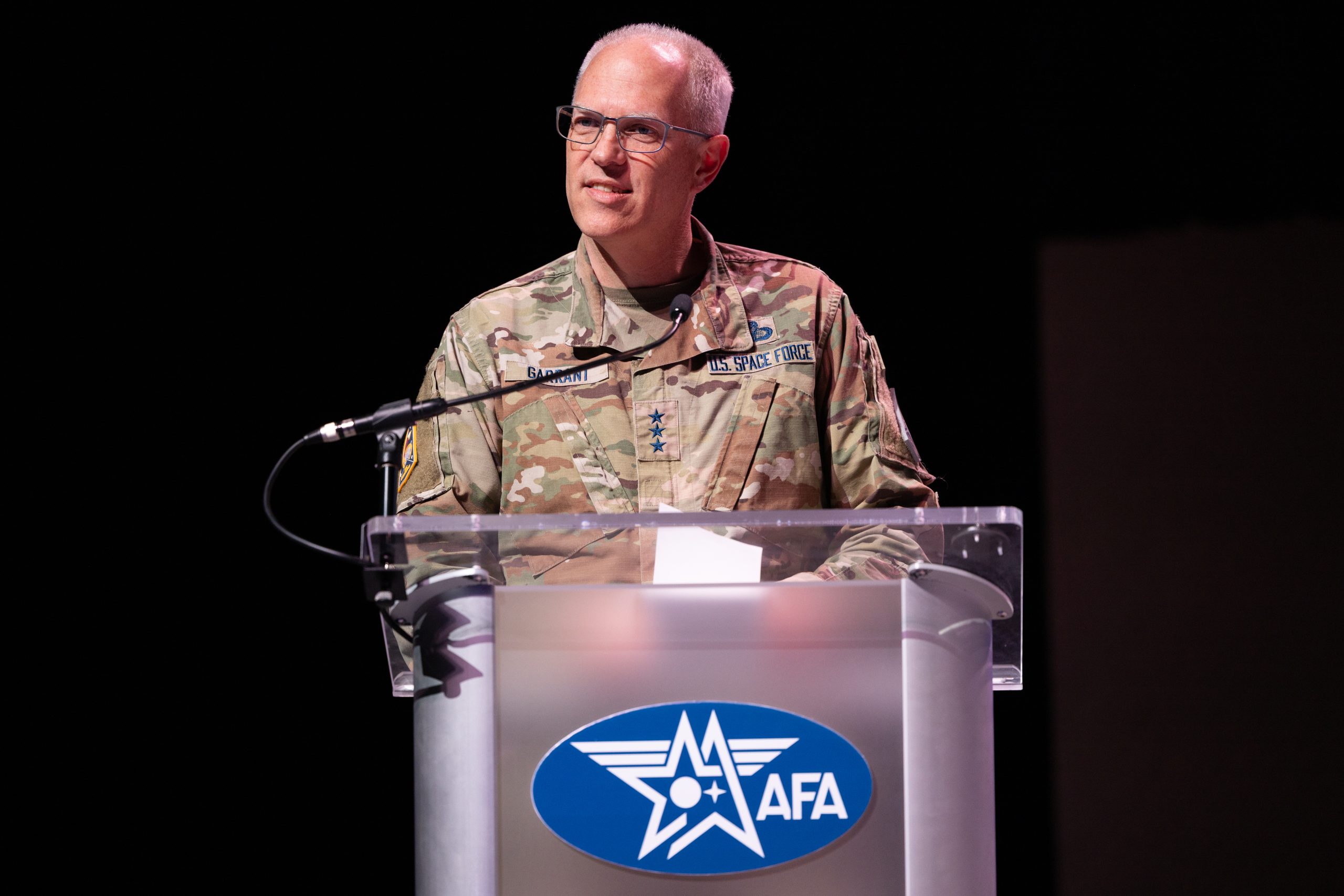
However, substantial work remains. The Pentagon has set a November 2027 deadline for the full operationalization of these new structures, leaving the Space Force approximately 18 months to complete the intricate integration process. Lieutenant General Philip Garrant, Commander of Space Systems Command (SSC), the Space Force’s primary acquisition field command, expressed his vigilance regarding this transition. “Over the next year, as we realign people with the new portfolios—and there’s some instances where we did a lot of combining from different organizations with different processes and different cultures and we’re really trying to hire a lot more people—I want to make sure that we don’t take our eye off the program execution,” Garrant stated in an interview at SSC’s headquarters at Los Angeles Air Force Base, California. “In the end, we’ve got to execute these programs. It is of concern to me.”
Garrant outlined several critical areas of focus as the Space Force navigates the complex path of acquisition reform. On the personnel front, a major undertaking involves the realignment of all unit manning documents to correspond with the new PAE structure, a process requiring extensive administrative effort. This involves not only moving individuals but also merging teams that previously operated under different organizational cultures and procedural frameworks, necessitating careful integration to maintain productivity.
Further, the service is developing entirely new processes and dedicated forums aimed at streamlining the generation and validation of requirements. This effort follows the Pentagon’s decision last year to dismantle the Joint Capability Integration and Development System (JCIDS), a long-standing framework often criticized for its bureaucratic complexity and slow pace. A key component of this new approach is the establishment of a “capability trade council.” This council will comprise representatives from both the service acquisition office and the user community, tasked with negotiating and prioritizing requirements proposed by the PAEs, thereby fostering a more agile and responsive needs-identification process.
The Space Force is also re-evaluating the organizational role of SSC in supporting the newly established PAEs. While formal decisions are still pending, Garrant indicated an intent to reduce the size of SSC headquarters and redistribute its personnel, embedding them directly within the PAE teams. For example, each portfolio team is expected to have dedicated finance and contracting personnel assigned to provide direct, tailored support. This move aims to decentralize decision-making and provide PAEs with integrated support functions.
Garrant noted that in the ongoing quest to establish the optimal organizational structure for the PAEs, the service explored several options. One consideration was expanding its “Integrated Mission Delta” construct, which currently pairs Space Operations Command’s Mission Deltas (operational units) with System Deltas from SSC (acquisition units). Another option involved creating entirely new mission-focused commands that would combine both operators and acquirers within a single field command. Ultimately, the service decided against a wholesale restructuring of its field commands in this manner. However, it continues to explore avenues to foster closer collaboration and integration between its operator and acquirer teams. Garrant affirmed, “Short of having combined field commands, SSC appreciates the value of having MDs and SYDs near each other and continues to look for opportunities to staff program offices near their operational counterparts.”
A critical legislative challenge facing the Space Force is securing the necessary budgetary authorities from Congress for its PAEs. The PAEs require the ability to craft portfolio-level budgets and possess the flexibility to shift funding between programs as new technologies emerge or as threats evolve. Lawmakers have historically been hesitant to grant such an extensive level of budget and reprogramming authority, viewing it as potentially diminishing congressional oversight. Garrant acknowledged that both the Space Force and the broader Pentagon have a responsibility to provide Congress with the requisite information and assurances to alleviate these concerns. Discussions on this matter are still in their nascent stages but are a high priority, as this level of budget flexibility is considered central to the effectiveness of the new PAE structure. “It will allow us to go very fast, particularly as requirements change,” Garrant emphasized. “When you look at the [fiscal 2027 budget] and how large it is, to have that budget flexibility would be pretty important. I know the PAEs would really like to have that.”
***
### Why This Matters
The U.S. Space Force’s ongoing acquisition reforms are not merely administrative changes; they represent a critical strategic imperative with far-reaching implications for national security, global competition, and economic innovation. The space domain has rapidly transformed from a relatively stable environment into a contested arena, where the U.S. faces growing threats from adversaries like China and Russia, who are actively developing anti-satellite weapons and advanced space capabilities.
Historically, defense acquisition processes have been criticized for being slow, bureaucratic, and ill-suited to the rapid pace of technological change and evolving threats. Delays in acquiring next-generation systems can leave the U.S. at a strategic disadvantage. By delegating authority to Portfolio Acquisition Executives and streamlining requirements generation, the Space Force aims to drastically reduce the time it takes to move from identifying a need to delivering a capability to operators. This agility is crucial for maintaining the U.S.’s technological edge and ensuring its space assets — vital for communications, intelligence, navigation, and missile warning — remain resilient and effective.
The emphasis on partnering with commercial companies also holds significant importance. The commercial space sector is experiencing unprecedented growth and innovation, often outpacing traditional government development cycles. By leveraging commercial off-the-shelf technologies and services, the Space Force can access cutting-edge solutions more quickly and cost-effectively, freeing up resources for highly specialized, national security-specific projects. This integration also fosters a stronger national industrial base, encouraging innovation and job creation.
The push for greater budgetary flexibility for PAEs, though challenging to secure from Congress, is foundational to the reform’s success. Traditional line-item budgeting often locks funds into specific programs years in advance, making it difficult to adapt to unforeseen technological breakthroughs or shifts in the threat landscape. Empowering PAEs to reallocate funds within their portfolios would enable a more dynamic response, ensuring resources are directed to the most pressing needs and promising innovations without lengthy delays.
Ultimately, these reforms are about more than just buying satellites; they are about transforming the Space Force into a more adaptive, responsive, and innovative organization. Success in this endeavor will directly impact the U.S.’s ability to deter aggression, protect its vital space assets, and ensure its continued leadership in a domain that is increasingly central to modern warfare and everyday life. Failure to adapt could have severe consequences for national security and geopolitical stability.