
Key Takeaways:
- Rapid Texas Expansion:Tesla is swiftly extending its robotaxi service to Dallas and Houston, making Texas its sole operational state for driverless vehicles, following an earlier launch in Austin.
- Ambitious Vision vs. Operational Reality:While Tesla’s social media announcement projects confidence with driverless video footage, current crowdsourced data suggests a very limited number of vehicles active in these new markets.
- Safety and Scale Under Scrutiny:The expansion comes amidst reports of 14 crashes involving Tesla’s Austin robotaxis, highlighting ongoing safety concerns and the significant challenge of scaling fully autonomous operations reliably and safely.
The Lone Star Leap: Tesla’s Robotaxi Ambitions Accelerate into New Markets
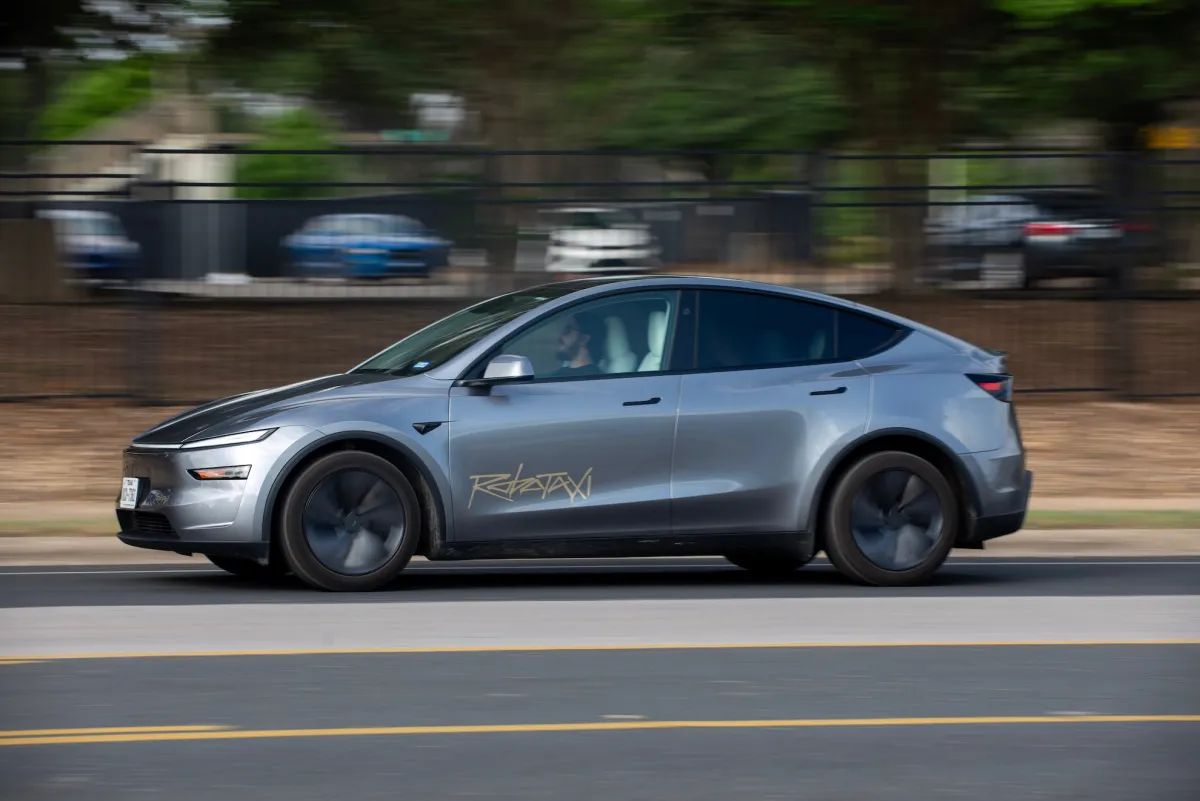
In a move poised to further stir the rapidly evolving autonomous vehicle (AV) sector, Tesla has officially announced the expansion of its robotaxi service to Dallas and Houston. The revelation, disseminated via a terse social media post, marks a significant, albeit early, step in the electric vehicle giant’s long-held ambition to dominate the future of urban mobility. With a 14-second video showcasing Tesla vehicles navigating city streets apparently without human intervention, the company aims to project an image of accelerating progress in a field fraught with technical and regulatory hurdles. This expansion underscores Tesla’s strategic focus on the Texas market, turning the state into a critical proving ground for its Full Self-Driving (FSD) technology and its vision for a driverless future.
Deep Dive: Texas, Tesla, and the Pursuit of Driverless Taxis
The announcement, simply stating “Robotaxi is now rolling out in Dallas & Houston 🤠,” builds upon Tesla’s existing presence in Austin, where its robotaxi service first launched last year. While the specifics of the Austin launch initially involved human safety drivers, Tesla has been progressively rolling out capabilities for rides without safety drivers since early 2024, a crucial step towards true autonomy. This phased approach allows the company to gather vast amounts of real-world data, refine its FSD software, and incrementally gain regulatory approval. Tesla’s strategy deviates from many competitors by leveraging its existing fleet of consumer vehicles equipped with FSD hardware, rather than developing purpose-built robotaxi units. This dual-use strategy, while potentially accelerating deployment, also means that the public’s perception of FSD’s capabilities in general consumer use cases directly impacts the trust placed in its robotaxi service. The Texas market, with its diverse urban landscapes and a generally receptive regulatory environment, appears to be Tesla’s preferred theater for this high-stakes experiment in autonomous transportation.
Contrastingly, Tesla also operates a more limited ride service with human drivers in the San Francisco Bay Area, suggesting a tiered approach to autonomy based on regional regulations and technological maturity. The decision to keep full driverless operations exclusive to Texas for now is telling, pointing to either more favorable state-level regulations or perhaps a more controlled testing environment that allows for rapid iteration and deployment away from the more stringent oversight often found in California. This geographic concentration allows Tesla to focus its engineering and support resources, theoretically accelerating the pace of development and overcoming localized challenges more efficiently before attempting broader deployment.
The Strategic Play: Why Texas, Why Now?
Tesla’s continued, almost exclusive, focus on Texas for its robotaxi operations is no coincidence. The state has cultivated a reputation for being business-friendly, often characterized by a less burdensome regulatory landscape compared to tech hubs like California. For autonomous vehicle companies, this often translates to fewer hurdles for testing and deployment permits, allowing for quicker market entry. Furthermore, CEO Elon Musk’s personal and business ties to Texas, including the relocation of Tesla’s headquarters to Austin and the establishment of Gigafactory Texas, likely play a significant role. This geographical synergy provides logistical advantages, local political goodwill, and a ready talent pool, fostering an ecosystem conducive to rapid technological development and deployment. The state’s sprawling, car-centric cities like Dallas and Houston also offer diverse driving environments—from dense urban cores to extensive highway systems—providing invaluable data for refining FSD technology across a wide range of scenarios.
From a competitive standpoint, establishing a strong foothold in Texas allows Tesla to potentially outpace rivals in a key demographic. While companies like Waymo and Cruise have made significant strides in cities like Phoenix, San Francisco, and Miami, Tesla’s approach leverages its vast existing customer base and vehicle fleet, creating a unique pathway to scale. By proving the viability and safety of driverless operations in a major state like Texas, Tesla could gain a crucial first-mover advantage, building public trust and refining its service ahead of a more widespread national or international rollout. The “why now” aspect likely stems from a combination of internal readiness milestones for its FSD software, coupled with the strategic imperative to demonstrate tangible progress in the highly competitive and capital-intensive autonomous driving race. The clock is ticking for AV companies to demonstrate profitability and scalability, and Tesla is clearly signaling its intent to accelerate on both fronts.
Navigating the Reality: Scale, Safety, and Skepticism
Despite the bold pronouncements, the practical scale of Tesla’s new robotaxi operations appears modest. Crowdsourced data from the Robotaxi Tracker website, a valuable independent resource for monitoring AV deployments, currently registers only a single active vehicle in each of the new cities, Dallas and Houston. This stands in stark contrast to the 46 active vehicles logged in Austin, suggesting that the “rolling out” phase is still very much in its infancy for these new markets. Such limited initial deployment is typical for new AV expansions, allowing companies to gather localized data and address specific mapping or operational challenges before scaling up. However, it also highlights the significant gap between a company’s aspirational announcements and the current, often incremental, reality of autonomous vehicle deployment.
Perhaps the most critical challenge facing Tesla’s robotaxi ambitions is the ongoing scrutiny over safety. In a February filing, Tesla disclosed that its Austin robotaxis have been involved in 14 crashes since their launch. While the severity and causes of these incidents are not detailed in the original report, any crash involving an autonomous vehicle immediately draws heightened public and regulatory attention. For an industry still striving to earn widespread trust, transparency, and a demonstrated track record of superior safety are paramount. The “beta” nature of Tesla’s FSD software, even as it powers these robotaxis, fuels a persistent debate among experts and the public regarding its readiness for fully unsupervised, commercial operation. Regulatory bodies, eager to ensure public safety, are closely monitoring these deployments. Tesla must not only prove its technology can drive reliably but also demonstrate that its incident rates are significantly lower than human-driven vehicles, and that it has robust systems in place to investigate and mitigate future risks. The journey from a few vehicles to a truly scalable, safe robotaxi fleet is long and arduous, demanding continuous innovation and an unwavering commitment to safety protocols.
The Road Ahead: High Stakes in Autonomous Racing
Tesla’s expansion into Dallas and Houston is more than just a geographical broadening; it’s a critical test of its long-term strategy in the autonomous vehicle race. The ability to deploy and scale in multiple, diverse urban environments is essential for proving the versatility and robustness of its FSD platform. Success in Texas could pave the way for expansion into other states, provided regulatory frameworks become more harmonized and public acceptance grows. The economic model for robotaxis remains a key area of focus for all players. Achieving profitability will depend heavily on maximizing vehicle utilization, minimizing operational costs (including charging and maintenance), and developing dynamic pricing strategies. Tesla’s existing charging infrastructure and integrated vehicle ecosystem could offer unique advantages here, but only if the technology can perform reliably enough to maintain high uptime.
The competition in the robotaxi sector is fierce, with well-funded rivals like Waymo (Google’s self-driving division) and Cruise (GM’s AV unit), alongside emerging players, all vying for market share. Each has its own technological approach, operational philosophy, and regulatory strategy. Tesla’s distinct path—leveraging its consumer fleet and iterative “beta” FSD development—presents both opportunities for rapid growth and unique challenges regarding public perception and regulatory oversight. The next few years will be crucial in determining which companies can transition from limited pilots to truly scalable and profitable autonomous mobility services, and Tesla’s aggressive moves in Texas position it as a formidable, if controversial, contender in this high-stakes race.
Bottom Line
Tesla’s swift expansion of robotaxi service into Dallas and Houston represents a bold declaration of its commitment to autonomous driving. While the social media announcement and accompanying video project confidence, the underlying reality reveals a nascent deployment scale and persistent challenges related to safety and public trust. The strategic focus on Texas offers a fertile ground for development, but the company must demonstrate consistent, verifiable safety and reliable performance across its growing fleet. The journey from ambitious vision to widespread, profitable driverless mobility is fraught with technical hurdles, regulatory scrutiny, and the imperative to earn passenger confidence. Tesla’s latest move is a significant step, but the true test lies in its ability to safely and effectively scale its robotaxi operations beyond mere pilots, transforming its FSD aspirations into a trusted, everyday reality.
Source:{feed_title}