
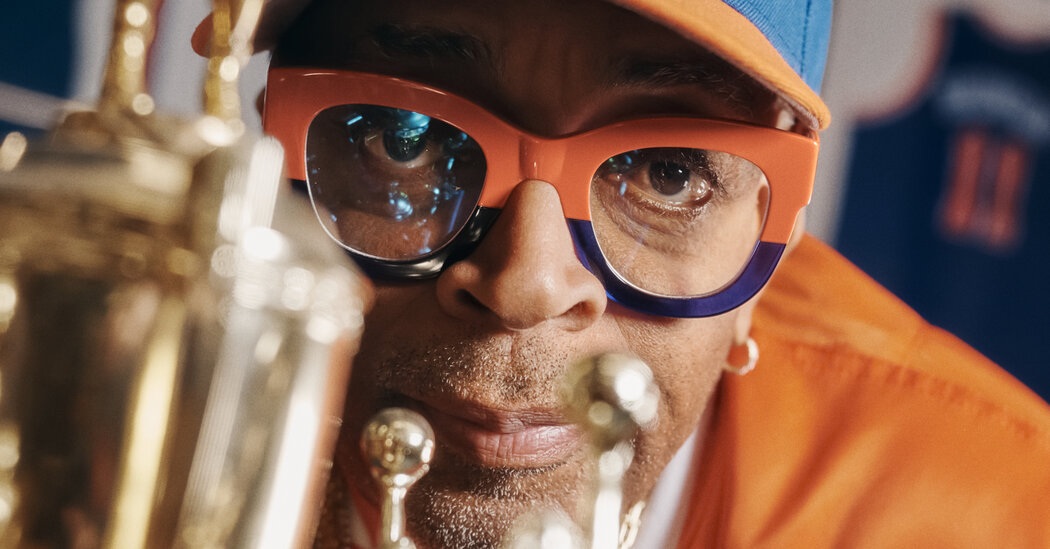
New York City, historically dubbed “Fun City” by Mayor John V. Lindsay during the challenging mid-1960s, is currently experiencing a wave of public enthusiasm, largely attributed to the New York Knicks’ deep playoff run. The basketball franchise, which last secured a championship in 1973, is poised to compete for its third title. On Wednesday, the Knicks are scheduled to face the San Antonio Spurs, featuring their highly touted rookie center, Victor Wembanyama.
Across the five boroughs, the city’s mood appears to be palpably uplifted, with widespread reports of increased public cheerfulness. Observers note a visible resurgence of Knicks pride, characterized by a proliferation of team apparel, from hats to jerseys, adorning residents. This phenomenon underscores the unique cultural significance of the Knicks within New York, suggesting that the team’s success translates directly into a revitalized sense of collective joy and civic identity, reminiscent of Lindsay’s optimistic vision for the city.
The New York Knicks’ historical pursuit of championships dates back to their inaugural victory in 1970. That momentous Game 7 of the NBA Finals against the Los Angeles Lakers is enshrined in sports lore, largely due to the heroic performance of captain Willis Reed. Despite a significant injury sustained in Game 5, Reed famously limped onto the Madison Square Garden court, inspiring his team to a decisive victory. That legendary squad also featured future Hall of Famers Walt Frazier and Bill Bradley, alongside key player Dave DeBusschere. The franchise secured a second championship in 1973, with Earl Monroe having joined the roster, further cementing its status as a premier NBA team of that era.
Following these golden years, the Knicks made two subsequent trips to the NBA Finals in 1994 and 1999, though they were unsuccessful in securing additional titles. These runs, however, were punctuated by years of playoff droughts and rebuilding phases, challenging the loyalty of their fervent fanbase. Yet, the team remained a fixture in the city’s cultural landscape, often serving as a barometer for New York’s collective spirit.
Since the 1999 Finals appearance, New York City has endured a series of profound challenges, including the devastating attacks of September 11, 2001, the impact of Hurricane Sandy, the global COVID-19 pandemic, and recent controversies surrounding immigration enforcement. Throughout these periods of adversity, the New York Knicks, despite their own struggles on the court, have consistently been viewed by many residents as a unifying force. The city’s deep-rooted basketball culture, characterized by countless courts and an unparalleled passion for the sport, ensures that the Knicks hold a unique place in the civic identity, often symbolizing resilience and communal spirit.
The current Knicks roster is seen by many as embodying the traditional values of the franchise, drawing parallels to the championship-winning teams of the early 1970s. The principles of teamwork and selflessness, famously championed by former coach Red Holzman with his mantra “Find the Open Man,” are reportedly evident in the team’s contemporary playstyle. This connection to history is reinforced by the enduring presence of former players, such as Walt Frazier, who continues to be an active broadcast personality for the team, maintaining a vital link between generations of fans and players.
Prominent Knicks legends who never won a championship, including Patrick Ewing, Larry Johnson, Latrell Sprewell, and John Starks, have been visibly supportive of the current team, often seen courtside. Their presence fosters a sense of continuity and brotherhood that resonates deeply with the fanbase. Team owner James Dolan has been credited with facilitating the return and engagement of these former heroes, thereby strengthening the bond between the team’s past, present, and its loyal supporters.
Key players on the current Knicks squad are frequently highlighted for their contributions and perceived embodiment of these team values. Center-forward Karl-Anthony Towns, for instance, has been noted for his willingness to sacrifice individual scoring for team success, a quality seen as reflecting the collective spirit New Yorkers often display during difficult times. Josh Hart and OG Anunoby are often characterized as “lunch-pail guys,” akin to the hardworking Dave DeBusschere of the championship era. Jalen Brunson, while a standout scorer, is recognized for a more understated, yet impactful, leadership style. Additionally, the presence of players like Jose Alvarado is celebrated for representing the city’s rich diversity, including its significant Puerto Rican community.
New York City, renowned for its vibrancy and diversity, views its sports teams as integral to its identity. The Knicks, in particular, are often described as the “soul” of this multifaceted metropolis, a city known globally for its cultural attractions, from Broadway to diverse culinary offerings. The recent election of the city’s first Muslim mayor further underscores New York’s evolving demographic landscape and its commitment to inclusivity.
However, New York City also grapples with significant socio-economic challenges. The rising cost of living has rendered many aspects of city life increasingly unaffordable for a substantial portion of its population, including attendance at high-profile sporting events. The prohibitive ticket prices at Madison Square Garden have led a noticeable number of dedicated Knicks fans to travel to away games in cities such as Atlanta, Philadelphia, and Cleveland, where the combined cost of travel, accommodation, and tickets often proves more economical than a single home game ticket.
Despite being considered a global epicenter for basketball, New York has experienced a championship drought spanning 53 years. This extended period means that multiple generations of Knicks supporters have yet to witness their team win an NBA title. The current iteration of the team, assembled by President Leon Rose and coached by Mike Brown, who replaced Tom Thibodeau, has garnered widespread acclaim for its cohesive play and resilience. The team’s deep bench and collective buy-in to its system have been critical to its success.
The upcoming series against the San Antonio Spurs presents a formidable challenge, particularly with the presence of Victor Wembanyama, an exceptionally talented big man who has rapidly become one of the league’s most compelling figures. Wembanyama’s public engagement, including his reported chess games in Washington Square Park, has contributed to his status as a “man of the people.” Historically, the Knicks’ championship triumphs in the 1970s involved overcoming legendary big men such as Lew Alcindor (later Kareem Abdul-Jabbar) and Wilt Chamberlain. This historical context frames the current matchup as another significant test against an iconic talent. The anticipation for the series is immense, with fans hoping for a decisive victory at Madison Square Garden to break the long-standing championship spell and once again declare New York “Fun City.”
Why This Matters
The New York Knicks’ playoff run transcends mere sports competition, holding significant cultural, social, and economic implications for New York City and beyond. For a city that has faced numerous adversities, from the trauma of 9/11 to the economic strains of rising living costs, the success of its premier basketball team serves as a powerful symbol of resilience and collective spirit. A championship victory would not only end a 53-year drought but also inject a profound sense of civic pride and shared joy into a diverse populace, potentially fostering greater social cohesion across different communities.
Economically, a deep playoff run and potential championship can deliver a substantial boost to the local economy. Increased tourism, heightened demand for merchandise, and a surge in patronage for local businesses, particularly in hospitality and entertainment sectors, are direct benefits. The amplified global media attention on New York City reinforces its status as a major international hub for culture, business, and sport, attracting further investment and visitors. The narrative of the team’s journey, overcoming challenges and embodying a hardworking, selfless ethos, mirrors the city’s own identity, making their success a compelling story that resonates far beyond the basketball court and into the broader societal consciousness. It underscores how sports can act as a crucial thread in the fabric of a city’s identity, influencing morale, fostering unity, and reflecting its enduring character on a global stage.