
Key Takeaways:
- Geopolitical Risk Fuels Energy Prices:The U.S. blockade on Iranian oil exports, dubbed “Operation Economic Fury,” has significantly tightened global crude supply, injecting a substantial geopolitical risk premium into oil benchmarks and directly driving the sharp rise in U.S. gasoline prices.
- Renewed Inflationary Pressures:Surging fuel costs are poised to reignite headline inflation concerns, impacting consumer purchasing power, increasing operational costs for businesses across multiple sectors, and potentially complicating the Federal Reserve’s monetary policy trajectory.
- Economic Headwinds and Market Uncertainty:The sustained elevation of energy prices poses a tangible threat to economic growth by squeezing household budgets and corporate margins, fostering market volatility, and prompting a reassessment of investment strategies, particularly in consumer-sensitive and logistics-heavy industries.
U.S. Treasury Secretary Scott Bessent breaks down Operation Economic Fury and the pressure against the Iranian regime on ‘Kudlow.’
The American consumer is once again facing a severe squeeze at the pump, as the AAA national average price for regular gasoline experienced a dramatic nine-cent surge in a single day, climbing from $4.30 on Thursday to $4.392 by Friday. This latest spike pushes the average a staggering $0.333 higher than just a week ago ($4.059) and represents a formidable $1.205 increase over the year-ago average of $3.187. While still below the all-time peak of $5.016 recorded on June 14, 2022, the current trajectory signals a renewed and concerning inflationary trend directly tied to escalating geopolitical tensions in the Middle East.
GAS PRICES SOAR TO HIGHEST POINT SO FAR DURING UNSETTLED CONFLICT WITH IRAN, INJECTING MARKET VOLATILITY
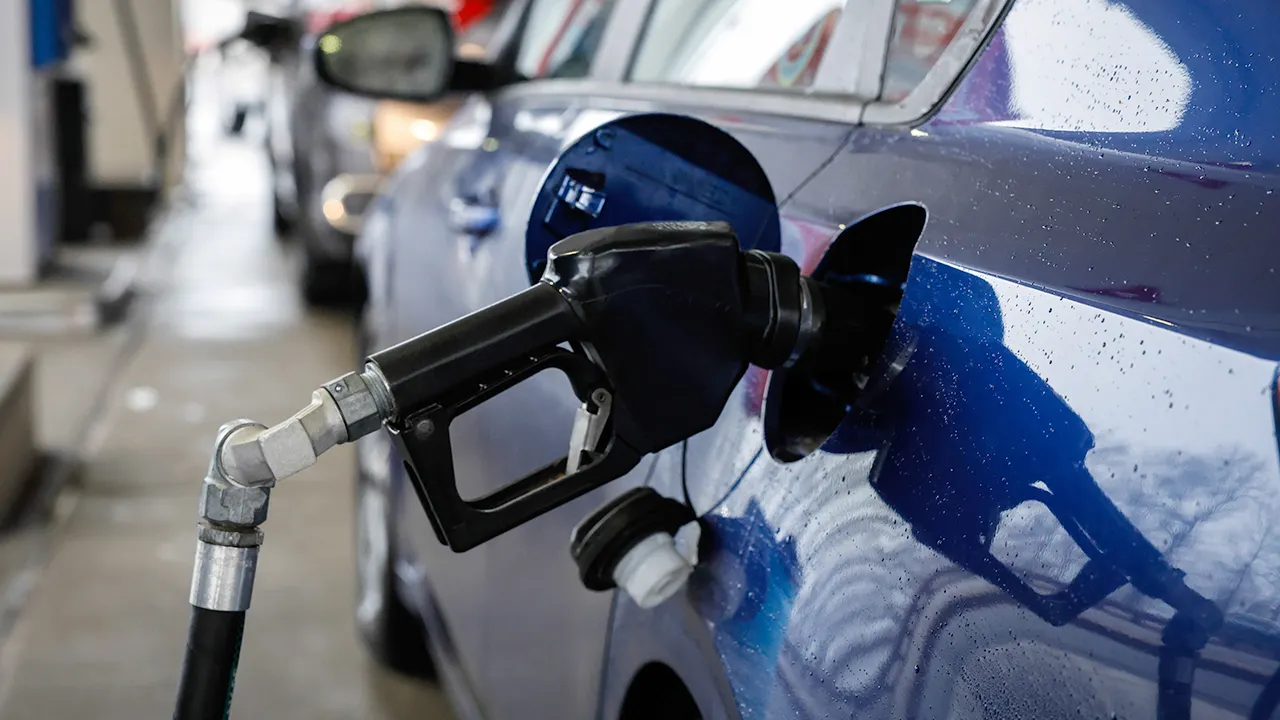
A fuel pump is connected to a car at a Mobil station in Englewood Cliffs, New Jersey, on Thursday, March 5, 2026.(Kena Betancur/Bloomberg via Getty Images / Getty Images)
The immediate catalyst for this sharp upward revision in fuel prices is the ongoing, unresolved conflict between the United States and Iran, specifically the intensified enforcement of a U.S.-led blockade on Iranian ports. This strategic maneuver, referred to by U.S. Treasury Secretary Scott Bessent as “Operation Economic Fury,” aims to exert maximum financial pressure on the Iranian regime by curtailing its primary revenue stream: oil exports.
The market’s reaction has been swift and decisive. Brent Crude international futures, the global benchmark, climbed above $111 a barrel, while West Texas Intermediate (WTI) U.S. futures exceeded $105 per barrel in early Friday trading, according to reports from Barron’s. These elevated prices reflect a significant geopolitical risk premium, as traders price in the potential for further supply disruptions and sustained tightness in global oil markets.
U.S. Central Command Commander Adm. Brad Cooper underscored the operational effectiveness of the blockade in a statement issued on Wednesday. “Right now there are 41 tankers with 69 million barrels of oil that the Iranian regime can’t sell. That’s an estimated $6 billion-plus from which Iran’s leadership cannot financially benefit. The blockade is highly effective and U.S. forces remain fully committed to total enforcement,” Cooper declared. This removal of a substantial volume of crude from the global supply chain, even if it was previously under sanction, inevitably tightens the market, driving up prices for all consumers.
The economic ripple effects of soaring fuel costs are already being felt across various sectors. Industries reliant on transportation and logistics, such as shipping, agriculture, and retail, face escalating operational expenses that are likely to be passed on to consumers, further fueling inflationary pressures. The specific plight of U.S. shrimpers, grappling with a “double whammy” of soaring fuel costs and tariff refunds, is a microcosm of the broader challenge facing numerous small and medium-sized enterprises.
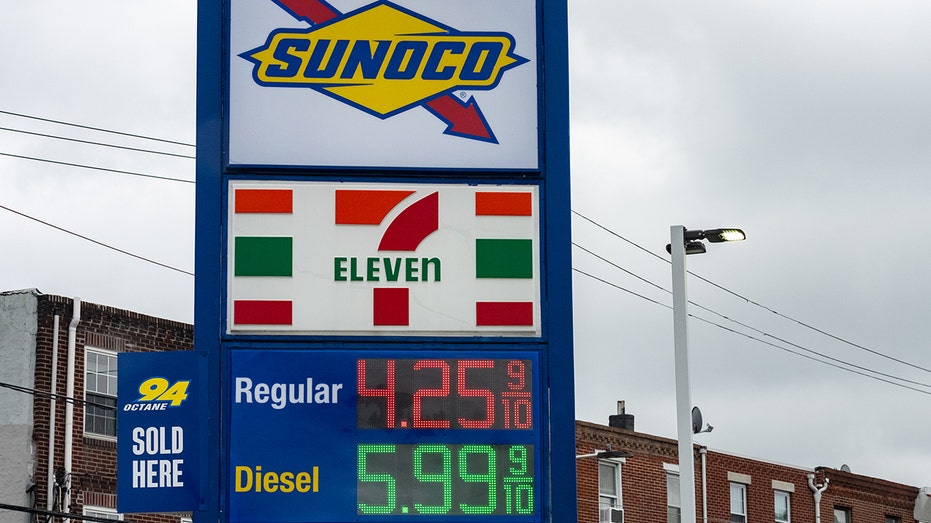
Gas prices rise in Philadelphia, Pennsylvania, on April 30, 2026, as the United States and Iran have not yet reached a deal.(Nathan Morris/NurPhoto via Getty Images / Getty Images)
Politically, the economic fallout is quickly becoming a contentious issue. Lawmakers are voicing concerns over the impact on their constituents and the broader economy. U.S. Sen. Amy Klobuchar, D-Minn., who is running for governor, explicitly linked the rising gas prices to the administration’s foreign policy, stating in a Thursday post on X, “Minnesotans are paying the price for this administration’s war with Iran as gas prices rise and squeeze families, small businesses, and farmers across our state.” Similarly, Democratic Sen. Mark Kelly of Arizona echoed these sentiments, declaring on X that “The Trump Administration’s war in Iran is driving up gas prices and sending summer travel costs through the roof.”
These political statements highlight the direct economic burden placed on households and businesses. Higher fuel costs erode discretionary income, potentially dampening consumer spending – a key driver of economic growth. For businesses, increased transportation costs translate to lower profit margins or necessitate price increases, contributing to a broader inflationary environment.
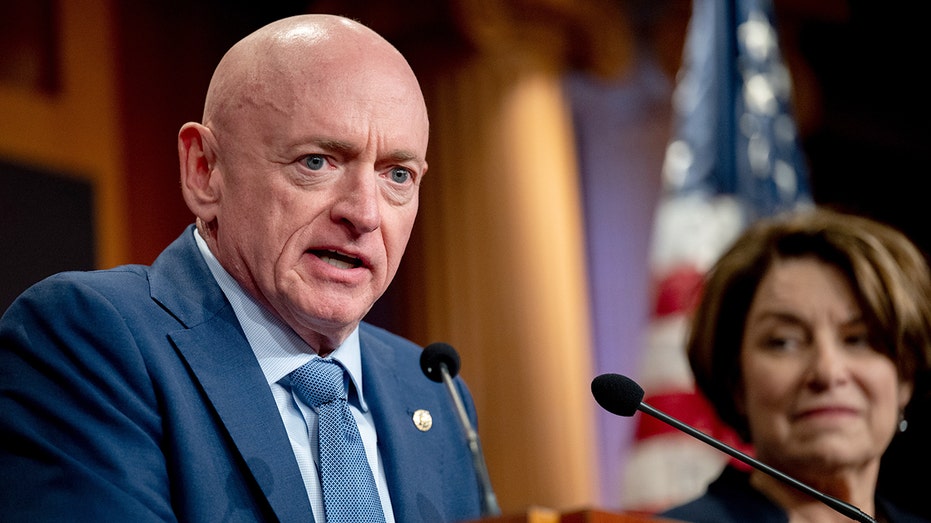
Sen. Mark Kelly, D-Ariz., left, and Sen. Amy Klobuchar, D-Minn., during a news conference ahead of the State of the Union address at the U.S. Capitol in Washington, D.C., on Tuesday, Feb. 24, 2026.(Daniel Heuer/Bloomberg via Getty Images / Getty Images)
Sen. Dick Durbin, D-Ill., further emphasized the market implications, noting that “Gas prices just hit a wartime high, inflation is up, & Americans are feeling the pinch of higher prices.” He also criticized Senate Republicans for blocking a resolution requiring Congressional approval for further military action, implying an endorsement of the President’s strategy despite the economic consequences. The counter-argument from the “Senate Republicans” X account, which pointed to higher gas prices and inflation under a previous administration, underscores the political sensitivity of energy costs and their direct link to public perception of economic management.
CLICK HERE TO GET FOX BUSINESS ON THE GO
Market Impact:
The sustained upward trajectory of crude oil and gasoline prices, fueled by the escalating geopolitical tensions with Iran and the effective implementation of “Operation Economic Fury,” introduces significant volatility and uncertainty across financial markets. The immediate impact is a heightened inflationary outlook, which could force the Federal Reserve to reconsider its monetary policy stance, potentially leading to a more hawkish position to temper price increases. This shift could, in turn, weigh on equity markets, particularly growth stocks, as higher interest rates make future earnings less attractive. Sectors such as energy (oil and gas producers) are poised to benefit from elevated commodity prices, while transport, logistics, airlines, and consumer discretionary sectors face significant headwinds from increased operational costs and reduced consumer spending capacity. Furthermore, the geopolitical risk premium will likely keep oil prices sensitive to any further developments in the Middle East, demanding constant vigilance from investors and policymakers alike. The confluence of supply shocks and renewed inflation fears poses a material risk to broader economic stability and growth projections for the coming quarters.