
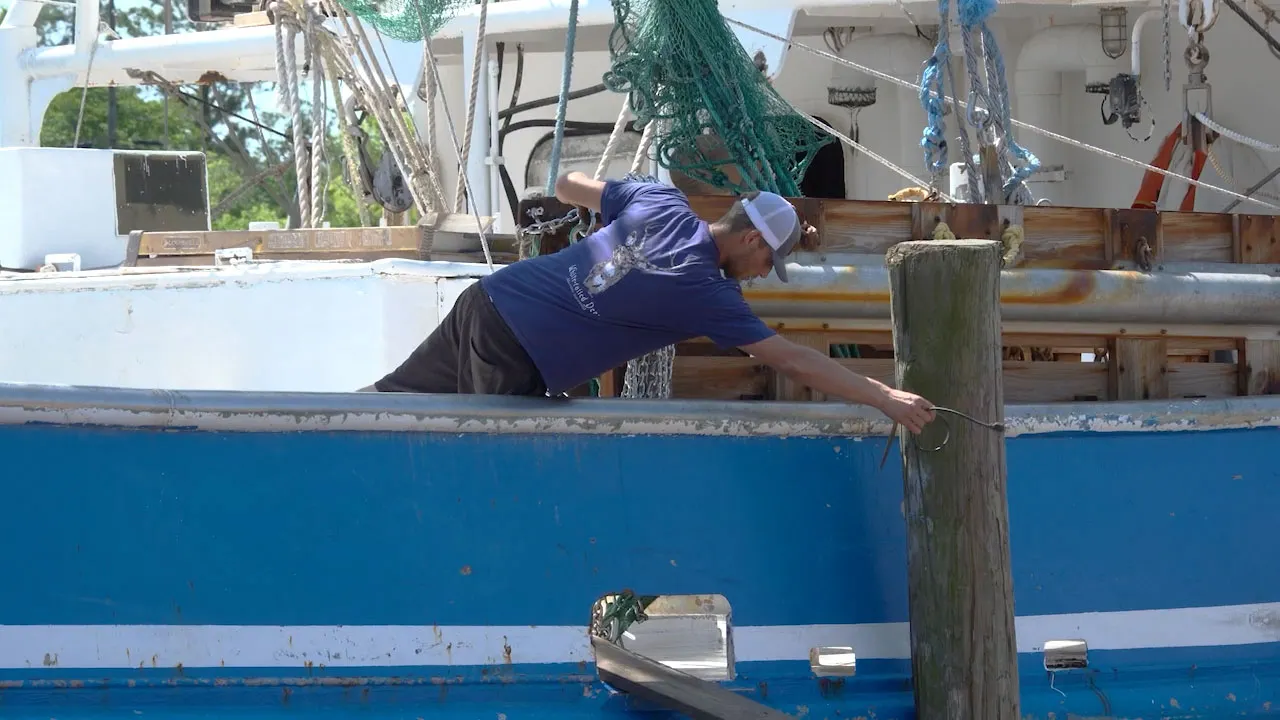
Shrimp boats along the Gulf Coast are gearing up for a new season, but some of them may stay docked on an empty tank. Some shrimpers in Bayou La Batre, Alabama said the price of fuel is too high for their usual months-long shrimping trips.
Key Takeaways
- Sustained Profitability Squeeze:American shrimpers face a “double whammy” of soaring diesel prices, exacerbated by geopolitical tensions, and a controversial Supreme Court ruling on tariff refunds, threatening their operational viability and long-term sustainability.
- Global Market Disruptions:The conflict in the Middle East, particularly concerning the Strait of Hormuz, is directly driving up energy costs for fuel-intensive industries worldwide, pushing diesel prices to multi-year highs and impacting the entire supply chain from harvest to consumer.
- Trade Policy & Domestic Industry:A legal battle over tariff refunds, intended for U.S. importers but effectively benefiting foreign shrimp producers, highlights ongoing challenges in protecting and supporting the domestic seafood industry against cheaper imports from nations with differing regulatory and labor standards.
BAYOU LA BATRE, Alabama — Many American shrimpers are keeping their shrimp boats docked with an empty tank ahead of shrimping season as high fuel prices and a contentious dispute over tariff refunds hit the industry with a profound “double whammy.” This confluence of factors is not merely an operational inconvenience but a critical market challenge threatening the viability of a storied U.S. industry, impacting everything from regional employment to consumer seafood prices.
Rising diesel costs — driven in part by geopolitical tensions affecting global oil supply and refining margins — are squeezing margins for shrimpers who rely heavily on fuel to operate. Simultaneously, a recent Supreme Court ruling regarding tariff refunds is adding significant financial pressure, perceived by domestic shrimpers as disproportionately benefiting foreign competitors.
Some shrimp boat owners in Bayou La Batre, Alabama, like Joseph Rodriguez, are watching global developments in the Middle East with bated breath, as the Strait of Hormuz remains effectively constrained by ongoing conflict in the region. Before the current escalation, approximately 20% of the world’s oil supply, including a significant portion of crude oil and refined products, transited this vital choke point. Any disruption there sends immediate shockwaves through the global energy markets, manifesting as higher prices at the pump for businesses and consumers alike.
“We definitely depend on the price of fuel, which we can’t control at all,” Rodriguez lamented, echoing the sentiments of countless small business owners in fuel-intensive sectors.
FEDERAL RESERVE LEAVES INTEREST RATES UNCHANGED AS POWELL’S CHAIRMANSHIP NEARS END
Some American shrimping crews are making repairs to their boats while they wait for gas prices to come down.(FOX News / Fox News)
Iranian officials said Monday they would consider reopening the strait if the U.S. lifts its naval blockade and ends the conflict. The Trump administration rejected the proposal, citing Iran’s refusal to halt its nuclear program. This diplomatic impasse means the geopolitical risk premium embedded in crude oil benchmarks like Brent and WTI is likely to persist, keeping diesel prices elevated.
“It’s going to make it more difficult to make any kind of profit at all,” Rodriguez said, highlighting the severe erosion of profitability that could force many multi-generational businesses out of the market entirely.
Amidst this economic uncertainty, some shrimping crews are using the downtime to repair vessels, hoping for a market correction in fuel prices that might make future trips economically feasible. This forced idleness, however, means lost revenue and potentially delayed supply for the broader seafood market.
Meanwhile, fuel prices in the United States continue to soar. AAA reported a gallon of diesel fuel cost an average of $5.46 on Tuesday, approximately $2 higher than a year earlier. This represents a staggering 58% increase year-over-year, far outpacing general inflation and putting immense strain on transportation, logistics, and any industry reliant on heavy machinery or maritime operations.
Rodriguez built the “Little Andrew,” a shrimp boat capable of holding 27,000 gallons of diesel fuel, in 2001. He starkly illustrated the operational costs, stating the vessel recently burned through about 12,000 gallons during a 37-day trip. At current prices, that single trip’s fuel bill would be roughly $65,520, an unsustainable expense without significantly higher shrimp prices at market, which are often dictated by cheaper imports.
AIR CANADA SCRAPS KEY US ROUTES AS FUEL COSTS SURGE AMID IRAN CONFLICT
The Southern Shrimp Alliance (SSA) underscored the gravity of the situation, stating that fuel costs “routinely account for more than 50%” of shrimpers’ total operating expenses. The organization warned that elevated prices could severely limit access to sustainable shrimp stocks off the U.S. coast, impacting both the domestic food supply chain and the livelihoods of thousands along the Gulf Coast.
Rodriguez, like several other shrimpers along the Gulf Coast, expressed support for U.S. actions in Iran, believing that a resolution would eventually lead to a decline in fuel prices if the Strait of Hormuz reopens for unrestricted global trade. This hope, however, contrasts with the immediate financial realities they face.
“We’ll surf along with it for a little bit because it’s got to be done,” Rodriguez said. “I believe fuel prices will come back down to a more manageable for us in the very near future.” This sentiment reflects a precarious optimism, where the survival of their businesses hinges on unpredictable geopolitical shifts.
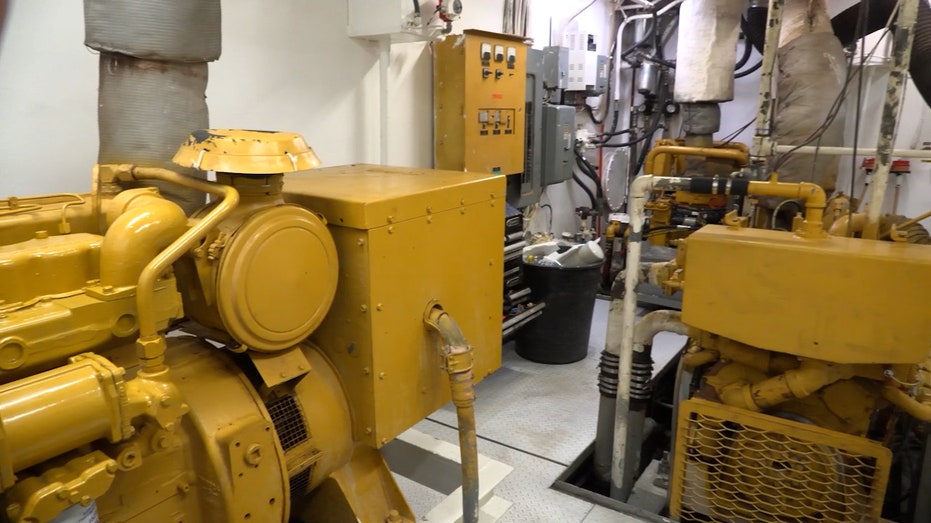
Shrimp crews take their boats out for weeks at a time, usually burning through about 12,000 gallons of diesel fuel. (FOX News / Fox News)
In addition to debilitating fuel costs, shrimpers are raising profound concerns about tariff refunds following a recent Supreme Court ruling. In February, the U.S. Supreme Court ruled that certain tariffs imposed by President Trump on U.S. importers were unlawful. These tariffs were often levied as anti-dumping or countervailing duties, intended to level the playing field for domestic industries against foreign competitors benefiting from unfair trade practices or subsidies.
The SSA highlighted that the U.S. government collected a staggering $902.7 million in tariff revenue on imported shrimp. The crux of the current dispute is that the U.S. government is now refunding these collected tariffs to foreign companies, rather than channeling the funds back to support struggling domestic shrimpers. Industry groups argue this outcome entirely defeats the original purpose of the tariffs, which was to protect and bolster American industries, and instead disproportionately benefits foreign suppliers at a time when domestic producers are facing unprecedented headwinds. Nearly $450 million of this refund money is expected to go to India alone, according to the SSA, further exacerbating the competitive imbalance.
CHEVRON CEO WARNS AVIATION STRAIN COULD WORSEN AS JET FUEL CRUNCH DEEPENS
“They ought to put it in some kind of fund to help domestic shrimpers in some sort of way,” Rodriguez contended. “We’re in competition with the government of China, for God’s sake, a communist country. We’re in competition with them with their shrimp imports.” This statement encapsulates the sentiment that domestic shrimpers are not just competing against private foreign entities, but against nations with state-backed industries and often lower labor, environmental, and safety standards, making it impossible to compete on price alone.
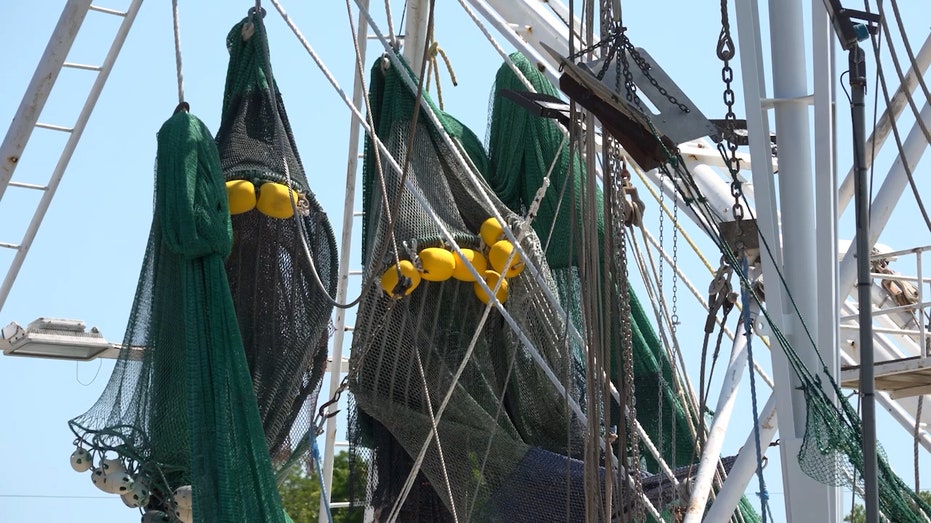
American shrimpers say high fuel prices and tariff refunds are a ‘double whammy.’(FOX News / Fox News)
Rodriguez urged consumers to buy American shrimp instead of imported products, calling it the industry’s “greatest hope.” He also claimed imported shrimp carry a higher risk of contamination from pathogens or veterinary drugs used during production, a concern frequently raised by domestic producers regarding food safety and traceability of foreign products.
CLICK HERE TO GET FOX BUSINESS ON THE GO
“You’d be surprised at some of the high-end restaurants that serve you shrimp, that got more frequent flier miles than I got,” Rodriguez concluded, making a poignant observation about the globalized nature of the seafood market and the often-hidden origins of the food on consumers’ plates.
Market Impact
The challenges facing American shrimpers present significant ripple effects across the broader market. For consumers, the potential for reduced domestic shrimp supply could lead to higher prices for U.S.-sourced seafood, or conversely, an increased reliance on cheaper, potentially less regulated imports. Restaurants and food service providers, already battling inflation and labor shortages, may see increased input costs for shrimp, impacting their margins and potentially leading to menu adjustments. Regionally, Gulf Coast communities heavily dependent on the shrimping industry face economic instability, including job losses and reduced local spending. This situation also underscores critical vulnerabilities in the U.S. food supply chain and highlights ongoing debates around trade policy effectiveness, domestic industry protection, and the critical balance between global commerce and national economic resilience. Without policy interventions or a significant shift in global energy markets, the long-term viability of the American shrimping industry remains tenuous, signaling a broader concern for other U.S. agricultural and resource extraction sectors facing similar pressures.