
Unlock the White House Watch newsletter for free
Your guide to what Trump’s second term means for Washington, business and the world
Key Takeaways for Investors:
- **Defense Industrial Base Strain:** Prolonged conflicts and rising global demand are exposing significant capacity constraints within the US defense industrial base. This translates to extended lead times for critical weapon systems, impacting both domestic readiness and export markets, and creating a backlog that defense contractors like Lockheed Martin and Raytheon will be pressured to address.
- **Geopolitical Risk Premium & Diversification:** The acute weapon shortages and delivery delays escalate geopolitical risk, particularly in contested regions like the Indo-Pacific and Eastern Europe. This will likely drive allies to diversify their defense procurement away from sole reliance on the US, creating opportunities for European and Asian defense manufacturers and potentially impacting US defense export revenues long-term.
- **Increased Defense Budgets & Investment Opportunities:** The global scramble for munitions and the need to replenish stockpiles will necessitate sustained and potentially increased defense spending across NATO and key Asian allies. Investors should watch for increased appropriations for specific weapon systems (missiles, air defense) and investment in advanced manufacturing, automation, and supply chain resilience within the defense sector.
Washington has issued a sobering warning to its closest European allies, including the UK, Poland, Lithuania, and Estonia: brace for significant delivery delays for crucial US weapon systems. This comes as the Pentagon scrambles to replenish its own critically depleted stockpiles following two months of intense military engagement in the Iran conflict, a development sending ripples through global defense markets and strategic alliances.
According to nine sources familiar with the matter, the Pentagon has informed these nations to anticipate serious setbacks for several missile systems. Two additional sources indicated that discussions are also underway to postpone shipments to key partners in Asia. These delays are not merely logistical hiccups; they are a stark symptom of an overburdened US defense industrial complex struggling to meet an unprecedented confluence of demand.
The primary driver behind these delays is acute concern over US inventory levels, particularly given the high volume of munitions expended in the recent Iran conflict. The American military has already been compelled to reallocate weapons from other strategic regions, including the Indo-Pacific, to cover these shortfalls. This immediate need, however, has also amplified deeper, pre-existing anxieties about the US’s long-term capacity to maintain a sufficient arsenal to deter Beijing or effectively counter China in any potential future confrontation over Taiwan.
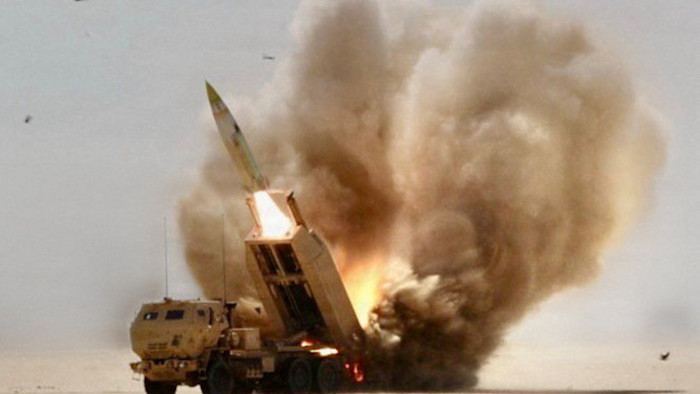
Beyond sparking alarm across European capitals, these delays spell grim news for Ukraine. After four grueling years since Russia’s full-scale invasion, Kyiv’s defense remains heavily reliant on US support, and any disruption to the flow of arms could have immediate, devastating consequences on the battlefield. The affected munitions include critical components for Himars (High Mobility Artillery Rocket Systems), Nasams (National Advanced Surface-to-Air Missile Systems), and other advanced missile platforms. Himars, manufactured by aerospace giant Lockheed Martin, have proven instrumental in Ukraine. Nasams, co-produced by Raytheon Technologies and Norway’s Kongsberg Gruppen, are vital for air defense.
The Pentagon, while declining to offer specific details citing the “operationally sensitive nature of these matters,” confirmed it is “carefully evaluating new requests for equipment from partners as well as existing arms transfer cases to ensure alignment with operational needs.” This bureaucratic language thinly veils the immense pressure on defense planners.
These revelations surface at an already tense juncture in transatlantic relations, further complicated by President Donald Trump’s vocal criticisms of allies for perceived insufficient contributions to the US campaign against Iran. While several sources insisted the delays are not punitive but rather a reflection of genuine US inventory concerns, the optics are undeniably challenging. Tom Wright, a former Biden administration official now at the Brookings Institution, underscored the strategic calculus: “The Pentagon may now need to fight a long war in the Middle East and it’s also desperate to shore up deterrence in the Indo-Pacific. It’s more than willing to throw Europe under the bus to do that. Europe needs to rebuild its own defence industrial base at warp speed.” This sentiment directly points to an accelerating trend towards regional rearmament and reduced reliance on a single superpower’s industrial capacity.
President Trump, in characteristic fashion, publicly dismissed concerns about stockpiles on Friday, stating, “All over the world, we have inventory, and we can take that if we need it.” While technically true that the US has global deployments, the logistical and political complexities of moving assets from one theater to another are significant, and such moves inevitably create new vulnerabilities.
Security analysts now universally advise US allies in Asia to prepare for similar, if not more severe, delays. Nations like Japan and South Korea, which depend heavily on various US weapons, including Patriot missile interceptors, for their national defense, are particularly vulnerable. The Financial Times previously reported that the US is assembling a record-size package of arms sales for Taiwan, potentially including Nasams and Patriot interceptors, with the Nasams portion alone estimated at $6 billion. The prospect of delays for such crucial systems in a high-tension zone like Taiwan Strait is deeply concerning for regional stability and investor confidence.
Christopher Johnstone, a former top Pentagon official at The Asia Group, warned, “Allies in Asia are likely underestimating the impact that US munition shortfalls will have on them and how long the impact will last.” He added, “Japan was already deeply frustrated with delivery delays for systems they have paid for, including the Tomahawk cruise missiles. This reality will drive Japan, South Korea and other allies to focus more heavily on indigenous and non-American options, even in areas where US equipment is clearly superior.” This trend towards indigenous defense development and diversification of suppliers presents both a challenge to US defense exporters and a significant opportunity for other global defense contractors and domestic industries in allied nations.
US defense firms, including major players like Raytheon (producing Patriot interceptors) and Lockheed Martin (Himars, F-35s), are indeed racing to boost production of critical weapons. President Trump last month claimed companies had agreed to “quadruple” output of exquisite systems. However, scaling up manufacturing in the defense sector is no trivial task. It involves long lead times for specialized components, skilled labor shortages, and complex supply chains that cannot be simply “turned on” overnight. Admiral Samuel Paparo, Indo-Pacific commander, recently projected it would take as long as two years for major defense contractors to sufficiently ramp up production to address current inventory shortfalls. This timeline is a critical factor for defense sector investors, indicating sustained demand but also ongoing supply-side pressures.
Washington has previously delayed weapon deliveries to allies; in 2024, President Biden paused shipments of Patriot and Nasams interceptors to other countries to prioritize Ukraine. However, the current warning to European allies signals a problem of much broader scale and systemic depth. The global user base for these systems is extensive: Nasams are deployed by Taiwan, Norway, Finland, Spain, the Netherlands, Lithuania, Indonesia, Australia, Hungary, Ukraine, Denmark, Qatar, and Oman. Fourteen US partners, including Taiwan, Ukraine, Poland, Estonia, Australia, and the United Arab Emirates, utilize the Himars system.
The strain on inventories is already severely impacting Ukraine. A senior Ukrainian official confirmed that US weapons for Kyiv have faced delays since the onset of the Iran conflict. Ukrainian President Volodymyr Zelenskyy has even stated that late arrivals have sometimes left Patriot launchers empty during intense Russian missile barrages, a terrifying prospect that underscores the real-world implications of these supply chain challenges.
Additional reporting by Lucy Fisher in London, Amy Mackinnon in Washington and Amy Kazmin in Rome
Market Impact:
The escalating geopolitical instability and the explicit warning of weapon delivery delays are poised to have a multifaceted impact on global markets. Defense sector stocks, particularly those of US prime contractors like Lockheed Martin (LMT), Raytheon Technologies (RTX), and General Dynamics (GD), face a complex outlook: while long-term demand appears robust, fueled by global rearmament and replenishment needs, short-to-medium term challenges related to production bottlenecks, supply chain constraints, and labor shortages could cap immediate growth potential. Investors will scrutinize quarterly earnings calls for insights into production ramp-up capabilities, order backlogs, and margin pressures. Simultaneously, this scenario could provide a tailwind for European defense firms like BAE Systems (BAESY) and Rheinmetall (RHM), as allies seek non-American alternatives. Beyond defense, the heightened geopolitical risk premium will continue to influence broader market sentiment, potentially driving inflows into safe-haven assets such as gold and government bonds, while contributing to volatility in energy markets and commodity prices, especially with ongoing conflicts. The imperative for governments to invest heavily in defense infrastructure and manufacturing capacity also suggests increased national debt and potential inflationary pressures in the coming years, making long-term fiscal stability a growing concern for bond markets.