
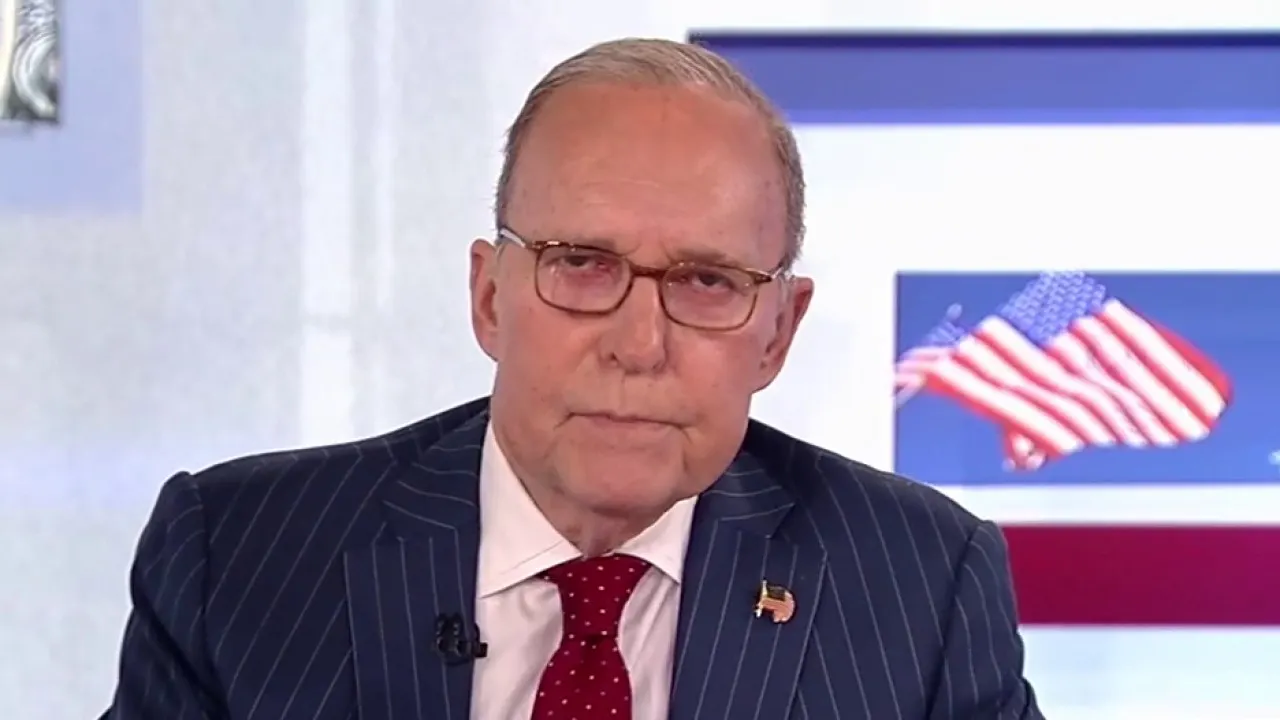
FOX Business host Larry Kudlow discusses what is next in the Middle East conflict on ‘Kudlow.’
**Key Takeaways:**
1. **Geopolitical Risk Premium:** Heightened tensions in the Middle East, particularly around the Strait of Hormuz, are injecting a significant risk premium into global oil prices and prompting shifts in investor sentiment towards safe-haven assets.
2. **Economic Warfare & Sanctions:** The aggressive U.S. sanctions regime is driving Iran’s economy towards collapse, impacting its ability to export oil, service debt, and fund operations, with ripple effects across global trade and financial compliance.
3. **Energy Market Volatility:** While U.S. naval operations aim to stabilize oil flows through the Strait, the underlying geopolitical friction maintains high volatility in crude benchmarks, affecting energy sector profitability and consumer purchasing power globally.
***
The geopolitical chessboard in the Middle East continues to be a primary driver of global market sentiment, with recent developments surrounding Iran underscoring significant implications for oil prices, shipping, and international finance. Following a perceived rejection of U.S. diplomatic overtures, characterized by an Iranian response that notably sidestepped critical concerns regarding its nuclear program and state-sponsored activities, the Trump administration has intensified its hardline stance. This escalation signals a deepening commitment to previously articulated “red lines” – specifically, the absolute denial of Iranian nuclear capabilities, cessation of missile development, an end to support for proxy groups, and crucial control over the Strait of Hormuz.
From a market perspective, these red lines translate directly into increased geopolitical risk. The Strait of Hormuz, a critical maritime chokepoint, through which approximately 20% of the world’s total petroleum liquids and a substantial portion of global liquefied natural gas (LNG) pass, stands at the epicenter of this tension. Any disruption here has immediate and profound effects on global energy markets. The U.S. Navy’s proactive move to guide merchant vessels through the Strait, a move highlighted by “Project Freedom” as described by experts like Ret. Gen. Jack Keane, is designed to assert international freedom of navigation and mitigate the perceived threat to global energy supply chains. This assertive posture, while intended to stabilize shipping lanes, simultaneously underscores the precariousness of the situation, often leading to an elevated “war risk” premium on crude oil futures.
The broader context of U.S. actions also frames the economic pressure exerted on Iran. The administration’s strategy extends beyond military presence, employing robust financial sanctions as a primary tool of economic warfare. The narrative of Iran “dropping into economic and financial ruin” is largely substantiated by data reflecting its dwindling oil exports, which are the lifeblood of its economy. Global crude benchmarks like Brent and WTI have reacted sensitively to news of Iranian export reductions, with supply tightness in certain regions being a direct consequence. Furthermore, the U.S. Treasury’s aggressive targeting of Iranian financial networks, including the freezing and seizure of offshore assets linked to the Islamic Revolutionary Guard Corps (IRGC), has sent a clear message to international banks and corporations: engage with Iran at your peril. This has effectively stifled foreign investment and trade, exacerbating Iran’s domestic economic woes, including its ability to meet payrolls and retirement obligations.
The operational impact of these sanctions is severe. With drastically reduced export capabilities and a global tanker fleet increasingly wary of sanctions compliance risks, Iran’s crude oil storage facilities are reportedly nearing capacity. An imminent shutdown of oil fields, as hinted, would not only represent a catastrophic blow to Iran’s economy but could also inflict long-term damage on its production infrastructure, impacting its future capacity to re-enter global energy markets even if sanctions were to ease. This prolonged economic siege, coupled with the U.S. naval presence in what some are provocatively terming the “Trump Gulf” or “Arabian Gulf,” signifies a fundamental shift in the regional power balance, aligning key Gulf states like the United Arab Emirates more closely with American interests and the dollar-denominated global financial system. The UAE’s continued ramping up of oil production, often in coordination with Saudi Arabia and within OPEC+, serves to partially offset lost Iranian barrels and stabilize global supply, albeit under the shadow of geopolitical uncertainty.
The three-week period of relative ceasefire, devoid of “serious talks” from Tehran, suggests a growing impatience within the U.S. administration. Analysts predicting a swift conclusion to the “mission” – implying a complete capitulation from Iran – point towards a strategy of maximal pressure designed to achieve “unconditional surrender.” This high-stakes approach, envisioning “dictation” rather than negotiation, introduces a significant degree of market uncertainty. Investors typically abhor unpredictability, and the prospect of a military confrontation, however limited, sends ripples through equity markets, boosts demand for safe-haven assets like gold and U.S. Treasury bonds, and can lead to increased volatility in currency markets as capital flows seek stability. The long-term implications for regional stability, global trade routes, and the intricate web of international alliances remain a subject of intense scrutiny for financial journalists and investors alike. The outcome of this protracted standoff will undoubtedly shape energy policy, defense spending, and investment strategies for years to come.
**Market Impact:**
The ongoing geopolitical friction in the Middle East, driven by the U.S.’s hardline stance against Iran, continues to exert significant influence across global financial markets. Energy markets remain particularly sensitive, with crude oil prices (Brent and WTI) experiencing heightened volatility due to supply concerns and the geopolitical risk premium. While U.S. naval escorts in the Strait of Hormuz aim to assure continuous supply, the underlying tension ensures that any minor incident could trigger sharp price spikes, impacting inflation expectations and consumer discretionary spending globally. Shipping and logistics companies face elevated maritime insurance premiums and potential disruptions to traditional routes, increasing operational costs. Broader equity markets display a “risk-off” sentiment during peak tensions, favoring defensive sectors and prompting a flight to quality assets such as U.S. Treasury bonds and gold. Conversely, defense contractors and oil and gas producers in stable regions may see increased investment and demand. The dollar’s role as the primary currency for oil transactions and a global reserve asset is reinforced by the sanctions regime, potentially strengthening its position amidst global instability. However, prolonged uncertainty risks dampening global economic growth forecasts and increasing the cost of capital for businesses reliant on stable energy prices and trade routes.