
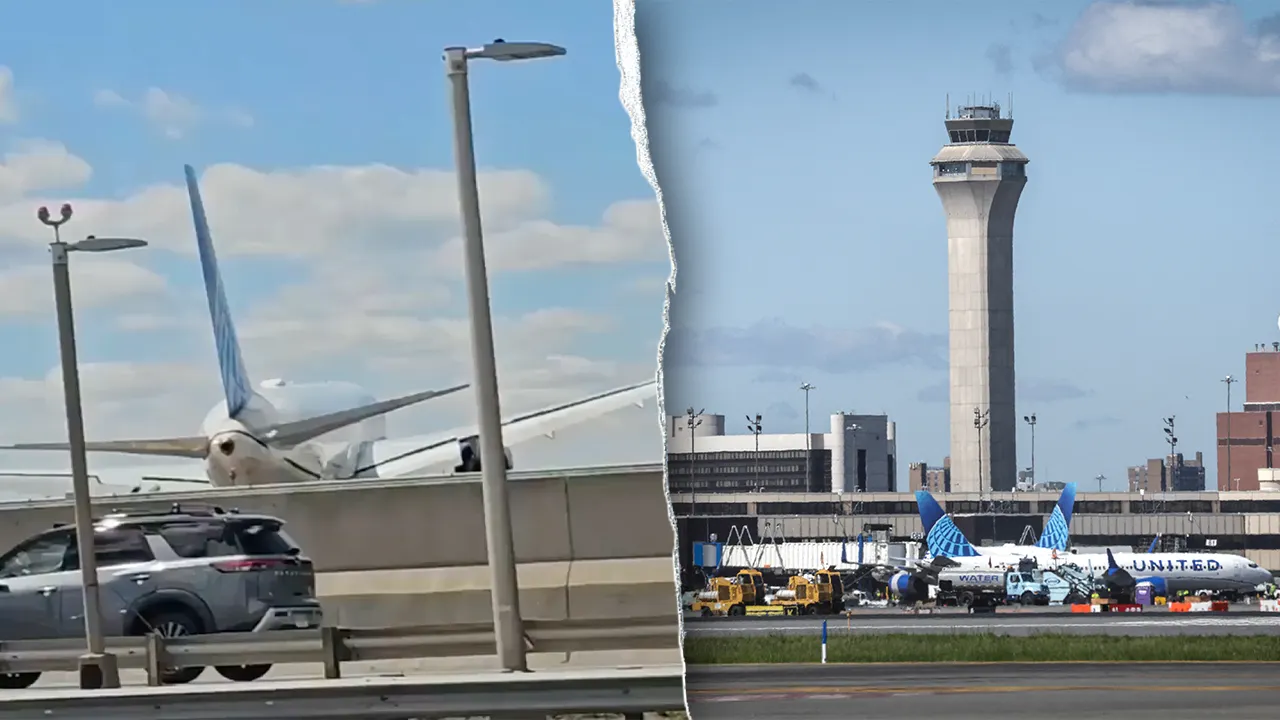
United Airlines Flight 169 from Venice clipped a light pole on approach to Newark Liberty International Airport but landed safely. (Credit: Patrick Oyulu via Storyful)
Key Takeaways:
- **Operational Headwinds & Cost Implications:** United Airlines (UAL) faces immediate financial outlays for aircraft inspection, repairs, potential grounding, and liability claims, which could impact its near-term operational efficiency and potentially weigh on Q3/Q4 earnings guidance.
- **Heightened Regulatory Scrutiny & Brand Risk:** Extensive investigations by the FAA and NTSB signal increased oversight, with the potential for fines and a detailed examination of UAL’s operational protocols. This incident, combined with recent operational reports, could erode investor and consumer confidence, impacting future booking trends.
- **Market Volatility & Sector Sentiment:** While individual incidents typically cause short-term dips rather than sustained downturns for major carriers, this event adds to broader concerns regarding aviation safety standards, operational integrity, and the cost of doing business in a high-demand, high-cost environment, potentially introducing a risk premium for UAL shares.
United Airlines (NASDAQ: UAL) finds itself under increased market scrutiny following an operational incident at Newark Liberty International Airport (EWR), where an international flight from Venice clipped a light pole and a tractor-trailer during its final descent on Sunday. While all 221 passengers and 10 crew members aboard Flight 169 landed safely, the event resulted in non-life-threatening injuries to a truck driver on the ground and immediately triggered comprehensive investigations by federal authorities, presenting potential financial headwinds and brand reputation challenges for the carrier.
The incident involving Flight 169, which departed from Venice, Italy, occurred at approximately 2 p.m. local time as the Boeing 767-300ER aircraft made its final approach to EWR. Initial reports indicate the plane’s landing gear and underside made contact with a light pole, which subsequently struck a tractor-trailer and a Jeep on an adjacent roadway. United was quick to confirm the safe landing and taxiing of the aircraft to the gate, emphasizing that no passengers or crew sustained injuries. However, the external damage and the injury to a ground worker immediately elevate this from a minor operational glitch to a significant safety event with tangible financial and regulatory implications.
United said its maintenance teams are inspecting the aircraft for possible damage and conducting a full safety review.(Patrick Oyulu via Storyful / Storyful)
United’s proactive response includes a thorough inspection of the aircraft by its maintenance teams and a comprehensive safety review. Critically, the crew members involved have been temporarily removed from service, a standard procedure designed to facilitate investigation and ensure safety protocols are re-evaluated. From a financial perspective, the grounding of a wide-body aircraft like the Boeing 767, even temporarily, incurs significant costs. These include lost revenue from canceled flights, the expense of maintenance and repairs, and potential lease costs if the aircraft is not owned outright. Depending on the extent of the damage, the aircraft could be out of service for weeks or even months, creating ripple effects across United’s flight schedule and potentially requiring costly adjustments to its operational network.
New Jersey State Police, who responded to the scene at approximately 1:58 p.m. near the New Jersey Turnpike, confirmed the preliminary findings regarding the strike on the pole and tractor-trailer. The truck driver was transported to a hospital with non-life-threatening injuries. This aspect introduces immediate liability concerns for United. The airline will likely face claims related to the truck driver’s medical expenses, lost wages, and property damage to the vehicles involved. While airlines carry extensive insurance coverage for such incidents, a claim of this nature can still result in higher premiums in the future, impacting the airline’s operational cost structure. The ongoing police investigation will also feed into the broader federal probes, potentially influencing the determination of fault and subsequent liabilities.
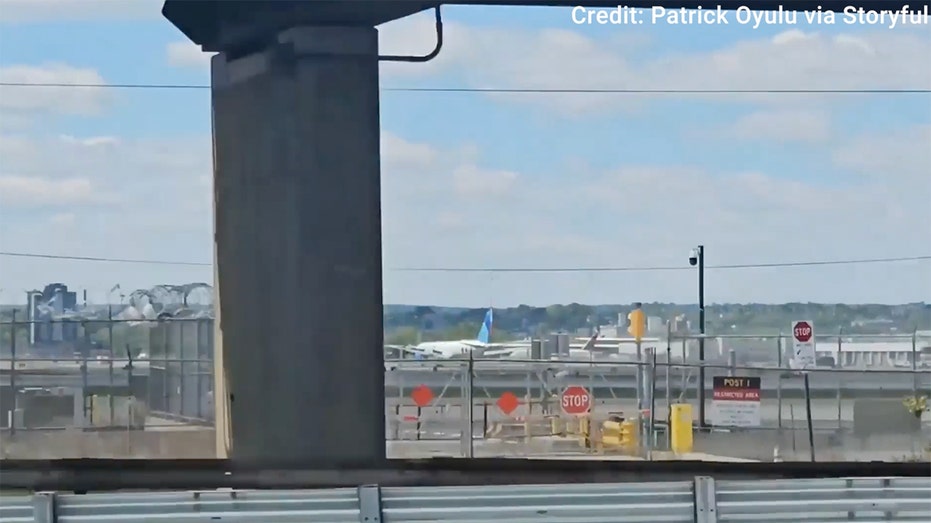
Federal authorities have also launched investigations into the incident.(Patrick Oyulu via Storyful / Storyful)
Federal authorities, including the Federal Aviation Administration (FAA) and the National Transportation Safety Board (NTSB), have swiftly launched their own investigations. The FAA confirmed the incident occurred at approximately 2 p.m. local time. The NTSB, known for its rigorous probes into aviation accidents, has already dispatched an investigator to Newark and has mandated United Airlines to secure and provide both the cockpit voice recorder (CVR) and flight data recorder (FDR). These “black boxes” are crucial for understanding the aircraft’s performance parameters, crew communications, and environmental factors leading up to the contact. A preliminary report detailing the facts and circumstances of the event is anticipated within 30 days. The findings of these investigations will be paramount, as they can lead to recommendations for operational changes, procedural updates, or even fines, depending on the determined cause and any potential non-compliance with regulations.
This incident occurs against a backdrop of heightened scrutiny for United Airlines, which recently reported a possible drone encounter near San Diego International Airport. While distinct incidents, a confluence of such reports can cumulatively impact public perception and investor confidence. Airlines operate in a highly regulated and safety-conscious environment, where every incident is meticulously examined. For United, which has been actively working to enhance its operational reliability and customer experience, these events present an uphill battle in maintaining positive sentiment. Furthermore, the original report noted United Airlines raising ticket prices by up to 20% due to surging fuel costs amid global geopolitical tensions. A safety incident could complicate this pricing strategy, potentially eroding consumer willingness to pay higher fares if confidence in operational integrity falters.
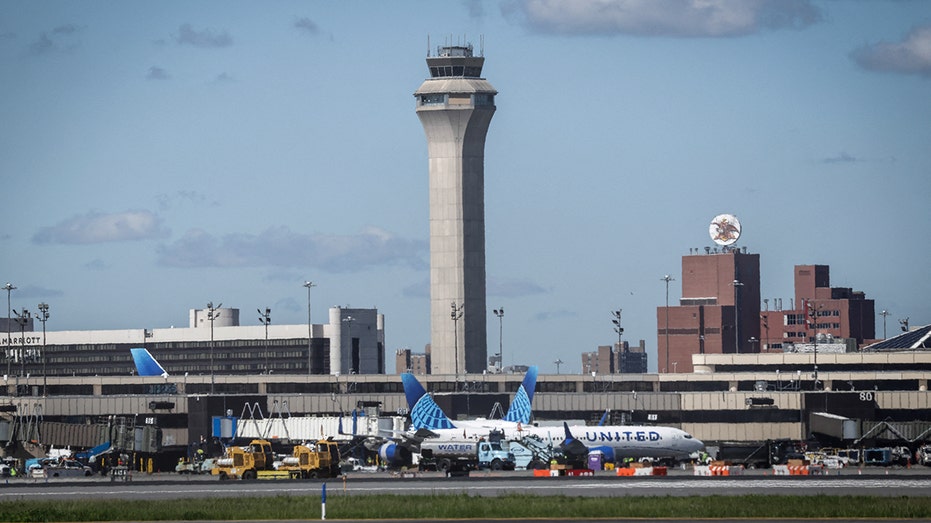
United Airlines planes are seen at the gate at Newark Liberty International Airport in Newark, New Jersey, on May 7, 2025.(KENA BETANCUR/AFP via Getty Images / Getty Images)
Beyond the immediate financial and regulatory implications for United, the incident could prompt broader discussions within the aviation industry regarding airport infrastructure and approach protocols. The proximity of ground traffic and infrastructure to active runways and approach paths is a constant challenge for airports, especially those as busy as Newark. While this specific event is under investigation, any systemic findings could lead to industry-wide recommendations for changes in signage, lighting, or even modifications to approach procedures, which could have cost implications for airport authorities and airlines alike. The aviation insurance market, already navigating complex risks, will also be closely watching, as a rise in such incidents could translate into upward pressure on premiums across the sector.
Market Impact:
The immediate market reaction to such an incident for a major carrier like United Airlines is often a minor dip in share price as algorithmic trading responds to negative headlines and uncertainty. Investors will be keenly watching for updates from United regarding the aircraft’s return to service timeline, the estimated financial cost of repairs and liabilities, and the preliminary findings from the NTSB and FAA. While a single operational incident is unlikely to trigger a sustained market downturn for UAL, especially given the current robust demand for air travel, it introduces a layer of operational risk that analysts will factor into their valuations. Prolonged investigations, significant fines, or an erosion of brand trust due to a perception of declining safety standards could lead to more significant headwinds, impacting future earnings guidance and potentially slowing recovery efforts in a competitive market. This event serves as a reminder to investors that operational excellence and stringent safety protocols are as crucial as financial performance in the airline industry.
CLICK HERE TO GET FOX BUSINESS ON THE GO
FOX Business’ Bonny Chu contributed to this report.