
Audio of this article is brought to you by the Air & Space Forces Association, honoring and supporting our Airmen, Guardians, and their families. Find out more at afa.org
The U.S. Space Force has significantly increased the maximum value of its recently awarded Andromeda contract, raising it from $1.8 billion to more than $6.2 billion. This substantial increase anticipates a heightened demand for reconnaissance and surveillance satellites in the coming years.
Initially, the Space Force announced the Andromeda contract awards in early April, selecting 14 companies to compete for the opportunity to build reconnaissance satellites under a program designated RG-XX. However, a notice issued on May 4 revealed that an urgent requirement for enhanced orbital visibility has led to a major increase in funding for space-based domain awareness programs in the fiscal year 2027 budget request. Consequently, the Space Force boosted Andromeda’s ceiling by over $4 billion. The service also indicated that this expanded Andromeda indefinite-delivery, indefinite-quantity (IDIQ) contract vehicle will now be utilized to procure not only reconnaissance satellites for RG-XX but also surveillance spacecraft for a distinct initiative known as SG-XX.
According to the Space Force notice, the decision was driven by an updated threat assessment: “Shortly before the award decision, the space reconnaissance and surveillance budget for Fiscal Year 2027 was significantly increased to address the escalating threat environment projected for [calendar year] 2030+.” This revised budget directly translates into a greater need for the capabilities already outlined and encompassed within the Andromeda Multi-Award Contract IDIQ.
The increased contract ceiling also provides the Space Force with additional flexibility, allowing for some margin to accommodate “unknown future U.S. and Foreign Military Sales requirements,” the notice further stated. This suggests a strategic move to prepare for potential international partnerships or unforeseen operational needs.
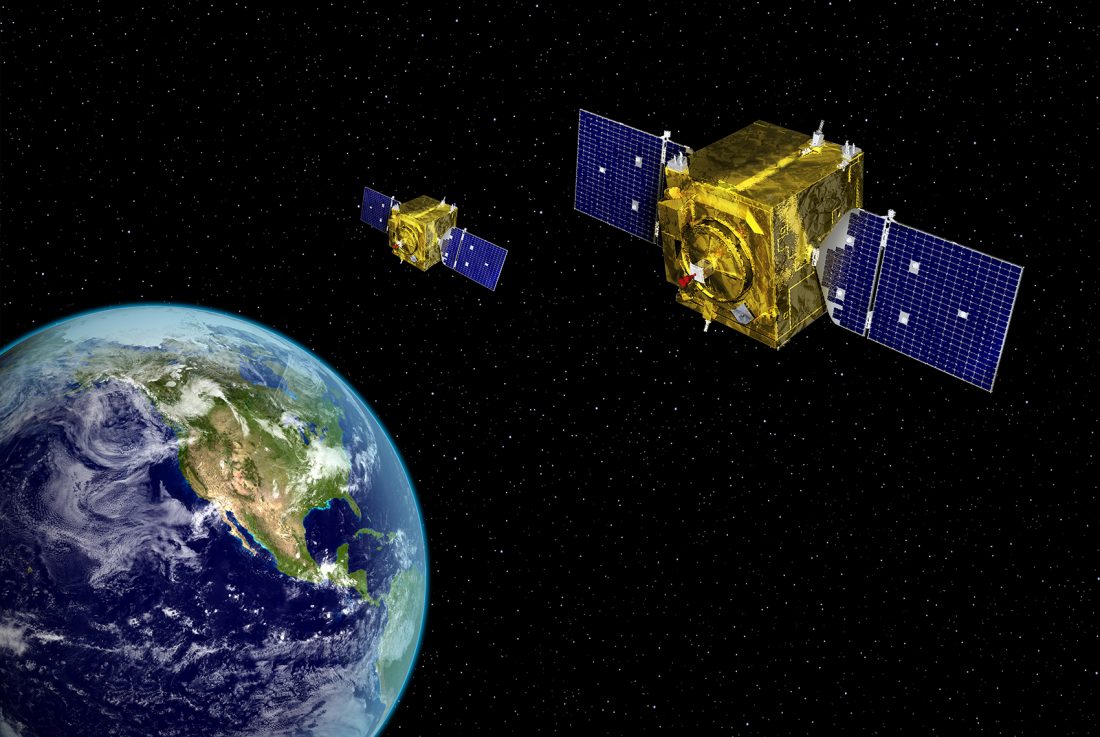
The overarching strategy for both RG-XX and SG-XX is to deploy constellations of small, cost-effective, commercially based satellites. These new systems are intended to augment current capabilities and eventually replace existing space assets. For the RG-XX program, the primary focus is on developing maneuverable satellites capable of observing and tracking activities specifically within geosynchronous orbit (GEO). This mission is currently performed by the Geosynchronous Space Situational Awareness Program (GSSAP) spacecraft, which RG-XX satellites are intended to succeed.
While the Space Force has yet to solicit bids or award contracts for SG-XX, officials previously briefed reporters in December, outlining their vision for this program. They envision SG-XX as a fleet of wide-field-of-view satellites designed to provide broad surveillance across GEO. These satellites will serve as the successor to Silent Barker, a joint program between the Space Force and the National Reconnaissance Office (NRO) that complements GSSAP. Both GSSAP and Silent Barker have largely been developed and operated with a high degree of secrecy, coordinating target tracking and data sharing using complementary sensors to provide a comprehensive picture of the orbital environment.
Space domain awareness (SDA) is identified as a top strategic priority for both the Space Force and U.S. Space Command. Officials emphasize the critical need to enhance their ability to detect and track potential threats, as well as to gain deeper insights into the on-orbit operations of potential adversaries. Beyond space-based sensors, the U.S. also relies on an extensive network of ground radars that continuously monitor orbital activity and track launches globally.
The distinction between surveillance and reconnaissance is crucial in this context. Surveillance typically involves more general, prolonged monitoring, which is effectively provided by wide-field-of-view sensors. Reconnaissance, on the other hand, is focused on observing specific objects and targets within tighter operational timelines, often requiring more agile and precise capabilities. Maneuverable satellites would be particularly valuable for reconnaissance missions, enabling close-up inspection and detailed tracking. The concept of “proliferation,” meaning the deployment of numerous smaller satellites, could significantly benefit both surveillance and reconnaissance missions by providing greater coverage, resilience, and revisit rates.
The Space Force’s fiscal year 2027 budget request allocates $355 million for the RG-XX program. This funding is earmarked for satellite design and manufacturing, as well as for additional contract awards and experimentation activities. The service plans to deploy these satellites in increments, with the first batch scheduled for launch in 2029 and a second increment following in 2030. The budget also provides funding for the development of necessary ground systems to support these new constellations. Future-year projections indicate a significant investment, with the service planning to spend nearly $2.8 billion on RG-XX between fiscal year 2027 and 2031, with expenditures expected to peak at approximately $1 billion in fiscal year 2029.
For the SG-XX program, the Space Force is requesting $370 million in fiscal year 2027. This funding is intended to continue satellite development efforts and to prepare for the launch of its first increment in 2030. The budget also supports a two-satellite prototype demonstration, designated YSG-XX, which is slated for launch in 2028. The Space Force’s five-year projection for SG-XX calls for an investment of $1.7 billion between fiscal year 2027 and 2031. This comprehensive funding strategy underscores the Space Force’s commitment to modernizing and expanding its capabilities in space domain awareness.
Why This Matters
The Space Force’s decision to quadruple the value of the Andromeda contract to over $6.2 billion represents a significant strategic pivot, underscoring the escalating geopolitical competition in space and the urgent need for enhanced orbital capabilities. This development has profound implications across several critical areas:
- Geopolitical Security and Deterrence:The “escalating threat environment projected for 2030+” is a clear acknowledgement of the growing capabilities of peer adversaries in space, including the development of anti-satellite weapons and the increasing on-orbit activity of nations like China and Russia. By investing heavily in reconnaissance and surveillance satellites, the U.S. aims to improve its ability to monitor potential threats, track adversary movements, and maintain space superiority. This enhanced space domain awareness is crucial for national security, enabling better decision-making in times of crisis and strengthening deterrence against potential aggression in orbit.
- Technological Shift and Innovation:This move signals a deliberate shift towards proliferated constellations of smaller, commercially-based satellites. Unlike traditional, large, bespoke satellites, these smaller, more numerous spacecraft are designed to be more resilient, cost-effective, and quicker to deploy. A proliferated architecture is less vulnerable to single points of failure, as the loss of one satellite would not cripple the entire system. This approach fosters innovation within the commercial space sector and leverages advancements in miniaturization and mass production, making space access more dynamic and responsive to evolving threats.
- Economic Impact and Commercial Space Growth:The multi-billion-dollar contract increase represents a massive injection of capital into the U.S. space industry. The 14 companies initially chosen for Andromeda, and others who may join later for SG-XX, stand to benefit significantly. This investment will likely stimulate further research and development, create jobs, and accelerate the growth of the commercial space sector, particularly in areas related to satellite manufacturing, launch services, and data analytics. It solidifies the government’s role as a major customer and driver of innovation for private space enterprises.
- Future of Space Operations:The Andromeda programs (RG-XX and SG-XX) will fundamentally reshape how the U.S. monitors and operates in geosynchronous orbit. Replacing or augmenting existing highly classified systems like GSSAP and Silent Barker with more advanced, maneuverable, and wide-field-of-view satellites will provide unprecedented visibility into this critical orbital regime. This improved awareness will allow the Space Force to better predict and respond to threats, ensure the safety of its own assets, and uphold the responsible use of space for all. The ability to track objects with greater precision and provide continuous, comprehensive surveillance is vital for protecting assets ranging from communications to navigation satellites.
- International Cooperation and Foreign Military Sales:The provision for “unknown future U.S. and Foreign Military Sales requirements” suggests a potential for future international collaboration. As space becomes an increasingly contested domain, allied nations may seek to enhance their own space domain awareness capabilities. The Andromeda contract’s flexibility could facilitate the sale or sharing of these advanced satellite technologies with trusted partners, strengthening alliances and fostering a more secure global space environment.
In essence, the Andromeda contract expansion is a clear indicator that the U.S. is rapidly adapting its space strategy to a new era of great power competition, investing heavily in the tools needed to maintain its advantage and ensure security in the final frontier.
Audio of this article is brought to you by the Air & Space Forces Association, honoring and supporting our Airmen, Guardians, and their families. Find out more at afa.org