

New York City Mayor Zohran Mamdani spotlighted Citadel CEO Ken Griffins Manhattan penthouse in a viral video announcing a new pied-à-terre tax. (Credit: NORGES BANK INVESTMENT MANAGEMENT)
Key Takeaways
- **Capital Flight Risk:** The public feud between Citadel CEO Ken Griffin and NYC Mayor Zohran Mamdani underscores growing tensions between high-tax urban centers and business-friendly states, highlighting the significant risk of capital and talent flight for financial hubs.
- **Tax Policy & Investment Climate:** Mamdani’s proposed pied-à-terre tax and “tax-the-rich” rhetoric, while politically popular in some circles, signals a potentially hostile investment climate, influencing major firms’ strategic location decisions and potentially impacting commercial and luxury residential real estate markets.
- **Inter-State Competition for Wealth:** Griffin’s renewed commitment to Miami reflects a broader trend of inter-state competition for high-net-worth individuals and corporations, where tax incentives, regulatory environments, and perceived quality of life are critical factors in the allocation of financial capital and economic activity.
In a pointed demonstration of the intensifying competition for financial capital and high-net-worth individuals among U.S. states and cities, Citadel CEO Ken Griffin has reiterated his firm’s strategic “double down” on Miami, citing a perceived anti-business sentiment emanating from New York City Mayor Zohran Mamdani’s office. This public spat, ignited by Mamdani’s viral Tax Day video targeting Griffin’s Manhattan penthouse to promote a new pied-à-terre tax, casts a spotlight on the delicate balance between populist tax policies and maintaining a competitive economic environment for the financial services industry.
Griffin, speaking at the prestigious 2026 Milken Institute Conference—a key forum for global financial leaders—affirmed, “When we moved from Chicago, there was a debate between New York and Miami. It’s unquestionably true that we made the right choice. I’ll leave it at that.” His comments carry significant weight, given Citadel’s stature as a multi-strategy hedge fund managing tens of billions in assets, and its high-profile relocation of its global headquarters from Chicago to Miami in 2022. The decision to further entrench in Florida is not merely a personal preference but a calculated strategic move with profound implications for talent acquisition, operational costs, and regulatory arbitrage.
Citadel CEO Ken Griffin supported more of his business partners moving to Miami from New York City.(Kayla Bartkowski/Getty Images / Getty Images)
The “creepy and weird” characterization of Mamdani’s video by Griffin underscores a deeper concern within the financial elite: a perceived lack of respect and even hostility from local politicians towards wealth creators. This sentiment, Griffin argued, is a critical factor influencing where financial firms choose to allocate their significant capital and human resources. “Now what the mayor of New York has made clear to my partners, and principally my New York partners, is that we need to double down on our bet in Miami because we want to be in a state that embraces business, embraces education, embraces personal freedom and liberty,” he stated, articulating a clear preference for environments that foster, rather than penalize, economic success.
Mamdani’s proposed pied-à-terre tax, aimed at non-primary residences, is positioned as a progressive measure to address income inequality and fund public services. However, from a market perspective, such policies introduce economic uncertainty and can be seen as punitive towards investors in luxury real estate. Critics argue that it risks deterring investment, depressing property values, and potentially leading to a broader exodus of high-net-worth individuals whose spending and philanthropic activities contribute significantly to the local economy. The luxury real estate market, often a bellwether for the ultra-wealthy’s confidence in a city, could be particularly vulnerable to such legislative changes.
“We’ve seen a mass exodus of business leadership from California to Texas and Florida. Mamdani’s making it very clear. New York doesn’t welcome success,” Griffin added. This statement draws a direct parallel to California’s recent struggles with corporate departures, where high taxes, stringent regulations, and cost of living have driven major companies and affluent residents to states like Texas and Florida. For New York, an already “fragile” economy grappling with post-pandemic challenges like commercial real estate vacancies, rising operational costs, and remote work trends, the perception of being unwelcoming to business could exacerbate existing vulnerabilities.
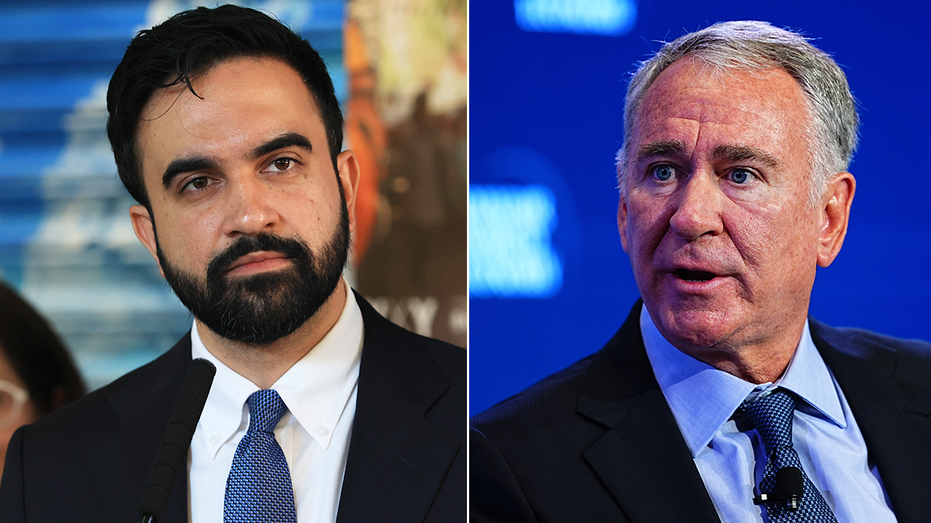
On April 15 (Tax Day), NYC Mayor Zohran Mamdani posted a video outside Ken Griffin’s Manhattan penthouse promoting a new “tax-the-rich” policy.(Spencer Platt/Aaron Schwartz/Bloomberg/Getty Images / Getty Images)
In a statement to Fox News Digital, Mayor Mamdani’s office attempted to walk a fine line, asserting, “Mayor Mamdani wants all New Yorkers to succeed. That includes business owners and entrepreneurs who create good-paying jobs and make this city the economic engine of America. It also includes Ken Griffin, who is a major employer in our City and a powerful figure in our economy.” However, the statement quickly pivoted back to its core message: “That does not negate the fact, however, that our tax system is fundamentally broken. It rewards extreme wealth while working people are pushed to the brink. The status quo is unsustainable and unjust. If we want this city to become a place that working people can afford, we need meaningful tax reform that includes the wealthiest New Yorkers contributing their fair share.” This rhetoric, while appealing to a voter base concerned with affordability, creates a palpable tension within the financial community, where “fair share” is often interpreted as an ever-increasing burden.
Adding a layer of complexity, Mamdani’s public actions revealed a curious dichotomy. Despite publicly lambasting Griffin, the Mayor personally thanked him for a significant donation to the New York Police Department just days later. At One Police Plaza, Mamdani acknowledged Griffin for “funding a memorial wall that will open later this year,” showcasing the practical reality that even politicians advocating for wealth redistribution often rely on the philanthropy of the very individuals they criticize. This apparent contradiction highlights the political tightrope walk inherent in urban governance, where public posturing must often be reconciled with the practical need for private sector contributions to essential services.
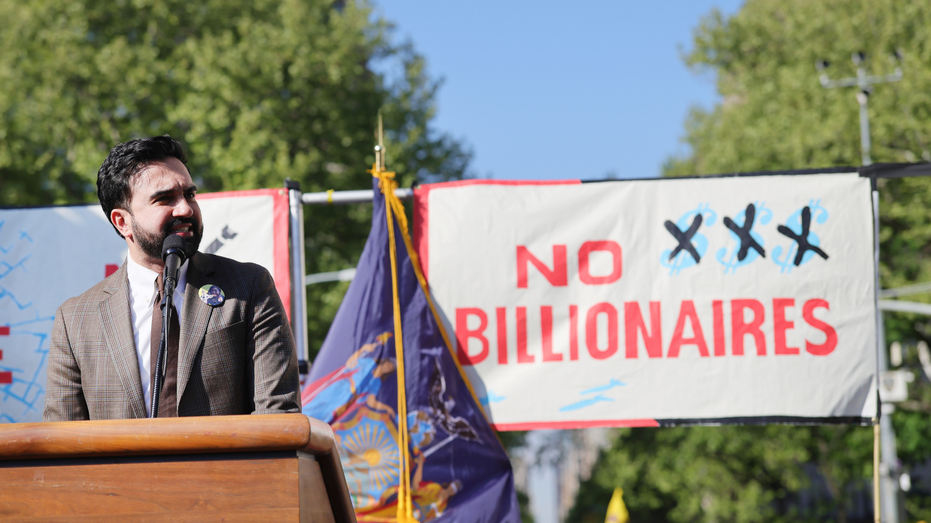
New York City Mayor Zohran Mamdani has previously criticized billionaires, including Ken Griffin, whom he recently thanked for supporting police.(Spencer Platt/Getty Images / Getty Images)
This ongoing narrative extends beyond individual personalities, touching upon the fundamental economic principles guiding business location decisions. Companies like Citadel weigh factors such as state income taxes, corporate tax rates, regulatory burdens, cost of living for employees, talent availability, and the overall political and social environment. Florida, with its lack of state income tax and pro-business policies, presents a compelling alternative for firms seeking to optimize their operational efficiency and attract top talent who prioritize financial freedom.
Market Impact
The public sparring between a prominent financial leader and a major city’s politician carries multi-faceted market implications. For **New York City’s real estate market**, particularly the luxury residential and commercial sectors, the proposed pied-à-terre tax and the associated anti-wealth rhetoric could accelerate a trend of cautious investment. Developers and high-net-worth buyers may reconsider New York, potentially leading to subdued demand, increased inventory, and downward pressure on property values in the high-end segment. Conversely, **Miami’s real estate market** stands to benefit further, experiencing increased demand for both luxury homes and commercial office space as more financial firms and affluent individuals opt for its tax-friendly environment.
In the **financial services sector**, the competition for talent and capital will intensify. Firms considering expansion or relocation will closely scrutinize the business climate and tax regimes of major hubs. A perceived deterioration of the investment environment in NYC could lead to a gradual shift of highly-compensated professionals and ancillary services (legal, accounting, wealth management) to more favorable jurisdictions, impacting New York’s status as the global financial capital. This could also influence **municipal bond markets**, as investor confidence in NYC’s long-term fiscal health could wane if capital flight accelerates, potentially leading to higher borrowing costs for the city as its tax base erodes.
More broadly, these events highlight the **macroeconomic trend of inter-state competition for economic supremacy**. States like Florida and Texas are actively luring businesses with lower taxes and reduced regulatory burdens, challenging the traditional dominance of high-cost, high-tax states. This dynamic influences investment decisions, job creation, and the allocation of venture capital across the country. Companies and investors will continue to favor locations that offer stability, predictability, and an environment perceived as supportive of wealth creation and business growth, making political rhetoric and tax policy critical factors in capital allocation strategies.